Most of us first meet the snapdragon as a stubby little six-pack at the garden center, wedged between the petunias and marigolds. That introduction does the plant a real disservice.
Give a snapdragon the right variety and a long, cool season to stretch its legs, and it becomes a 3- to 4-foot spire that anchors a bouquet and outlasts almost everything else in the vase.
Here is a bit of trivia to reset your expectations: the flowers are built for bumblebees, which are heavy enough to pry the jaws open, while most honeybees simply can’t get in.
By the end of this guide you’ll know how to choose the right type, coax the fussy seeds to life, time your planting, sidestep the one disease that actually matters, and cut stems that keep going for 2 weeks.
Snapdragons at a Glance
- Botanical name: Antirrhinum majus (family Plantaginaceae)
- Lifespan: tender perennial usually grown as an annual; may overwinter in zones 7–11
- Light: full sun (6+ hours); part shade is fine in hot climates
- Sweet spot: cool weather — nights near 40°F, days near 70°F; stalls above about 80°F
- Start seeds: indoors, about 8–10 weeks ahead of your last frost date
- Bloom rhythm: late spring, a summer lull, then a fall encore
- Vase life: 7–10 days, sometimes a full 2 weeks
- Bonus points: deer- and rabbit-resistant, pollinator magnet, petals are edible
Why Snapdragons Earn Their Keep
If you have written snapdragons off as filler, here is the reframe. In a bouquet crowded with round blooms — roses, zinnias, dahlias — a snapdragon is the exclamation point.
Its vertical spike gives an arrangement rhythm and height that round flowers alone can’t, which is exactly why florists reach for it.
They are also genuine workhorses. Cut-and-come-again by nature, snapdragons send up more side shoots the more stems you take.
They bloom in nearly every color except true blue, many are softly fragrant, and they shrug off cold that flattens tender annuals.

They were popular enough to be named the National Garden Bureau’s Flower of the Year back in 1994, and they remain a top-10 fresh-cut flower in the U.S. to this day.
Toss in that deer and rabbits usually leave them alone, and you have a flower that gives back far more than it asks for.
Crack the Code: Snapdragon Groups 1 to 4
Snapdragon seed packets and catalogs often label varieties with a group number from 1 to 4.
It looks like jargon, but it is simply telling you which season a variety is built to bloom in, based on day length, light intensity, and temperature.
| Group | Blooms best in | Reliable picks |
| 1 | Cool, short days — early spring and fall | Chantilly, Legend, Maryland |
| 2 | Cool-to-mild spring and fall | Animation, Costa, Overture |
| 3 | Mild-to-warm, lengthening days | Potomac, Opus, Madame Butterfly |
| 4 | Warm, long days of summer | Rocket, Opus, Madame Butterfly |
Treat the groups as a helpful guide, not gospel.
The system was developed for greenhouse growers, and at extreme latitudes it can fall apart — growers in the far north sometimes find that long summer days scramble the expected timing, and a Group 1 variety underperforms while a Group 3 shines.
The practical move: plant a spread of groups for the longest possible bloom window, or pick a couple of dependable varieties and succession plant them (more on that below) rather than obsessing over the numbers.
Shape matters too.
- The classic snapping jaw belongs to types like Rocket and Potomac.
- Chantilly and other butterfly types have an open, upward face.
- Madame Butterfly blooms are double and ruffled, almost azalea-like — people often don’t realize they are snapdragons at all.
- For pots, look to dwarf and trailing varieties like Twinny, Floral Showers, and Candy Showers.
Starting From Seed (The Part That Trips People Up)
You can buy snapdragon transplants, but starting from seed unlocks the whole catalog of colors, heights, and hard-to-find varieties.
If you do grab a nursery flat, pick short, stocky plants that haven’t started blooming yet — they settle in and branch far better than tall, already-flowering ones.
The from-seed reputation for being fussy is half-true: snapdragons aren’t hard to germinate, they’re just slow and start from seeds the size of dust.
Plan around those two quirks and you’ll do fine.
The Seeds Are Basically Dust — Here’s How to Sow Them
- Start early

Sow indoors 8 to 10 weeks before your last frost date. Snapdragons are slow, often needing 100 to 120 days from seed to bloom, so erring early is far better than erring late.
- Try a chill (optional)
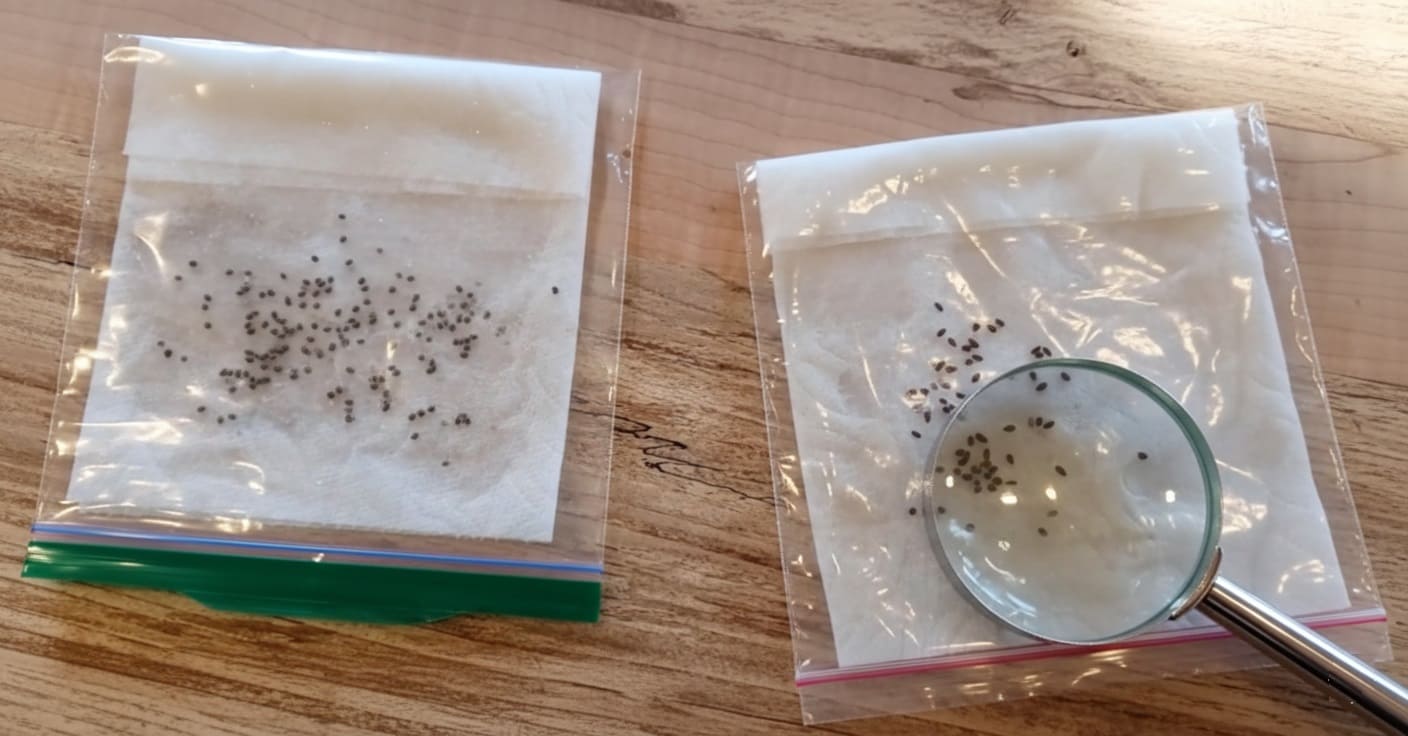
A few days in the refrigerator or freezer before sowing can make germination more even, mimicking the cold spell the seeds expect in nature. It’s a small step that smooths out patchy sprouting.
- Surface-sow — do not bury
Snapdragon seeds need light to germinate, so press them onto pre-moistened mix and leave them on top.
A whisper-thin dusting of vermiculite holds them in place and keeps them from drying without blocking the light.
- Use the toothpick trick

Dip the tip of a toothpick in water, touch it to a seed or two, and set them on the soil — 2 seeds per cell is plenty. It sounds silly until you try to place specks this small any other way. (The same trick saves your sanity with poppy seeds.)
- Keep them warm and watch closely
At 65 to 75°F, expect sprouts in 7 to 14 days — though give stragglers up to 3 weeks before giving up.
The moment they germinate, get them under bright light, because seedlings stretch tall and weak fast. Aim for 12 to 16 hours of light a day.

- Water from below
Bottom-water or mist gently so the tiny seeds don’t get washed out of place, and keep the air moving.
Good airflow is your best defense against damping-off, a fungal collapse that snapdragon seedlings are prone to.

One common scare: seedlings that germinate, then seem to freeze in place for weeks. Usually that is a sign they are too cold or running out of food.
Seed-starting mixes carry few nutrients, so once your seedlings have 2 to 3 sets of true leaves, start a weak, diluted feed and make sure the room is genuinely warm. They’ll pick up again.
To Pinch or Not to Pinch?
This is the snapdragon debate, and both camps are right — it just depends on your goal.
Pinching means snipping out the growing tip when a plant is about 3 to 4 inches tall (or has 4 to 6 sets of leaves), leaving 2 to 3 sets behind.

The plant responds by branching into many stems, which can dramatically increase your harvest. The trade-off is that pinching delays blooming by a couple of weeks, and each stem may be a touch shorter.
Skip the pinch and you get fewer stems, but they tend to be taller and thicker, with one impressive central spike that blooms sooner.
So: pinch for a productive, bushy plant; leave it alone for a single statement stem.
Can’t decide? Do what a lot of cut-flower growers do and pinch half your plants while leaving the rest. You stagger the harvest and hedge your bet at the same time.
 Learn about Topping Pepper Plants: The Simple Gardening Hack for Bigger Harvests
Moving Them Outside: Timing, Spacing, and Support
Here is where snapdragons surprise people.
Hardened-off plants are genuinely tough — established ones can take hard cold, with different sources citing survival anywhere from the low 20s down toward 0°F depending on the variety, snow cover, and how well the plant settled in.
The catch is the word established. A tender seedling fresh from your basement is not that hardy, so harden it off over 7 to 10 days first, easing it into wind and sun.
Because they actually prefer to root into cool soil, you can set transplants out a week or two ahead of your last frost rather than waiting for warm weather.
In mild-winter regions, fall planting is even better — the plants establish over winter and bloom early the next spring.

A handy tip borrowed from tomato growers: snapdragons can be planted deep, right up to their lowest leaves, with any early flower buds pinched off. That buried stem grows extra roots and gives you a sturdier plant.
Spacing is a genuine trade-off. Plant close, around 6 inches apart, and the plants grow taller and lean on each other — great for long cut-flower stems.
Space wider, 9 to 12 inches, and you get better airflow and less disease, which matters a lot in humid climates. Let your weather make the call.
Finally, support. Snapdragons are both phototropic and geotropic, meaning a stem that tips over will curve back upward within hours — and once it bends, you can’t straighten it.

Tall cut-flower varieties really do need 1 to 2 layers of horizontal netting, raised as the plants grow, or individual stakes. Short and dwarf types, and anything in a sheltered spot, often need no support at all.
Through the Season: Water, Food, and the Summer Slump
Once they’re growing, snapdragons are low-drama.
Give them about an inch of water a week, delivered at the base in the morning so the foliage dries quickly — wet leaves are an open invitation to fungus.
They like even moisture but hate wet feet; roots sitting in soggy soil will rot.
A couple of inches of mulch around the plants (kept off the stems) holds the soil cool and the moisture steady, which earns its keep once summer heat arrives.
Feed lightly. A balanced 10-10-10 or a flower-focused fertilizer once blooming begins is plenty.
Snapdragons are light eaters, and too much nitrogen backfires, giving you tall, floppy, leafy plants with fewer flowers.
They are also sensitive to salt, so go easy — and be wary of cheap, salty composted manure, which can leave transplants yellowing and wilting even when the soil looks moist.
Now, the summer slump, which confuses almost every new grower.
From a single planting, expect a flush of blooms in late spring or early summer, a noticeable slowdown once days climb past about 80°F, and then a fresh wave in fall as things cool off.
You can cut plants back to 4 to 6 inches during the lull to encourage that fall comeback.

Heat-tolerant series like Rocket, Potomac, and Snapshot push through the heat better than most.
And if you want truly continuous flowers rather than waves, the real secret isn’t one perfect planting — it’s succession planting, sowing a fresh batch every 2 to 3 weeks so something is always coming into bloom.

If you’re not cutting the flowers for the vase, deadhead spent spikes to keep new ones coming.
The One Disease Worth Knowing: Rust
Snapdragons attract a handful of pests and a few fungal problems, but if you only remember one, make it rust.
Snapdragon rust (Puccinia antirrhini) shows up as pale yellow spots on the tops of leaves and rusty-brown pustules underneath; affected leaves shrivel, and the plant turns unsightly.

Frustratingly, the fungus thrives in the same cool weather snapdragons love, and it spreads.
To keep it in check: space plants for good airflow, keep water off the foliage, and remove and trash any infected leaves or plants — never compost them.
Move next year’s planting to a different spot, and choose rust-resistant varieties when you can.
Honest truth, though: once rust takes hold as summer heats up, many growers simply pull the plants and move on to the next succession. It’s not a failure on your part — it’s just snapdragons.
The supporting cast of troublemakers includes aphids, spider mites, thrips, slugs, and the occasional caterpillar or stink bug.
Thrips show up worst on pale flowers, which is why some flower farmers grow only deep, saturated colors so the specks don’t show.
Most of these you can knock back with a blast of water or insecticidal soap — none of them are the season-ender that rust can be.
Cutting Snapdragons for the Vase
You’ll find conflicting advice on when to cut snapdragons, and it’s worth clearing up because it directly affects how long they last.
For the longest vase life, cut early — when only the bottom 1 to 3 florets have opened and the rest are still buds.
The reason is biology: once bees pollinate the open flowers, those florets shatter and drop, and snapdragons are a little sensitive to ethylene, so a fully open stem fades faster.
Cut early and the remaining buds keep opening in the vase for days.
Real talk, though: catching them that early is hard, and a stem with up to a third or half its florets open is still perfectly good — you just trade away a little vase life.
Either way, cut deep, almost down to the base of the plant, leaving about 2 sets of leaves. This feels wrong the first time, but it is the whole trick.

The first time you cut a snapdragon you’ve babied for months right down to its ankles, it feels like a mistake — like you’ve thrown the plant away.
Resist the urge to snip politely near the top. A shallow cut gives you short, forked stubs; a deep cut tells the plant to send up long new stems from below.
Within a couple of weeks it answers that hard cut with a fistful of fresh stems, and you stop flinching.
Pick them when the air is cool — early morning or evening, not the middle of a hot day — then get the stems straight into clean water and keep them upright.

Lay them at an angle in the bucket and that geotropic curve kicks in again. A packet of flower food helps the buds keep opening.
Handled well, snapdragons give you 7 to 10 days in the vase, and often closer to 2 weeks.
Saving Seed and Second Chances
In mild climates, snapdragons happily self-sow, popping up as free volunteers in the cracks and corners where last year’s seed fell.
The plants themselves can soldier on for a few seasons where winters are kind, but they grow woody and flower less with age — when yours start looking ragged, it’s no loss to pull them and start fresh.
If you want to save seed, here’s the catch worth knowing before you bother: most modern snapdragons are hybrids, and their seed won’t come true.
The classic heartbreak is saving seed from a gorgeous frilly spike, sowing it the next spring, and getting oddball round blobs instead — doubly awkward if you’ve already handed packets to friends.
Save seed only from heirloom or open-pollinated types if you want a match; otherwise, treat saved hybrid seed as a fun lottery and enjoy the surprises.

To clone a specific favorite reliably, take a cutting instead: snip just below a leaf node, dip it in rooting hormone, keep it humid, and you’ll have roots in about 2 to 3 weeks.
Frequently Asked Questions
- Do snapdragons come back every year?
It depends on your climate. In zones 7 to 11 they are short-lived perennials that often overwinter and return, though the blooms are best in the first year.
In colder zones they are grown as annuals — but if you let a few plants go to seed, you may get volunteers next spring. Just remember hybrids won’t look like the parent plant.
- Are snapdragons safe around pets and kids?
Yes. The ASPCA lists snapdragons as non-toxic to dogs, cats, and horses, and the flowers are edible for people too — pretty as a garnish, if a little bitter.
The only rule: never eat blooms from a plant that’s been sprayed with pesticides.
- Do deer and rabbits eat snapdragons?
Rarely. Their bitter taste makes snapdragons one of the more deer- and rabbit-resistant flowers you can plant, which is a gift if browsing animals usually treat your garden as a buffet.
A truly hungry animal will sample anything, but snaps sit near the bottom of their menu.
- Can I grow snapdragons in containers?
Absolutely — just match the variety to the pot. Dwarf, mid-height, and trailing types thrive in containers, while the tall cut-flower giants don’t.
Use a quality, well-draining mix and a pot with drainage holes, and plan to water and feed a bit more often than you would in the ground.
- Can I time snapdragons to bloom for a wedding or event?
You can aim, but don’t bet the centerpiece on it. Bloom timing shifts with weather, daylight, and heat, and a single hot spell can stall an entire planting.
If snaps are essential for a specific date, start several successions, grow extras, and line up a backup source. Experienced growers plan three ways to get the flowers, not one.
The Short Version
Snapdragons reward you for working with their nature instead of against it. Get a few things right and they hand you months of color and armloads of stems.
The essentials:
- Start the dusty seeds early and shallow — light, warmth, and patience do the work.
- Plant out into cool weather; harden seedlings off first, then stop coddling them.
- Pinch for more stems, or leave plants alone for taller single spikes — or split the difference.
- Cut deep and cut early for the longest vase life.
- Watch for rust, give plants airflow, and let succession plantings carry the season.
Here’s the encouraging part: even a half-forgotten snapdragon tends to forgive you. Few flowers give back this much for so little fuss.
So pick a couple of varieties that genuinely make you happy, get a tray started this week, and plan to cut your first stems with the confidence of someone who finally knows the secret — go low.
Your future bouquets will thank you.
source https://harvestsavvy.com/growing-snapdragons/


No comments:
Post a Comment