A single trip to the garden center has a way of emptying a wallet. You go in for a couple of tomato seedlings and leave a hundred dollars lighter, wondering how a money-saving hobby got so expensive.
Here is the good news: plants are one of the few things you can buy once and multiply forever. Most of what you would pay full price for is already growing nearby — dividing, dropping seeds, and sprouting where nobody planted it.
This guide gathers the most reliable ways to get plants for free, whether you have a yard full of perennials or an empty balcony and nothing yet.
You will learn how to make new plants from ones you (or your neighbors) already have, where to find giveaways, how to rescue cheap plants, and how to do it without breaking a law or importing pests.
The short version — four ways to stop paying full price:
- Multiply what already exists. Divide perennials, root cuttings, save seeds, and let self-sowers spread.
- Tap your community. Ask friends and neighbors, and use swaps, seed libraries, and Buy Nothing groups.
- Rescue the cheap stuff. Clearance racks, end-of-season sales, and plants headed for the dumpster.
- Do it the right way. Skip patented and invasive plants, and quarantine new arrivals so you do not import pests.
Why Free Plants Are Worth It
Free plants have a quiet advantage over the ones on the sale bench. A division from a neighbor’s border or a cutting from a plant three doors down is already proven.
It has survived your exact climate, soil, and local pests, so it tends to settle in faster than nursery stock trucked in from another state. You also skip the markup on pots, soil, and shipping.
Just remember that “free” changes where the effort goes, not whether there is any. A rescued fern or a rooted cutting still needs the right light, water, and a little patience before it thrives.
Go in expecting to give each plant some care, and your success rate climbs.
Make More Plants From Ones You Already Have
The cheapest nursery you will ever shop is the one already growing in your yard, and in the yards of everyone you know.
The methods below turn a single plant into many — and help you keep the tender ones going instead of rebuying them — for little more than time and patience.
Divide Perennials (the Most Reliable Method)
Division is the closest thing to a guaranteed win. Many perennials grow in expanding clumps, and once every few years they are happy to be split into several smaller plants.
It rejuvenates the parent, too, so an overgrown clump flowers better afterward. Hostas, daylilies, ornamental grasses, sedum, bee balm, iris, rhubarb, and clumping herbs like chives, oregano, and lemon balm all divide easily.

Here is the whole process, start to finish:
- Water the parent plant deeply a day or two before you dig, since a hydrated plant handles the move far better.
- Dig all the way around the clump and lift it out with a garden fork rather than slicing through it with a spade.
- Pull or cut the clump into sections, making sure each piece has healthy roots and three to five growing shoots.
- Replant each division at the same depth as before, water it in well, and keep the soil moist for the first couple of weeks.
A little wilting for a few days is normal. New growth within a few weeks tells you it took.
One tip from experience: keep aggressive spreaders like mint in a buried pot, or a single free division will happily colonize your whole bed.

Take Cuttings
A cutting is just a piece of a plant coaxed into growing its own roots. It sounds like magic, but for many plants it is close to foolproof, and the new plant is an exact copy of the one you admired.
Pothos, spider plant, philodendron, coleus, and most succulents root from a snippet dropped in water. Woody plants like willow, elderberry, and currants are nearly as easy.
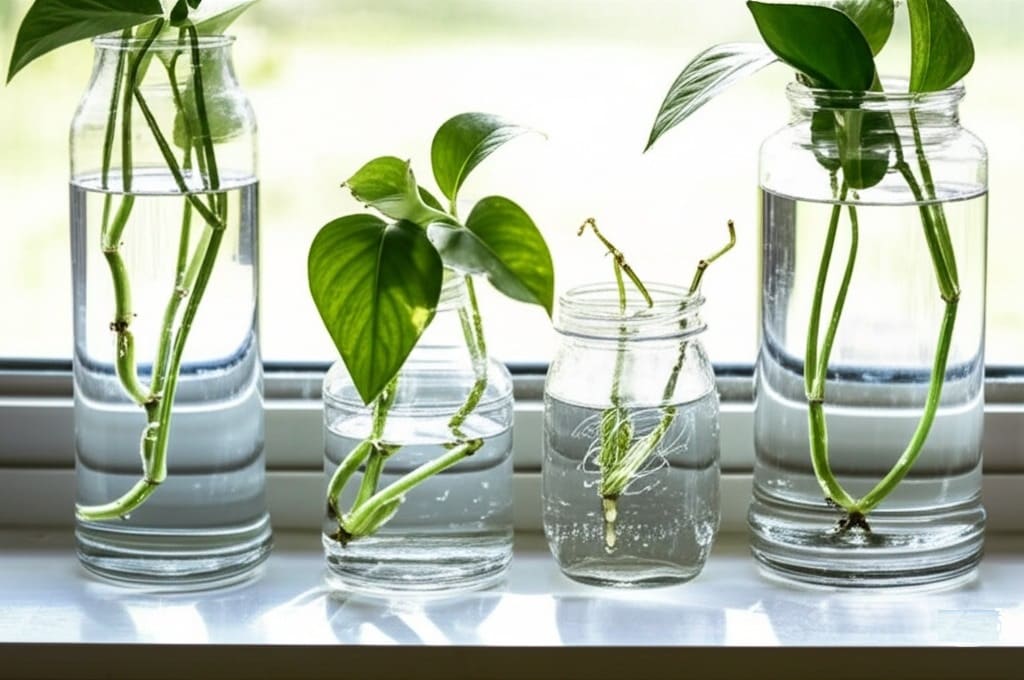
To take a basic stem cutting:
- Snip a four- to six-inch piece from a healthy, non-flowering side shoot, cutting just below a node (the little bump where a leaf meets the stem, which is where roots form).
- Strip the lower leaves, leaving a couple at the top. If those are large, cut them in half to slow water loss.
- Put the cutting in a jar of water or a small pot of moist, gritty mix, somewhere warm and bright but out of direct sun.
- Pot it up once the roots are an inch or so long and it resists a gentle tug.
 Learn How to Propagate Plants in Water: Easy Step-by-Step Method
Timing depends on the wood. It is worth knowing the three types, because it tells you what to take and when:
- Softwood cuttings are this year’s soft, green, bendy growth, taken in late spring to early summer. They root fastest — great for lavender, salvia, fuchsia, and hydrangea — but dry out quickly, so keep them humid.
- Semi-ripe cuttings come from midsummer to early fall, when the base of the stem has begun to firm up but the tip is still soft. Use them for rosemary, sage, thyme, and evergreen shrubs.
- Hardwood cuttings are woody, dormant-season stems taken from late fall through winter. They are the slowest but the most forgiving — think willow, elderberry, forsythia, and roses. Push them into the ground and wait.
Do you need rooting hormone?
For easy houseplants and softwood cuttings, no — plain water or damp mix is plenty. It earns its keep on tough, woody cuttings like roses, where it noticeably improves your odds.
Some gardeners swear by homemade willow water as a natural substitute; it will not hurt, though a small tub of rooting powder is cheap and lasts for years.

Learn How to Use Honey as a Natural Rooting Hormone for Cuttings
Once propagation starts to feel easy, grafting is the natural next step — joining a short cutting (called a “scion”) of a variety you want onto a tougher rootstock to make a new tree.
It takes practice, but many fruit-tree groups run cheap or free scion-wood swaps each winter, a bargain way to collect named apple and pear varieties.
Save Your Own Seeds
Saving seeds is the most generous math in gardening: one tomato or one dried flower head can hand you dozens or hundreds of next year’s plants.
Let a few fruits fully ripen or flower heads dry on the plant, collect the seeds, then spread them on paper to dry for a week or two before storing them somewhere cool, dark, and dry in a labeled envelope.
Most vegetable and flower seeds stay viable for several years.
One catch trips up beginners, so let us clear it up. Seeds only “come true” — grow into the same plant as the parent — if they are open-pollinated or heirloom varieties.
Seeds saved from hybrids (often labeled “F1”) usually sprout fine, but the plants that grow are a genetic grab bag and rarely match the parent.
That is not because hybrids are genetically modified, by the way; that is a common mix-up. Hybrids are simply crosses of two parent lines, and their offspring reshuffle.
For dependable results, save seeds from open-pollinated tomatoes, beans, peas, zinnias, cosmos, sunflowers, and marigolds.

Let Plants Do the Work: Layering, Runners, and Volunteers
Some plants practically propagate themselves. You just have to notice and lend a hand.
- Layering:
Bend a low, flexible stem down, pin it to the soil or bury a section, and leave it attached to the parent.
It grows its own roots over a few months, and then you snip it free. Rosemary, currants, and climbers take to this readily.
- Runners and suckers:
Strawberries send out baby plants on runners, while raspberries, elderberries, and lilacs push up suckers from their roots.
Dig up the rooted offshoots and move them. Gardeners often give these away because they are pulling them out anyway.
- Volunteers and self-seeders:
Seeds dropped by last year’s plants (or hiding in your compost) sprout on their own.
Tomatoes, dill, cilantro, kale, squash, and many flowers all do it. Keep the ones you want, move them where you like, and pull the rest.
Overwinter Tender Plants
Tender annuals and half-hardy perennials — geraniums, coleus, begonias, and fuchsias among them — do not have to be a yearly repurchase.
Before the first hard frost, dig them up, pot them in fresh mix, and keep them somewhere bright and cool indoors, pinching them back now and then so they stay bushy.
If windowsill space is tight, take a few cuttings instead and carry those small rooted plants through winter.
Either way, you head into spring with free, established plants while everyone else is lined up at the register.

Learn How to Overwinter Dahlias: Dig, Store, or Leave Them in the Ground
Grow Free Plants From Your Kitchen
Before you toss those vegetable ends into the compost, look again — a surprising number will grow into new plants on a sunny windowsill. It is the most fun way to get free plants, and a great one to try with kids.
- Garlic, ginger, and shallots: plant a single clove or a knobbly piece with a visible bud, and it grows into a whole new plant.
- Green onions, leeks, celery, and lettuce: stand the rooted base in a little water until it regrows, then pot it up.
- Potatoes and sweet potatoes: a tuber that has started to sprout “eyes” will grow into new plants.
- Pineapple tops and avocado pits: slow, leafy houseplants that rarely fruit indoors, so grow them for the greenery and the novelty.
Set your expectations, though. Some scraps regrow leaves or run to seed rather than producing another full-sized vegetable — still a free plant, just not always a harvest.

Do not stop at the scraps — the seeds inside are free plants, too.
Rinse and dry the seeds from peppers, tomatoes, squash, pumpkins, and melons, and they will often sprout on a windowsill.
Your pantry pitches in as well: dried beans, peas, and chickpeas are simply seeds, and whole spices like coriander, dill, and fennel frequently grow.
The same catch from seed-saving applies, though — supermarket produce is often hybrid, so it may sprout but not match the parent.
For the best odds, start with organic or farmers-market produce and heirloom varieties.
Here are the Best Tasting Heirloom Tomatoes: 37+ Varieties Ranked by Flavor
Where to Find Free Plants From Other People
Gardeners are famously generous, partly because a thriving garden always makes more than one person can use. Once people know you are looking, plants have a way of finding you.
Just Ask
Start with the people you already know: friends, family, neighbors, and coworkers who garden. Most end up with more seedlings and divisions than they can plant and are glad to share.
Make it easy to say yes by offering to come dig or divide the plants yourself, and bring something back — seeds, a cutting, or a plate of something from your kitchen.
And before you leave, ask how they grow it: the person handing you a plant is also your best free source of advice on the light, soil, and water it likes.
There is a rhythm to this that is easy to miss at first. The gardener who hands you a fistful of daylily fans this spring is usually thrilled to take a pot of your spare tomato seedlings next month. Free plants tend to travel in both directions.
Swaps, Seed Libraries, and Exchanges
Plant and seed swaps are exactly what they sound like: everyone brings extras — cuttings, divisions, or seed packets — and trades for something new.
Look for them through garden clubs and community centers, or host your own with a few card tables and some snacks.
Many public libraries now run seed libraries, where you borrow open-pollinated seeds, grow them, and return a portion of the seeds you save at season’s end.
Because the seeds come from local gardens, they are already suited to your area.

Clubs, Community Gardens, and Extension Offices
Local garden clubs and horticultural societies are equal parts knowledge and free plants; members are always dividing something.
Community gardens are just as good — volunteer for a season and you will pick up divisions, cuttings, and advice you cannot get from a label.
In the United States, county cooperative extension offices and their master gardener programs sometimes give away seedlings or native plugs at events. These are rarely advertised, so call and simply ask what is coming up.
Native plant societies deserve a special mention. Many organize plant rescues, digging up wild natives from land about to be developed or mowed and letting volunteers take some home.
Join through an organized group and with the landowner’s permission — that is what keeps this on the right side of the ground rules below.
Online Giveaways
The internet is one of the easiest places to find free plants.
Buy Nothing groups, Freecycle, the free section of Craigslist, Facebook Marketplace and gardening groups, and Nextdoor all regularly list plants, cuttings, and “come dig them up” perennials.
Free listings move fast, so check often and reply quickly. If something is already claimed, message anyway and ask whether they have more to spare — and post your own “wanted” note describing what you are after.
Curbs, Construction Sites, and Landscapers
Keep your eyes open as you move around town, especially on spring weekends when gardeners are thinning beds. Uprooted plants left at the curb are fair game.
When a yard is being redone or a lot cleared, the existing shrubs and perennials are usually destined for a dumpster — a quick, polite ask can rescue them.
It is worth calling local landscapers and contractors, too; many will happily set aside established plants rather than pay to haul them away, especially if you are reliable about picking up promptly.
Snag Cheap and Rescued Plants (Almost Free)
Not everything worth grabbing is literally free. A few dollars and some care can be the next best thing, and often gets you bigger, faster results.
- Clearance and “infirmary” racks:
End-of-season and half-dead markdowns at nurseries and big-box stores often just need repotting, a trim, and water.
Ask staff whether they have plants headed for the dumpster — many will simply hand them over.
- Garage, yard, and estate sales, and flea markets:
Swing by near the end, when sellers would rather give plants away than pack them up.
- Store garden clubs:
The big chains email buy-one-get-one coupons to members. Not free, but close.
- Cheap native seedlings:
Conservation districts and extension offices often sell native tree and shrub seedlings for pennies and hand out freebies at garden fairs.
- School, college, and society plant sales:
High-school FFA chapters, college horticulture and master-gardener programs, and botanical gardens hold plant sales and fundraisers with healthy stock at a fraction of retail.
Get on their mailing lists and arrive early for the best pick.
- Free seeds by mail:
Request free seed catalogs, watch for first-order promotions and the bonus packets many companies slip into orders, and look for the native or pollinator seed giveaways some conservation groups run each year.
- Tree programs:
Groups like the Arbor Day Foundation and many city forestry departments offer members or residents free or low-cost saplings suited to the local area.
- Plants as gifts:
Add specific plants, or a nursery gift card, to your birthday or holiday wishlist.
- Post-event plants:
Churches, schools, and offices frequently give away the lilies, poinsettias, and potted plants used to decorate after a holiday or event — just ask.
Free the Right Way: Stay Legal, Ethical, and Pest-Free
This is the part most “free plant” lists skip, and it is exactly what separates a smart gardener from a regretful one. A little care here protects your garden, your neighbors, and your conscience.
Skip Patented Varieties
Many of the most eye-catching modern plants are patented, which makes it illegal to propagate them — even for yourself, and even from a plant you own.
Before you take a cutting or division, check the tag. A patent number, the letters “PPAF” (plant patent applied for), or a trademarked name printed in capitals with a ® symbol all mean hands off.
Familiar examples include Knock Out roses and Endless Summer and Limelight hydrangeas. Older, open, and heirloom varieties, on the other hand, are yours to multiply freely.
Do Not Spread Invasives or Poach Wild Plants
A free plant that takes over your yard — and then your neighbor’s — is no bargain.
Steer clear of known thugs like running bamboo, English ivy, and butterfly bush where they are a problem in your region, and never move Japanese knotweed at all.

The same caution applies to wild plants.
Collecting from parks, preserves, and other protected land is off-limits, rare and endangered species are shielded by law, and even where foraging is allowed you need the landowner’s permission and should never take more than a small share of what is growing.
Quarantine and Inspect New Arrivals
Free plants can carry hitchhikers — aphids, scale, mealybugs, fungal spots, or hidden root rot — and shared soil and mulch can spread stubborn pests like invasive jumping worms.
Give every new plant a two-week quarantine away from your collection, and look it over carefully before it moves in.
When you can, take plants bare-root by shaking off the donor’s soil, or root a clean cutting instead, and wipe your pruners with rubbing alcohol between plants. Skip anything that looks diseased.
For the same reason, be wary of hauling in free soil itself; build up your own with compost rather than importing someone else’s weed seeds and pests.
Explore 50+ Common Christmas Tree Bugs: How to Identify, Prevent, and Get Rid of Them
A Season-by-Season Plan
Timing decides how much of this actually works. Most free-plant methods have a sweet spot in the calendar, so here is the year at a glance.
| Season | Do this now | Keep in mind |
| Spring | Divide summer- and fall-blooming perennials; sow saved seeds; hit swaps and giveaways as gardeners thin their beds. | Wait until the soil warms and new shoots appear; hold off on dividing lavender and other woody herbs. |
| Summer | Take softwood and semi-ripe cuttings; root leaf cuttings of African violets and succulents; move self-sown seedlings. | Keep cuttings shaded and humid, and avoid dividing plants in peak heat. |
| Fall | Divide spring bloomers like peonies and iris; collect ripe, dry seed; grab end-of-season clearance plants. | Divide four to six weeks before hard frost so roots can settle; label seeds as you store them. |
| Winter | Take hardwood cuttings of dormant shrubs; start saved seeds indoors; plan swaps and browse catalog promotions. | Give indoor seedlings bright light, and go easy on watering dormant plants. |
Frequently Asked Questions
- How long does it take to get a real plant this way?
It depends on the method. Divisions and rescued plants are essentially instant — they are full-sized from day one.
Cuttings of easy houseplants root in one to three weeks, while woody cuttings can take a couple of months. Seeds are a full season’s project, and trees grown from seed are a multi-year labor of love.
- Will free plants grow as well as ones I buy?
Often better. A division or cutting from a plant already thriving down the street is proven for your climate and soil, so it frequently outperforms shipped-in nursery stock.
The catch is matching each plant to the right spot and checking it for pests before it joins your garden.
- How do I get free plants if I don’t own any yet?
Start with other people and with seeds. Post in a Buy Nothing or Freecycle group, ask gardening neighbors, and visit a seed library or swap.
A few cheap packets of open-pollinated seeds will snowball into a seed-saving supply within a season or two, and kitchen scraps like green onions and garlic get you growing for nothing today.
- Can I really get free trees?
Yes. Look for self-sown seedlings under mature trees, ask a friend for the little ones popping up in their yard, and check tree-giveaway programs run by groups like the Arbor Day Foundation and local conservation or extension offices.
You can also grow trees from seed — oaks drop heavy crops of acorns in bumper “mast” years. Just get permission before digging anything up.
- Can I take cuttings from plants at a park, store, or botanical garden?
No. Taking plant material from stores, parks, and botanical gardens counts as theft or breaks their rules, and many of those plants are patented anyway.
Stick to your own plants, those of friends and neighbors who say yes, swaps, and giveaways. If you forage in the wild, do it only with permission and never with rare species.
Start Your Free Garden This Week
Filling a garden without spending money comes down to four simple moves: multiply the plants you already have, tap the generosity of your gardening community, rescue the cheap and cast-off, and do all of it the right way.
None of it requires a green thumb you were born with — only a willingness to ask, to wait a little, and to pay attention to what is already growing around you.
The best part is how it compounds. This year’s single hosta becomes next year’s dozen, and the more plants you share, the more come back to you.
A garden built this way is not just cheaper; it is richer, more local, and more connected to the people around you.
So pick one thing to do this week. Drop a stem cutting into a jar of water on the windowsill, or post a quick “any perennials to spare?” in your local Buy Nothing group.
That first small step is where a free garden begins — and once it takes root, remember to pass a few plants along yourself.
source https://harvestsavvy.com/get-free-plants/


No comments:
Post a Comment