Walk past two flower beds planted from the exact same list and one will look designed while the other looks like a rummage sale.
The difference usually isn’t the plants. It’s that the good bed has five of something where the other has one of everything.
That never makes it into a gallery of pretty pictures, and it’s a big part of why so many first beds disappoint.
This guide covers both halves: the ideas worth stealing, and the few decisions that make any of them work.
By the end you’ll know where to put a bed, how big to make it, how many plants to buy, and what to expect in the years while it fills in. You’ll also know which popular advice to ignore.
The five-minute version
- Watch the light first. Full sun is 6 or more hours of direct sun, part sun is 3 to 6, shade is under 3.
- Keep beds reachable. No deeper than 4 feet (1.2 m) if you can only get at them from one side.
- Plant in three heights. Low at the front, knee-to-waist in the middle, tall at the back.
- Buy in threes and fives, not one of everything.
- Mulch 2 to 3 inches (5–8 cm) deep, pulled back off the stems.
Read the site before you read a plant tag
Spend one clear day watching where the sun actually falls
A spot that’s bright at 8 a.m. can be in full shade by one o’clock, and the shadow line shifts through the season as the sun climbs and deciduous trees leaf out.
The cheapest way to get this right is to photograph the same view every two hours and compare the pictures. Guessing here is the most expensive mistake in gardening — lavender in damp shade will sulk for two years and then die.
Not all sun is equal, either. Afternoon sun counts for more than morning sun, and a west-facing bed against brick behaves like a far hotter site than the same plants set in an open lawn.
Then check the soil with your hands
Grab a fistful when it’s damp and squeeze.
- If it holds a slick shape and stays put, that’s clay.
- If it falls apart and feels gritty, that’s sand.
- If it holds briefly and crumbles when you poke it, you have loam and you should feel lucky.
Clay is fertile but drains badly and takes half of spring to warm up; sand warms early and lets nutrients wash straight through. Both are fixed the same way, with compost and plenty of it.
Two more things before a spade goes in the ground
Find your zone on the USDA Plant Hardiness Zone Map, which was rebuilt on newer weather data in November 2023 and moved a good part of the country a half-zone warmer — if you memorized your zone before then, check it again.
And call 811, the free national dig line, before you break ground. Notice periods run about two to three business days in most states, and utility lines are sometimes buried only a few inches down.
Size and shape the bed before you shop
The most useful rule in bed design almost never gets said out loud: never make a bed deeper than you can reach into.
Against a wall or fence, that’s about 4 feet (1.2 m). If you can walk around both sides, you can go to 8 feet (2.4 m).
The moment you have to step into a bed to deadhead something, you compact the soil you just spent a weekend improving.
Length is where people undershoot. A 3-foot strip along a 40-foot house reads as a stripe, not a garden.
As a rough proportion, a foundation bed looks right at about half the height of the house at the eaves — so a single-story ranch wants something like 6 to 8 feet (1.8–2.4 m) of depth, not 3.
Hold the whole bed 12 to 18 inches (30–45 cm) off the siding so you can paint, so water sheds away from the foundation, and so nothing grows into the wall.
For the shape, lay a garden hose on the ground and walk away. Look at it from the street, from the front door, and from the window you actually sit at.
Long, sweeping curves beat scalloped wiggles almost every time, and a good test is whether you could push a mower along the edge in one smooth pass. Straight lines belong to formal gardens, where everything else is straight too.
Three rules that make any planting look designed
These three are structural, and they’re why a professionally planted bed reads as deliberate rather than collected.
Build it in three heights
Most disappointing beds are flat — everything knee-high, evenly spaced, each plant standing alone. Layering fixes it.
1. The front layer is ground cover and low edging plants that spill over the border and hide bare soil: catmint, lamb’s ear, hardy geranium, creeping thyme, coral bells.

2. The middle layer, roughly knee to waist, does most of the flowering — salvia, coneflower, black-eyed Susan, yarrow, daylily, garden phlox.

3. The back layer carries the drama and the winter structure: shrubs, ornamental grasses like little bluestem and switchgrass, globe thistle, joe-pye weed.
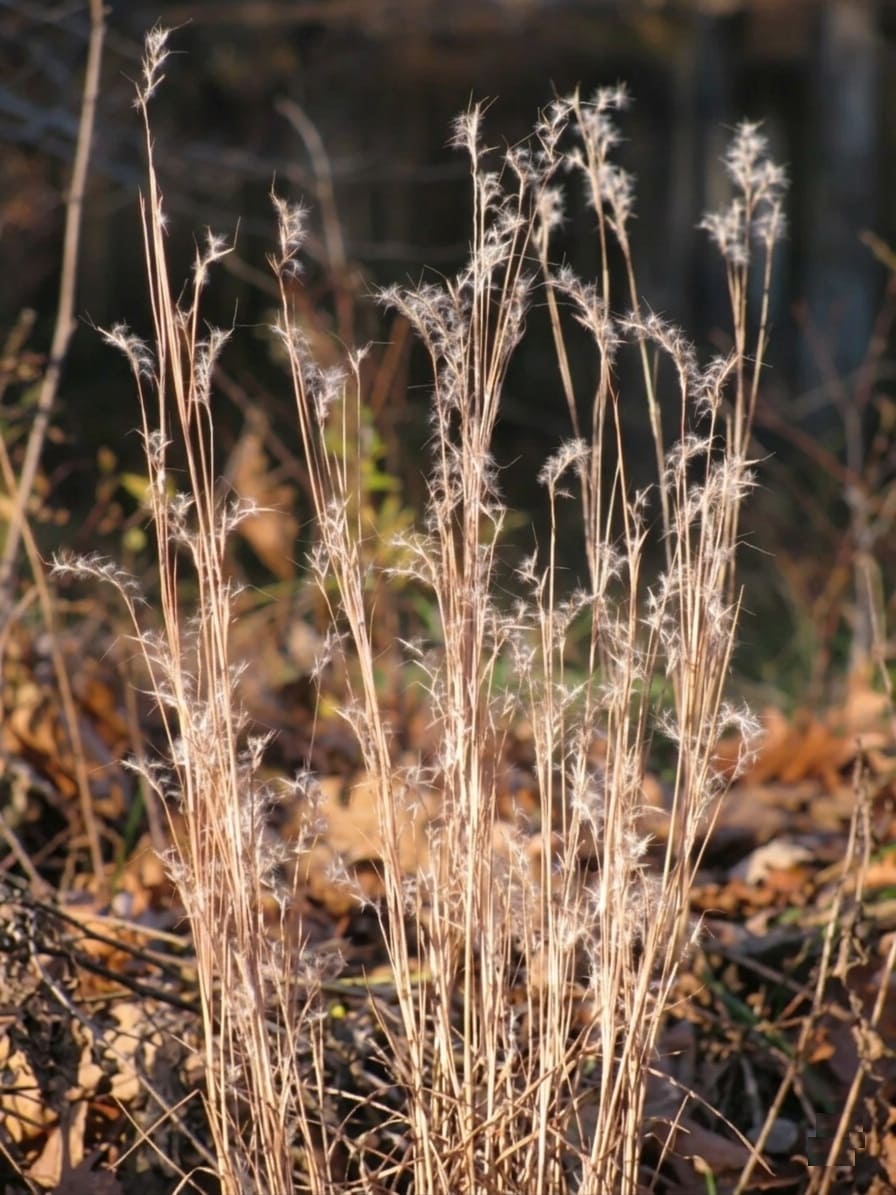
In an island bed you can see from all sides, the tall layer goes in the middle and steps down in every direction.
Break the rule once or twice on purpose, too: a see-through plant like tall verbena, set near the front, adds depth without hiding anything behind it.
Buy in threes and fives
This is the single change that does the most work. One plant of a kind disappears; three or five of the same plant read as a deliberate drift.
Set them out in loose triangles rather than rows, and repeat the same plant two or three times down the length of the bed so your eye travels instead of stopping.
It happens to nearly everyone the first spring. You go to the nursery with a list, and then there’s a salvia you’ve never seen, and a coral bell with better leaves, and by the time you’re at the register you have 14 plants and no two the same.
Six weeks later the bed looks busy and unsettled and you can’t work out why, because every plant in it is lovely. The fix costs nothing: next trip, buy three more of the two things already doing well instead of one more new thing.
Trees and one specimen shrub are the exception. Those you want singly, because a lone striking thing becomes the focal point everything else is arranged around.
Pick a color story
Three schemes are reliable.
- Monochrome uses one hue in many shades, and an all-white bed is the classic — sophisticated, and the hardest of the three to get wrong.
- Analogous colors sit side by side on the color wheel, like pink, purple, and mauve, and feel warm and settled.
- Contrasting colors sit opposite, like purple and yellow, and make each other look brighter.
Whichever you pick, decide before you shop and let foliage carry it. Silver, chartreuse, and near-black leaves hold a scheme together through the months when nothing is blooming, which is most of the year.
 Learn How to Create a Harmonious Garden: A Guide to Beautiful Design
Flower bed ideas worth stealing, sorted by the problem you have
Every idea below assumes you’ve matched it to your light and soil first. The groups run from the conditions you’re stuck with to the choices that are yours. Pick by constraint, not by photograph.
Hot, dry, and you’re not going to water it
- Gravel bed.

Drought-adapted plants set into a few inches of gravel over native soil. Sharp drainage is the entire point, so skip this on heavy clay unless you raise the grade. Lavender, santolina, sedum, agastache, sea holly.
- Prairie or native mix.

Little bluestem, purple coneflower, butterfly weed, blazing star. Deep roots, no supplemental water once established, and the seedheads carry the bed through winter.
- Mediterranean herbs as ornamentals.

Rosemary, sage, thyme, and oregano earn their space twice — silver foliage all season, and you can cook with them.
- Succulents and rock.

Best where winters are mild or drainage is genuinely sharp. Hens and chicks and hardy sedums take real cold; the tender succulents sold as houseplants do not.
Shade, north walls, and under trees
- The woodland layer.

Under deciduous trees, spring bulbs and ephemerals do their whole job before the canopy closes. Follow them with hosta, fern, astilbe, foamflower, and hellebore.
- Light the dark with leaves, not flowers.

Shade beds live on foliage contrast. Silver-splashed brunnera, variegated hosta, Japanese painted fern, and a chartreuse heuchera will outperform any bloom you try to force there.
Explore the Best Ground Covers for Shade That Actually Thrive in Low Light
- Hydrangeas on the north side.

A north-facing foundation is close to ideal for bigleaf and oakleaf hydrangeas — enough light to flower, no scorching afternoon sun.
- Dry shade under mature trees.

A different problem from a woodland floor: the tree drinks first, and the ground stays dry even after rain. Plant small, plant in fall, water through the first year, and lean on epimedium, hellebore, bigroot geranium, and sedge.
Explore Fast-Growing Shade Trees That Cool Your Yard in 5 Years
Wet ground, slopes, and the spots people give up on
- Rain garden.

A shallow, saucer-shaped bed dug 4 to 8 inches (10–20 cm) below grade where downspout or driveway runoff already collects.
It has to drain within a day or two rather than hold water, so on heavy clay dig deeper and backfill with a sandy compost mix or it won’t empty fast enough.
Joe-pye weed, blue flag iris, swamp milkweed, cardinal flower, red-twig dogwood.
- Terrace a slope

Instead of fighting runoff, cut the slope into level shelves held by stone, block, or timber, so soil and water stay long enough for roots to use them.
Keep each wall low — many places require an engineered design above about 3 to 4 feet (0.9–1.2 m), so check your local rules.
- The curb strip

That ribbon between sidewalk and street takes road salt, reflected heat, and foot traffic, it’s often city-owned, and it’s where utility lines run.
Confirm you’re allowed to plant, keep sightlines open, and use tough, low things: prairie dropseed, daylily, yarrow.
- Coastal beds.

Salt spray, wind, and sand narrow the list fast. Sea thrift, Russian sage, bayberry, switchgrass, and coreopsis all cope.
Mulch heavily to hold moisture in sand, and let a tough hedge or fence take the wind off everything behind it.
Small, narrow, or awkward
- Grow up.
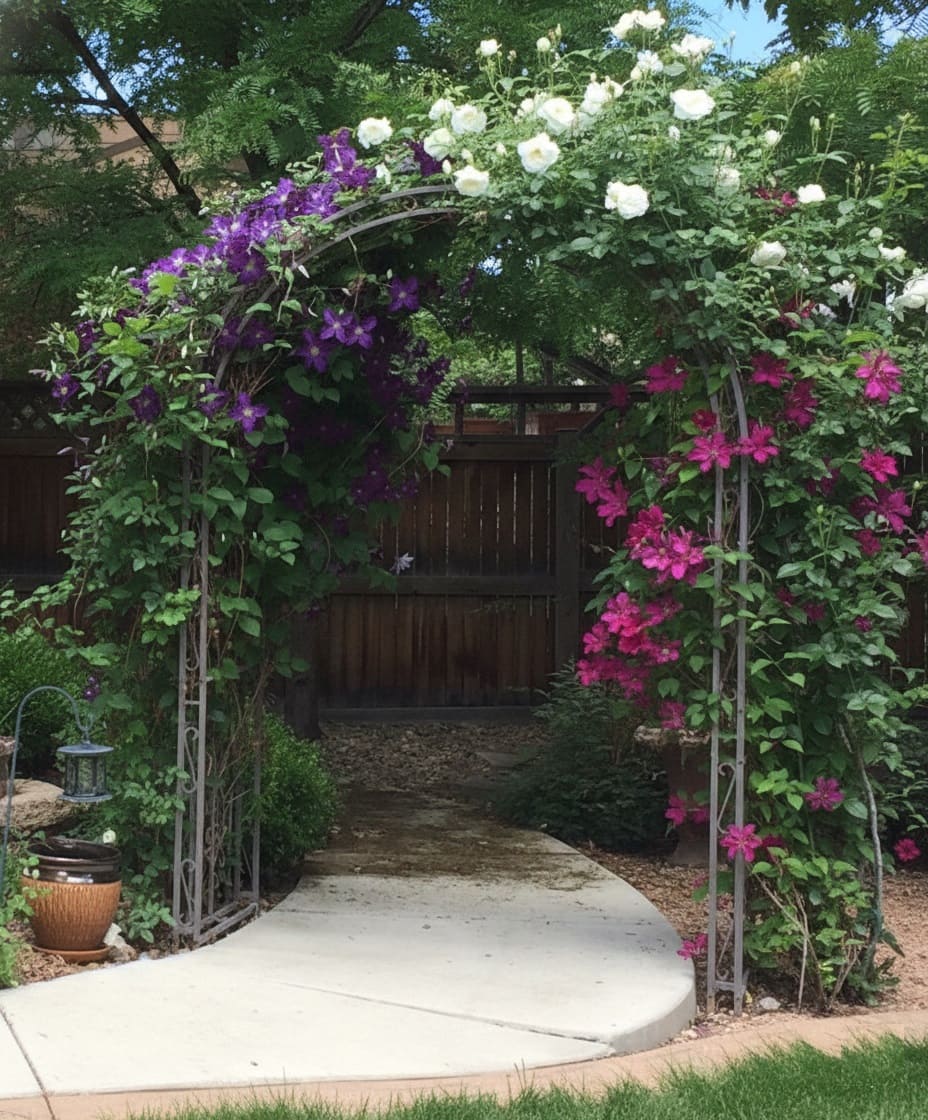
An obelisk, tuteur, or simple trellis puts a clematis or climbing rose into 2 square feet of ground. In a narrow bed, vertical space is the only space you have.
- Go big instead of small.

In a tiny yard, three large plants read as generous while 15 small ones read as fussy. Hydrangeas and large grasses blur a boundary fence and make the space feel deeper.
- Sink containers into the bed.

A pot dropped into a gap gives you instant height and somewhere to swap seasonal color without disturbing anything’s roots.
- The walkway strip.

A 2-foot (60 cm) ribbon of low perennials softens hard paving. Choose things that shrug off reflected heat and a stray footstep: creeping thyme, sedum, dwarf catmint.
Where to put a bed when the edges are already full
- Island bed.

A free-standing bed out in the lawn, seen from every side. Nothing breaks up a flat expanse of grass as well, and it wants plants that look good from behind as well as in front — grasses, coneflower, false indigo, low shrubs.
- Along a fence or wall.

A fence hands you a backdrop for free, which is what lets a narrower bed still look intentional — the planting isn’t doing all the work alone.
A dark stain behind pale flowers is one of the cheapest upgrades in a yard, and the vertical surface takes a climbing rose or clematis.
- Shrink the lawn.

Rather than a thin border around a wide lawn, invert it: deep beds with a mown grass path winding between them.
More planting, less mowing, and a yard that reads as a garden instead of a green rectangle with a fringe.
- Mailbox or lamppost bed.

A 3-foot (0.9 m) circle around something fixed is the smallest useful bed there is, and it makes a good first project.
Edge it so the mower has a clean line, and choose plants that shrug off heat bouncing off the pavement.
Matching the bed to the house
- Plants packed close enough to lean on each other, mixed heights, self-seeders left where they land. Roses, foxglove, hollyhock, lady’s mantle, larkspur. Suits older houses and porches, and the one rule is to leave no bare soil showing.

- Mirror-image beds flanking the door, clipped evergreen anchors, and the same few plants repeated on both sides. It sits well against colonials and anything symmetrical, and it’s the highest-maintenance look here, because the effect lives or dies on the shearing.

- Restraint instead of variety: three or four species in repeated blocks, crisp geometric edges, and texture doing the work that color usually does. Mondo grass, boxwood spheres, feather reed grass, sedum. Best against clean-lined architecture.

- Bold foliage.

Large leaves can carry a bed by themselves — canna, elephant ear, and banana in sun, hosta and rodgersia in shade. In cold zones, treat the tender ones as annuals or lift them in fall.
Beds with a job to do
- Cut-flower row.

Long and narrow so you can reach every stem, planted heavily with zinnias, cosmos, dahlias, and snapdragons. Cutting them makes them bloom harder.
- A pollinator bed done properly

Nectar is only half of it. Add host plants — milkweed for monarchs, dill and parsley for swallowtails, violets for fritillaries — or you’re running a diner with no nursery attached.
- Rainbow chard, purple kale, and bronze fennel hold their own beside flowers, and nasturtium and calendula are ornamental and edible at once.

- Moon garden.

White flowers and silver foliage next to a porch, for people who only see the yard after dark. Flowering tobacco and moonflower add scent at night.
- A sensory bed for kids.

Lamb’s ear to touch, scented geranium to rub, sunflowers to measure themselves against, zinnias they’re allowed to cut.
- Something happening in every season.

Plan the calendar rather than the peak: bulbs for early spring, perennials through summer, asters and mums for fall, and an evergreen or a shrub with good bark so the bed isn’t blank in February.
It’s the hardest of these to get right and the one you’ll notice most.
Building the bed: a realistic weekend
Here’s the order that works, whether the bed is 20 square feet or 200.
- Mark the shape. Hose on the ground, live with it for a day, then cut the line with a half-moon edger, or with a spade held straight up and down.
- Get rid of the grass. See the table below — this is the step that decides your timeline.
- Feed the soil, don’t rebuild it. Spread 2 to 3 inches (5–8 cm) of compost and fork it into the top 8 inches (20 cm). On clay, add coarse horticultural grit, never builder’s sand, which combines with clay into something close to concrete. And never work clay while it’s wet; wait until it crumbles underfoot.
- Set the pots out before you dig anything. Space them by mature width, not by how big they are today, then stand back and look. Yes, it will look sparse. That’s correct.
- Plant properly. Soak each pot first, dig a hole as deep as the rootball and half again as wide, tease the roots if they’re circling, and set the crown level with the surrounding soil. Planting too deep is the most common reason a healthy plant simply never takes off.
- Water it in hard. Even if rain is forecast. Soaking collapses the soil in around the rootball and closes the gaps where fine roots would otherwise sit in dry air and die back.
- Mulch 2 to 3 inches deep, keeping it 1 to 2 inches (2.5–5 cm) off every stem. Mulch piled against a crown traps moisture where you don’t want it and invites rot.
Learn How to Build a Raised Garden Bed: A Complete Step-by-Step Guide
The three ways to clear the grass, and what each one costs you in time:
| Method | Wait before planting | Best for |
| Cut and lift the sod | Same day | Small beds, and any time you want to plant this weekend |
| Smother with cardboard and compost | 2 to 3 months | Any size, no digging — start in summer to plant in fall, or in fall to plant in spring |
| Till it in | Same day, but expect regrowth | Rarely worth it, since tilling chops perennial weed roots into new plants |
Learn How to Get Rid of Weeds Naturally & Keep Them from Coming Back
Then the math nobody gives you. Plan on roughly one low or mid-layer perennial per 2 to 3 square feet, and one shrub or large structural plant per 9 square feet (about 1 m²).
A 4-by-10-foot bed — 40 square feet, or 3.7 m² — comes out around 15 to 20 perennials plus two or three anchors.
That’s more plants than most people expect and less money than most people fear, because a good share of year one can be filled with cheap annuals.
Pot size matters far less than count. A quart-size perennial costs a fraction of a gallon and usually catches up within a season or two, so three quarts beat one gallon nearly every time.
Save the big pots for the one or two anchor plants you want to register immediately.
What the first three years actually look like
There’s an old gardening saying about perennials: first year sleep, second year creep, third year leap. It’s accurate, and it catches people off guard.
Year one is genuinely underwhelming. The bed you pictured has 18 inches of bare mulch between every plant, half of them flower for two weeks and quit, and by August it looks less like a garden than a plan for one.
Nothing is wrong — those plants are building roots. The temptation is to squeeze in more perennials to close the gaps, and that’s exactly the decision you’ll be undoing in year three when everything is crowded and flopping over.
Fill the gaps with annuals instead. Zinnias, cosmos, marigolds, and alyssum are cheap, they bloom for months, and they pull out at the end of the season without a fight.
Watering matters more than anything else that first year: about 1 inch (2.5 cm) of water a week including rainfall, delivered in one or two deep soakings rather than a daily sprinkle.
Shallow watering grows shallow roots, and shallow roots are what fail in the first real August.
By year three most perennials hit mature size and some are ready to divide. That’s when the bed starts paying you back.
A clump of catmint or coneflower split in fall gives you three more of a plant that’s already proven it likes your yard, which is exactly how you build the drifts you couldn’t afford at the start.
The maintenance that actually matters
Not much, if the plants were matched to the site in the first place.
- Mulch once a year, spring or fall, topping back up to 2 to 3 inches.
- Skip the fertilizer, mostly. Perennials in decent soil topped with compost each year rarely need feeding, and too much nitrogen buys leafy growth that flops by midsummer at the expense of flowers. Michigan State Extension makes the case that established perennial beds are generally better off without routine feeding.
- Re-cut the edge each spring. Nothing else you can do in 20 minutes makes an average bed look this cared for.
- Deadhead the repeat bloomers — salvia, catmint, roses, zinnias — and let the rest go to seed.
- Cut back in late winter, not fall. Standing stems and seedheads feed birds and shelter insects through the cold. The Xerces Society recommends leaving stems up over winter and cutting them back in spring to varying heights of 8 to 24 inches (20–60 cm), which leaves nest cavities for stem-nesting native bees.
- Divide crowded clumps every three or four years, in fall for spring bloomers and in early spring for late ones.
Three things you’ll see recommended that I’d skip
Landscape fabric under mulch is sold as a permanent fix and behaves like the opposite.
Mulch breaks down on top of it into a perfect seedbed, weeds root down through it, and after a few years the fabric clogs enough to shed water instead of passing it.
NC State Extension now advises pulling it out of planted beds and using mulch alone. Sheet cardboard does the same job for one season and then rots away, which is what you actually want.
Water-retaining crystals test well in a pot on a bench and poorly in a real bed. Compost and mulch do more for soil moisture, cost less, and improve the soil while they work.
Butterfly bush, English ivy, and periwinkle turn up constantly on idea lists, and all three escape gardens.
Butterfly bush is a listed noxious weed in both Oregon and Washington, and the Oregon Department of Agriculture permits only approved cultivars that produce under 2% viable seed.
If you want the butterflies, plant milkweed, joe-pye weed, or a native aster instead. If you want evergreen ground cover in shade, use wild ginger, foamflower, or a native sedge.
Frequently asked questions
How much does it cost to put in a flower bed?
Expect roughly $150 to $400 for a 4-by-10-foot in-ground bed if you supply the labor, with plants making up most of it and compost, mulch, and edging the rest.
Raised beds run higher, since you buy both the frame and the soil to fill it. The cheapest route to a full bed is fewer varieties in bigger groups, divided in a couple of years.
When’s the best time to plant a flower bed?
Fall, in most of the country. The soil is still warm, roots establish while the top growth is dormant, and autumn rain does much of your watering for you.
Spring is a close second. Midsummer planting works only if you’re willing to water almost daily for a month.
What if I already have a bed and it just looks tired?
Work in this order: pull anything you actively dislike, divide what’s overgrown and use the divisions to build bigger groups of your best performers, then top up the compost and mulch and re-cut the edge.
Most tired beds are crowded and scattered rather than starved. More often than not you’ll finish without buying a thing.
Should I do a raised bed or plant in the ground?
If your soil is workable at all, plant in the ground — it holds moisture better, costs less, and lets roots go where they want.
Raised beds earn their cost when soil is genuinely bad or contaminated, drainage is poor, or bending down is hard. For flowers, 10 to 12 inches (25–30 cm) of depth is plenty.
Can I make a flower bed around a tree?
Yes, but don’t pile soil over the roots. Even a few inches of added depth across a mature root flare can slowly suffocate the tree, which is why those tidy raised rings around trunks so often end badly.
Plant small shade-tolerant perennials into the existing soil between the roots, lean on spring bulbs that finish before the canopy fills in, and spread mulch thinly without mounding it against the trunk.
What do I plant if deer and rabbits eat everything?
Aim for aromatic, fuzzy, or toxic foliage: catmint, salvia, lamb’s ear, Russian sage, yarrow, daffodils, ferns, and most ornamental grasses.
Nothing is truly deer-proof in a hard winter, and pressure varies enormously block to block. The dependable pattern is that deer rarely bother with what smells strong or feels furry.
Start with a hose
You don’t need a design degree or a big budget for this. You need a bed sized to your reach, plants matched to the light you actually have, three or five of each instead of one, and mulch over the whole thing.
The part worth holding onto is that this gets easier rather than harder. A vegetable garden resets to bare dirt every spring, but a flower bed compounds — the clumps you put in this fall are the free plants you’ll be dividing to extend the bed later.
So pull the hose out of the shed this weekend and lay a shape on the grass. Look at it from the street. Move it twice. That’s the whole first step, and it costs nothing.
source https://harvestsavvy.com/flower-bed-ideas/


No comments:
Post a Comment