The best cucumbers for pickling are pickling varieties: short, bumpy, unwaxed cucumbers with a small seed cavity, often sold as Kirbys.
If you grow your own, Boston Pickling and National Pickling have proved themselves for generations, Wautoma and Calypso stand up to mildew and mosaic virus, and Pick a Bushel fits in a large pot.
If you buy them, freshness matters as much as type, and a pickler picked this morning will beat a better variety that’s been sitting for a week.
Start with the right cucumber and handle it quickly, and your pickles will keep their crunch, from a single fridge jar to a full canner load for winter.
Quick picks
- At the store or market: pickling cucumbers (often labeled Kirby) 3 to 5 inches (7.5 to 13 cm) long, hard at both ends, with dull rather than waxy skin.
- One variety to grow: Boston Pickling if you want an heirloom, Calypso if you want a disease-resistant hybrid.
- If disease or beetles end your season: Wautoma, or County Fair for bacterial wilt.
- Pots and small beds: Pick a Bushel or Picklebush.
- Persian cucumbers: great for fridge pickles you’ll eat within a few weeks, but use pickling types for canning and fermenting.
- Before packing: cut 1/16 inch (1.5 mm) off the blossom end, and pickle within a day of harvest.
What Makes a Cucumber Good for Pickling
Any cucumber can be pickled, but only some stay crunchy in brine, and the reasons are built into the fruit:
- A small seed cavity.
The flesh around the seeds is the wettest, softest part of a cucumber and the first to break down in a jar.
Linda Ziedrich, author of The Joy of Pickling, rates the size of the seed cavity as the most important trait of all, because that center softens even when the seeds are barely formed.
- Skin that lets brine in but holds its shape.
You’ll read that picklers have thick skins and also thin ones, and both are relative.
Their skin is thinner than a standard slicer’s, which is bred to survive shipping and often waxed, but tougher than an English or Persian cucumber’s, so a spear stays intact for months. Wax rules a cucumber out, since brine can’t get through it.
- Firm, fairly dry flesh.
Watery flesh dilutes the brine and goes limp. A good pickler feels hard from end to end.
- A short, blocky shape.
Picklers are harvested young, when they’re stubby and nearly even in width, so they pack tightly and pickle evenly to the center.
- Bumps and spines.
This is how you spot a pickler. American types have a few large warts with white or black spines, European types a coat of fine prickles, and both rub off with a towel.
- Little bitterness.
A bitter cucumber makes a bitter pickle, so some modern varieties, County Fair among them, are bred to be bitter-free.
- Raw crunch is a poor predictor.
When food writer Veronica Tegen grew several varieties in one bed and pickled each the same way, Boston Pickling, with its small, tight center, was still crisp after months in the fridge.
Muncher, a snacking cucumber with a larger, wetter seed cavity, came out soft enough to sag in the jar.
The Best Pickling Cucumber Varieties to Grow
Brine and spices supply most of a pickle’s flavor, so the right variety for you depends mostly on what tends to go wrong in your garden: disease, beetles, a short summer or too little space.
First, the terms you’ll meet on seed packets:
- Open-pollinated or heirloom:
Seed you save grows into the same variety, provided no other cucumber pollinated the flowers. Heirlooms are older open-pollinated varieties.
- Hybrid or F1:
A deliberate cross, usually made for disease resistance and yield. Saved seed won’t come true, so you buy new seed each year.
- Gynoecious or PF (predominantly female):
Almost every flower is female, so yields come early and heavy, but the plants still need pollen. Packets include some seed of a pollinator variety, often dyed a different color, so plant every seed in the packet.
- Parthenocarpic:
Sets fruit with no pollination at all, so it can grow in a greenhouse or under row cover all season.
Kept away from other cucumbers, the fruit is nearly seedless, which is ideal for pickles. If bees do pollinate it, the fruit can turn seedy and misshapen.
- Disease codes:
Letters such as ALS (angular leaf spot), CMV (cucumber mosaic virus), DM (downy mildew) and PM (powdery mildew) list what a variety resists. Resistance cuts losses but doesn’t make a plant immune.
Whatever you choose, picklers need the same basics. Sow them once the soil has warmed to about 70°F (21°C), give vining types a trellis and water deeply and evenly, since drought stress leads to bitter, misshapen fruit.
Plant enough vines to give you a jar’s worth at each picking.
If you just want a recommendation for your situation, start here:
| Your situation | Varieties to try | Why they fit |
| First pickling garden | Boston Pickling, National Pickling | Proven heirlooms with small seeds; you can save the seed |
| Mildew or mosaic virus kills your vines | Wautoma, Calypso | Each resists six common cucumber diseases |
| Cucumber beetles and bacterial wilt | County Fair | Wilt-resistant, and needs no bees, so it can stay under row cover |
| Pots, balconies and small beds | Pick a Bushel, Picklebush | Compact plants spreading about 2 feet (60 cm) |
| Short or cool summers | Northern Pickling, Bushy | First fruit in under 50 days |
| Greenhouse, tunnel or row cover | Little Leaf H-19, Excelsior | Set fruit without pollination |
| Cornichons and tiny whole gherkins | Parisian Pickling, Vorgebirgstrauben | Prickly European types bred to be picked small |
 Here are 20 Best Mini Cucumbers to Grow (Varieties + Care Guide)
Heirloom and Open-Pollinated Picklers
Grow these if you’d like to save your own seed. Several have been filling pickle jars for a century or more.
- Boston Pickling:
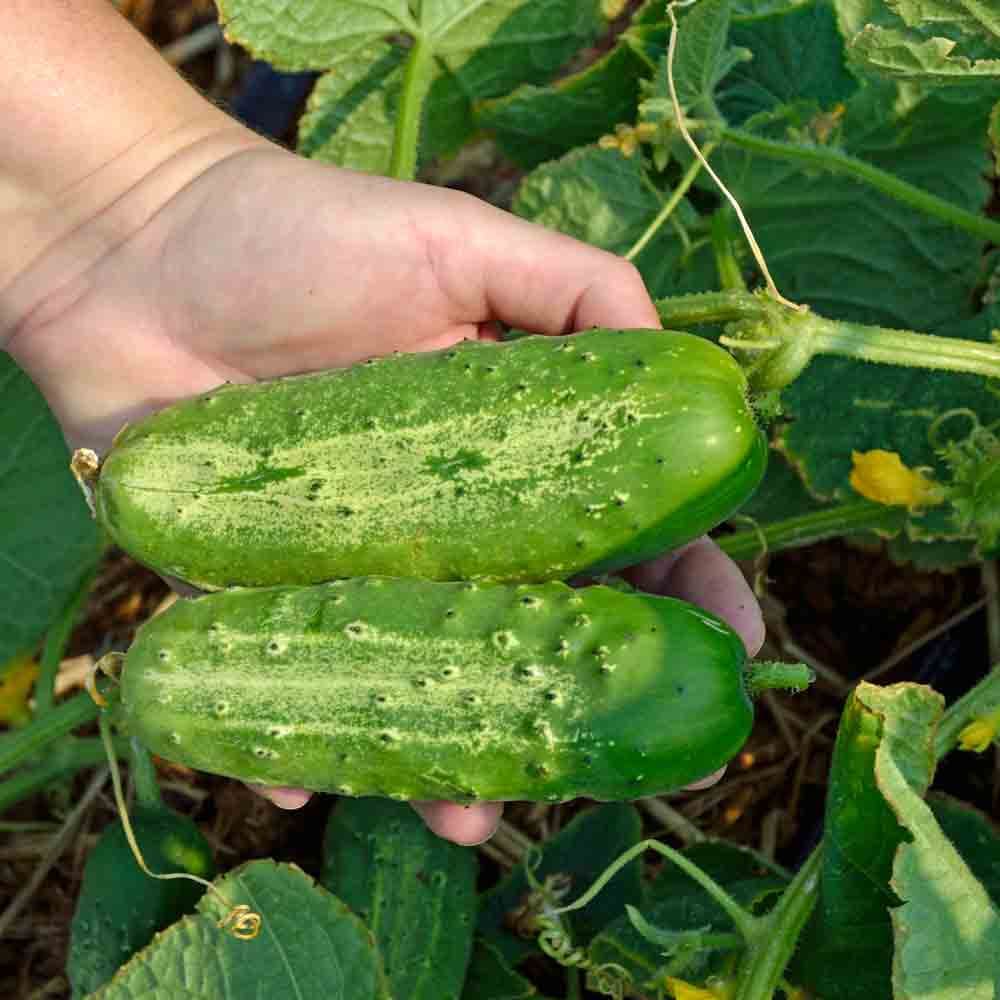
Introduced in 1880 and still a favorite with home gardeners. Its blunt, black-spined fruits have small seeds, and the vines keep bearing as long as you keep picking, starting at about 55 days.
- National Pickling:
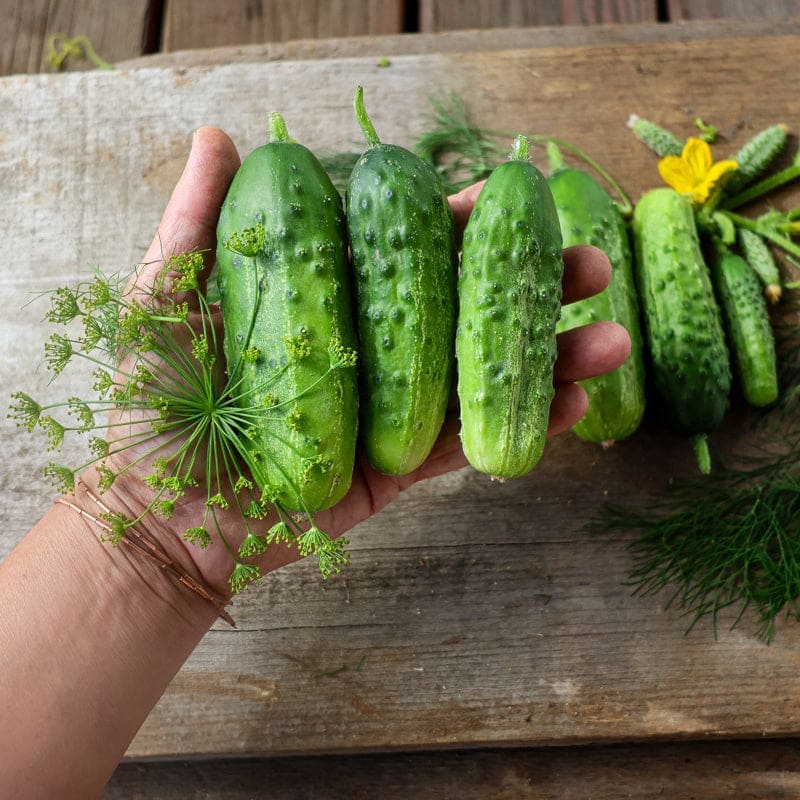
Bred at the Michigan Agricultural Experiment Station for the pickle-packing industry in the 1920s. The straight, medium-green fruits are thick enough for proper spears and ready in about 55 days.
- Chicago Pickling:
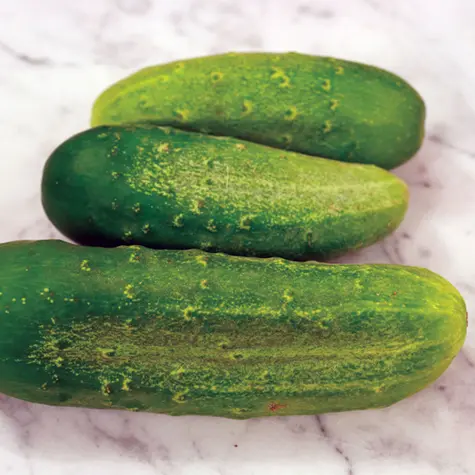
An American heirloom from 1888, black-spined and resistant to scab and cucumber mosaic virus. Pick it at 2 inches (5 cm) for gherkins or let it reach about 4 inches (10 cm) for chips.
- Wisconsin SMR 58:
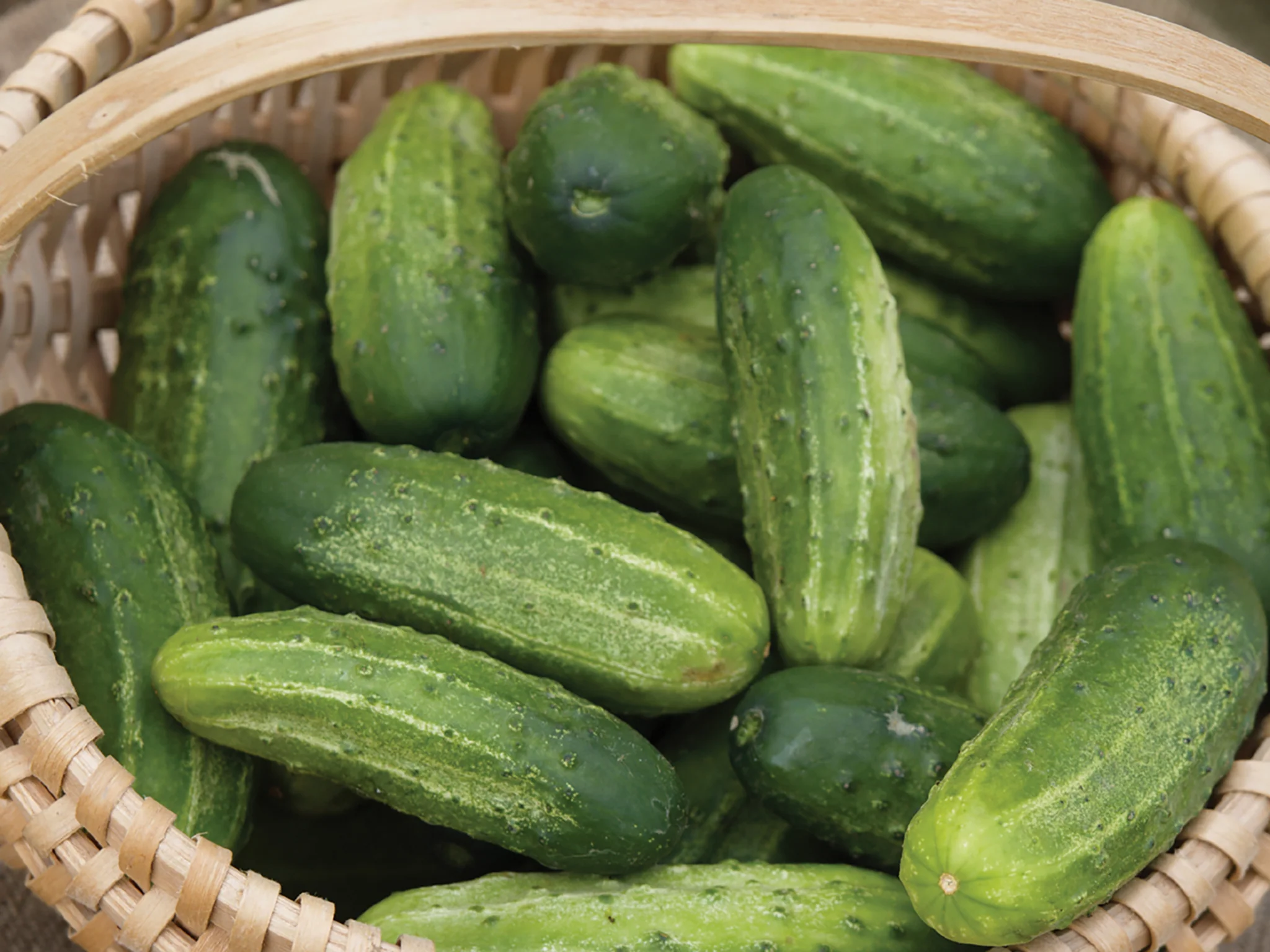
A descendant of the University of Wisconsin’s SMR line, whose initials stand for scab and mosaic resistant. It yields heavily, and its longer, slightly tapered fruits grow straightest on a trellis.
- Wautoma:
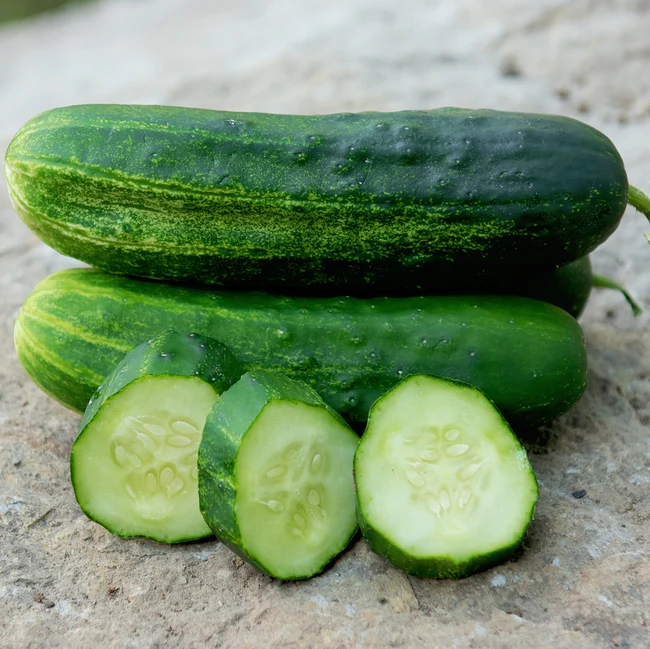
Released in 1985 by the USDA and the University of Wisconsin, and one of the strongest open-pollinated choices where disease is the problem.
It resists six diseases, including both mildews, scab and mosaic virus, and its slender, white-spined fruits are ready in about 60 days.
- Northern Pickling:
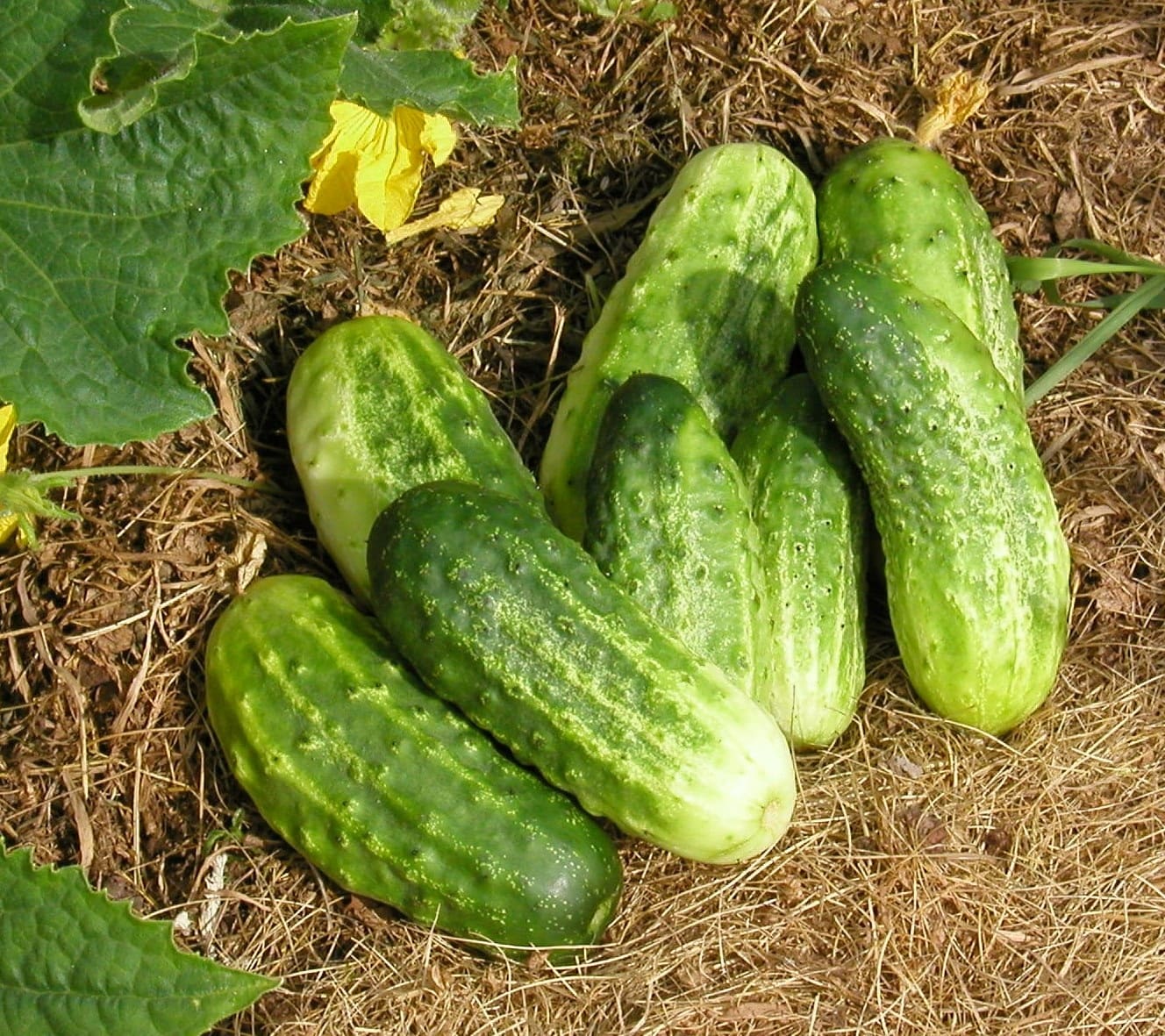
From the Maine Agricultural Experiment Station and suited to New England and Canada. Its compact vines set fruit at almost every leaf joint, with the first pickles ready in about 48 days.
- Sumter:
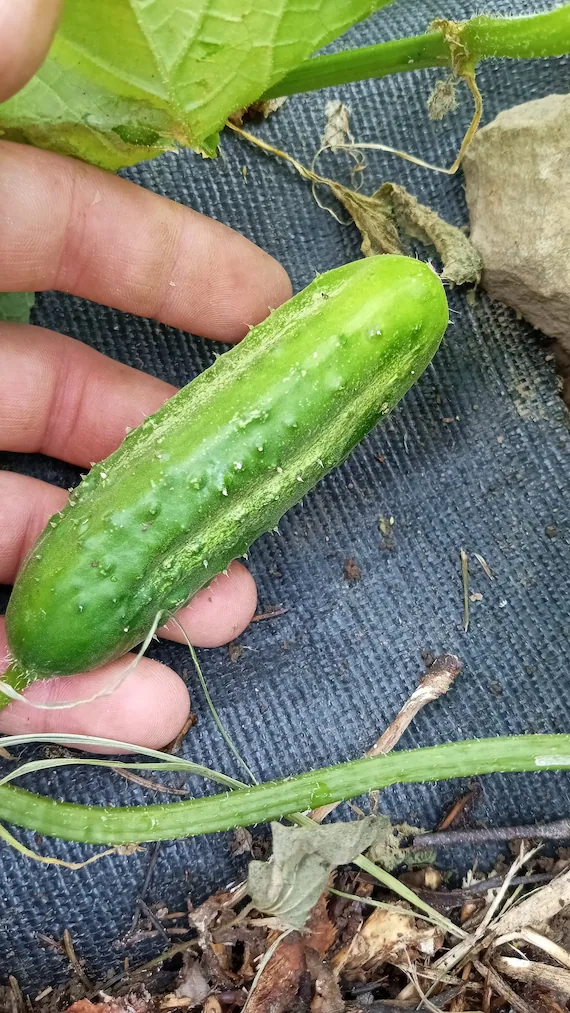
Released in 1973 by Clemson University’s experiment station in South Carolina. Its white-spined fruits have a small seed cavity, and it resists seven diseases, including both mildews, anthracnose and watermelon mosaic virus.
It’s also one parent of the Carolina hybrid below.
- Bush Pickle:
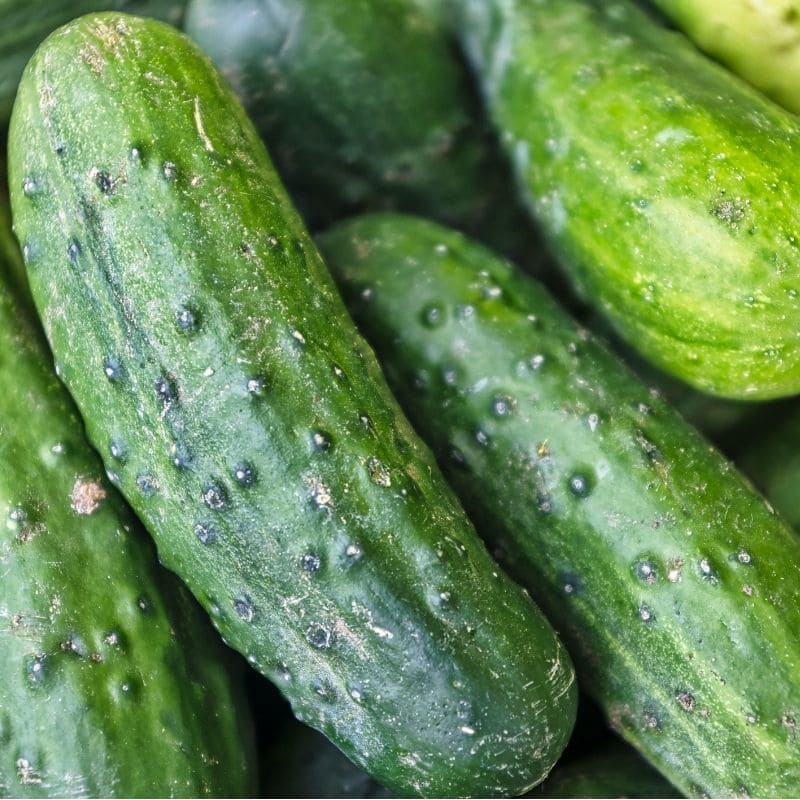
An open-pollinated bush type, not the same as Picklebush below. It sets its crop over a shorter window than vining picklers, which suits you if you’d rather can one or two big batches than a jar at a time.
- Homemade Pickles:
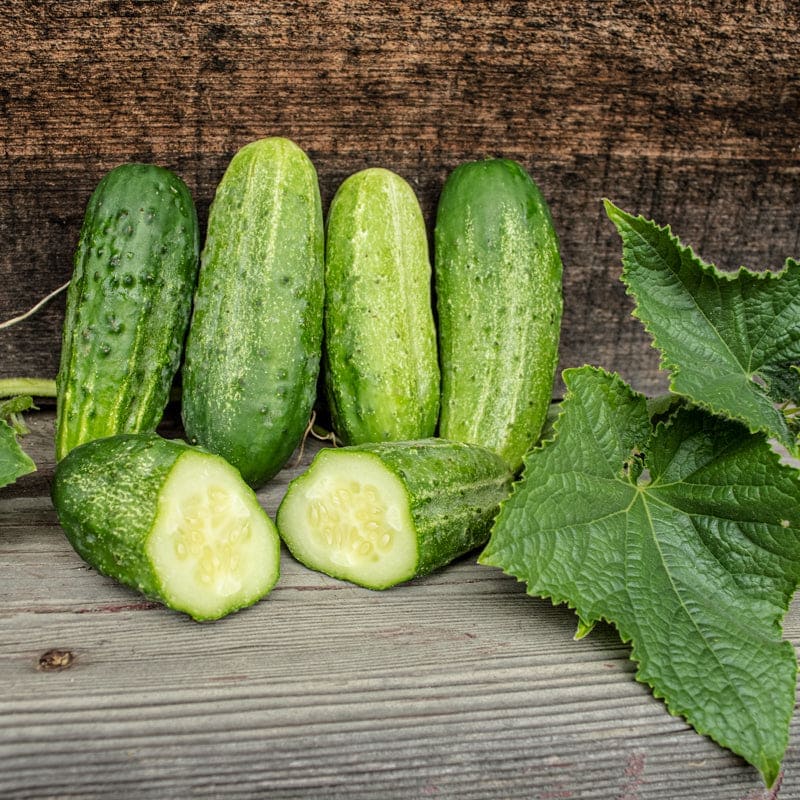
An open-pollinated variety on 4- to 5-foot (1.2 to 1.5 m) vines.
It stays crisp anywhere from 1½ to 6 inches (4 to 15 cm) long, so a few missed days of picking don’t cost you the harvest, and it resists angular leaf spot, powdery mildew and cucumber mosaic virus.
- Double Yield:
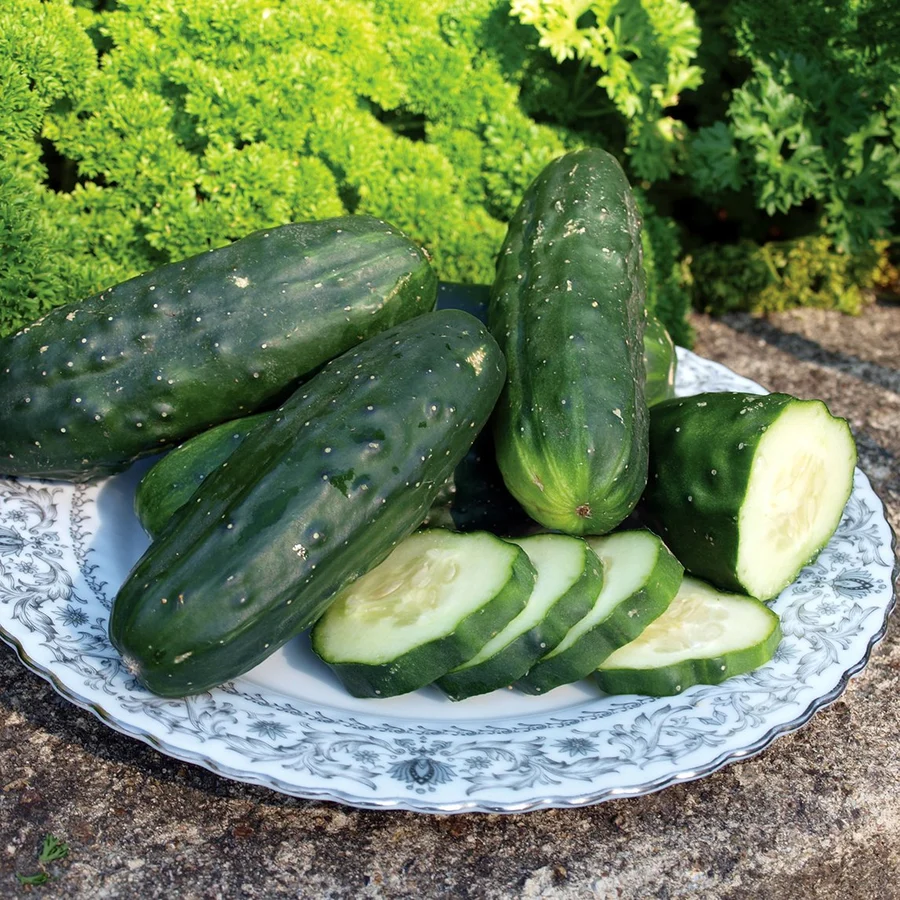
An early variety from 1924 that often sets two cucumbers at a leaf joint, with picking starting around 50 days.
- Bushy:
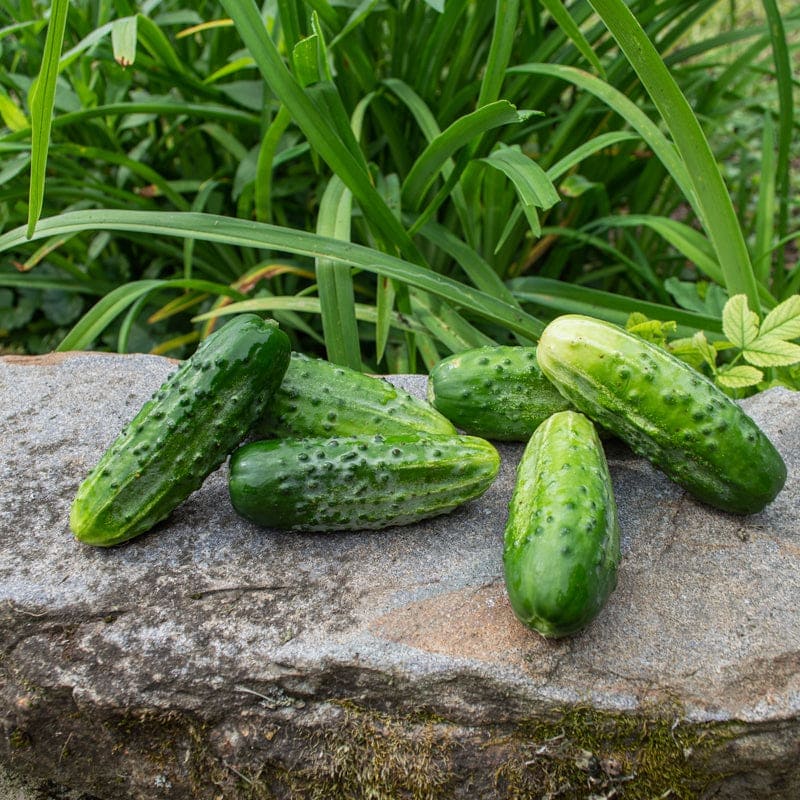
A cold-tolerant Russian variety on short 3- to 5-foot (0.9 to 1.5 m) vines that starts bearing in under 50 days.
- Little Leaf H-19:
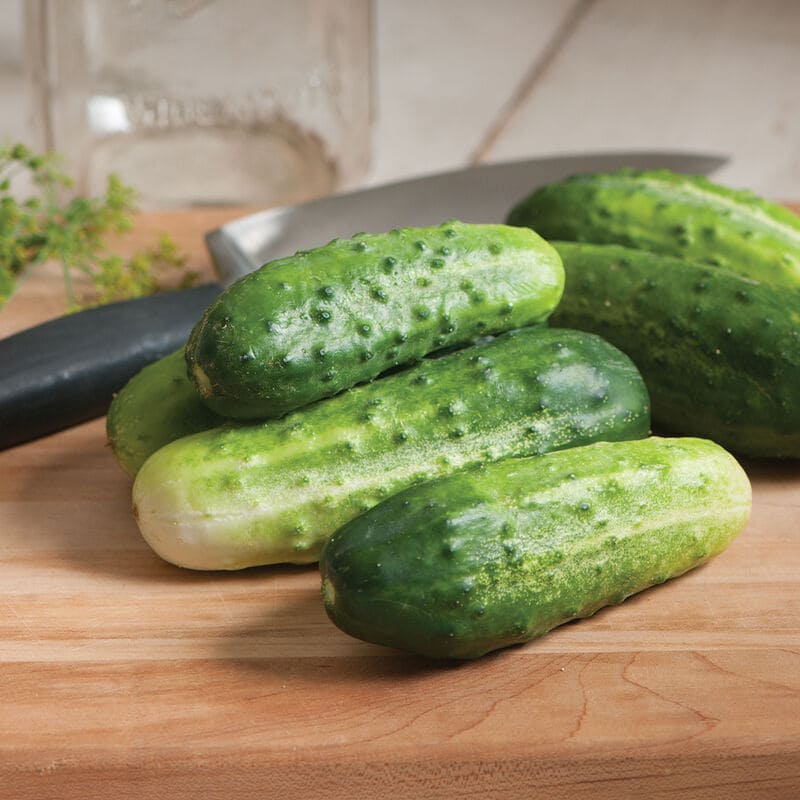
Released by the University of Arkansas in 1991. It’s open-pollinated yet can set fruit without bees, and its small leaves and compact, branching vines make the 3- to 4-inch (7.5 to 10 cm) fruits easy to find.
Hybrids Bred for Disease Resistance and Big Harvests
- Calypso:
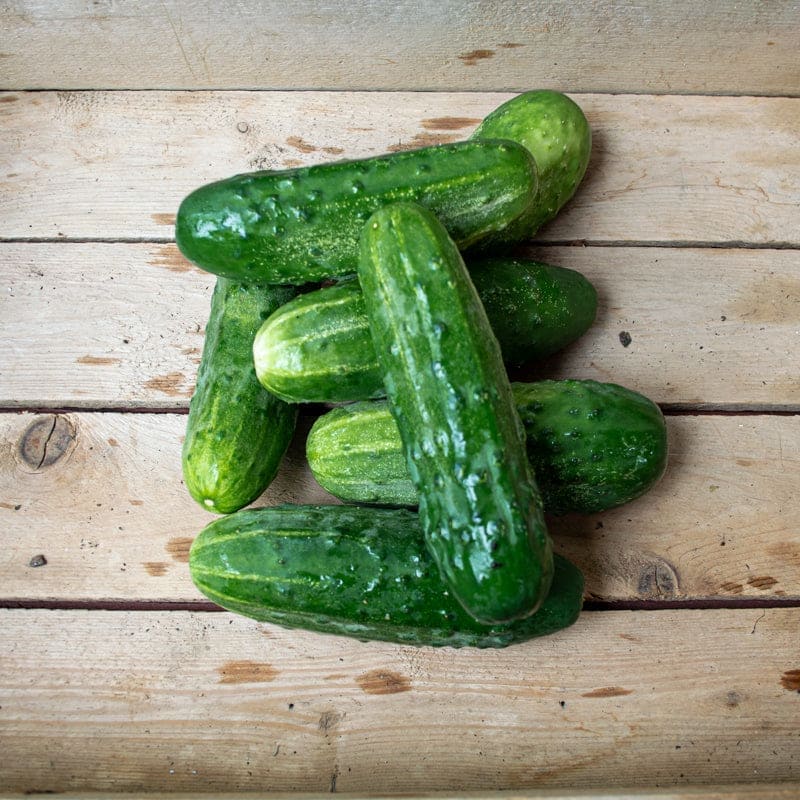
Bred at North Carolina State University and long a mainstay of commercial pickle fields. It resists six common cucumber diseases, and its mostly female flowers give it heavy yields. Pick at about 3 inches (7.5 cm).
- County Fair:
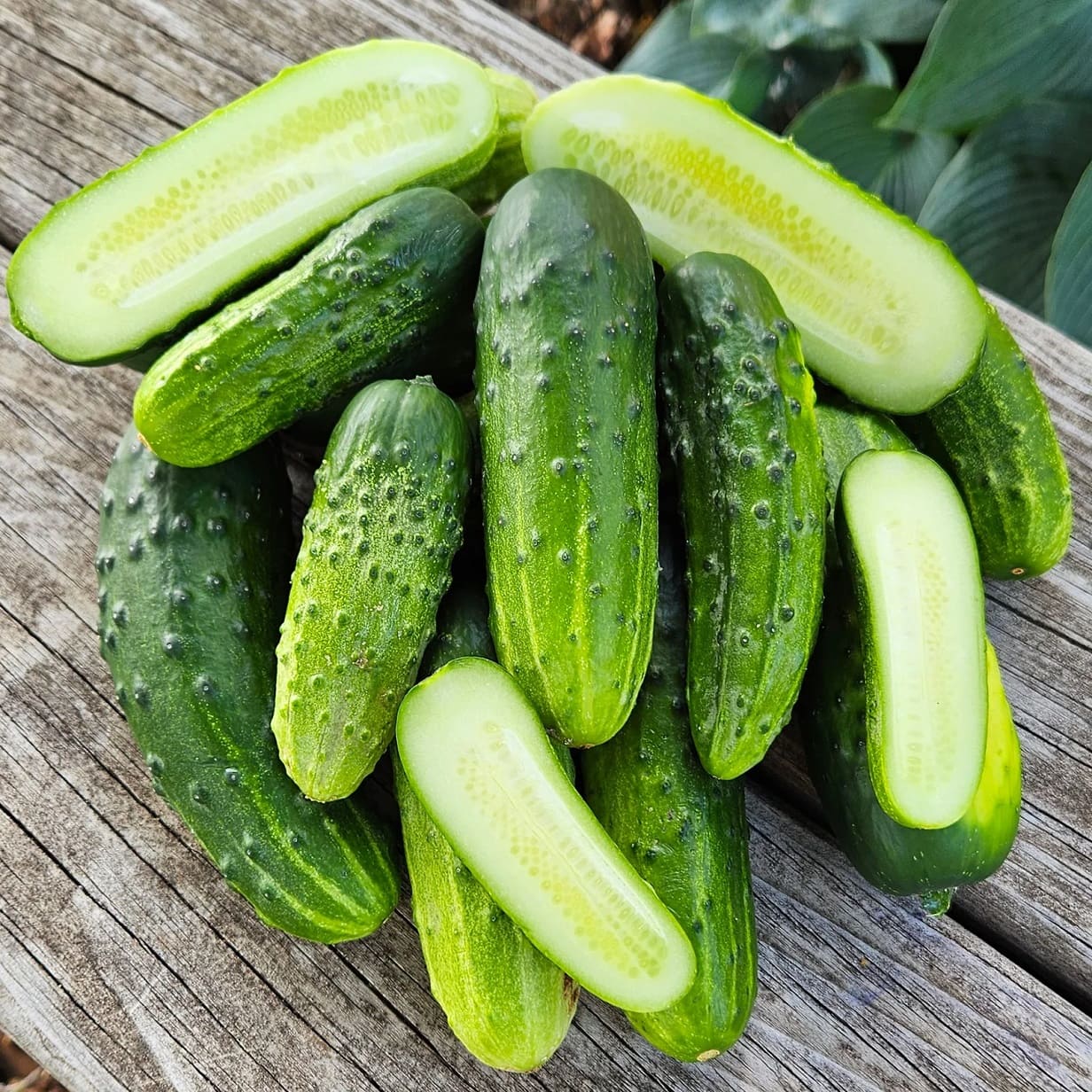
Like Wautoma, bred by the USDA and the University of Wisconsin. University of Maryland Extension calls it the only cucumber on the market that resists bacterial wilt, a disease spread by cucumber beetles that kills whole vines.
Because it’s parthenocarpic, it can stay under row cover all season, out of the beetles’ reach, and it’s nearly seedless when grown apart from other cucumbers. Pick at 3 to 4 inches. It’s also sold as County Fair 83 or County Fair Improved.
- Carolina:
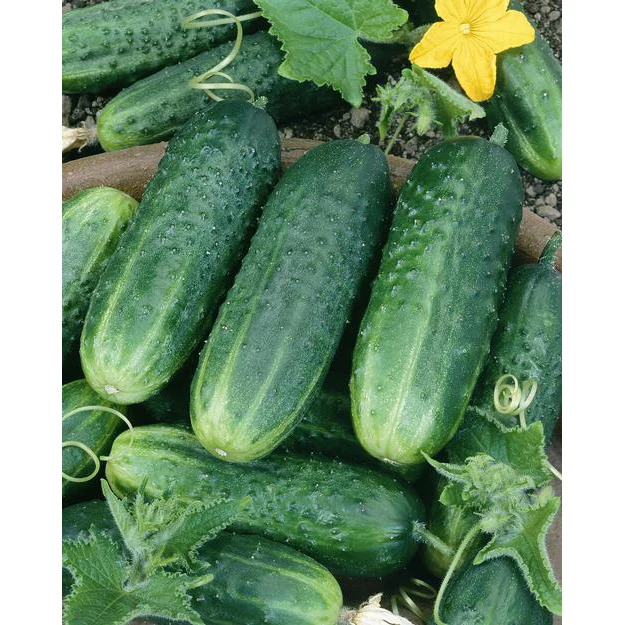
A 1973 Clemson hybrid closely related to Calypso, with white-spined fruits, a small seed cavity and resistance to seven diseases.
- Regal:
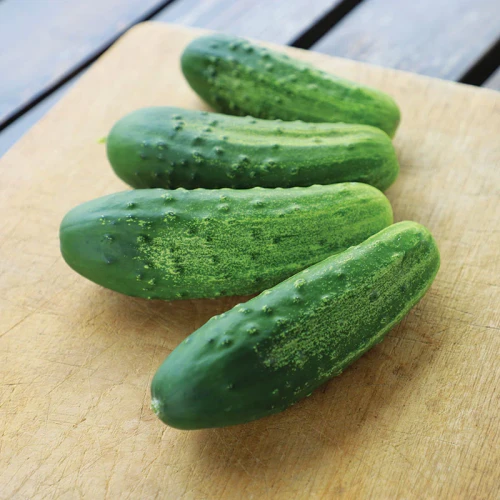
A semi-dwarf North Carolina State hybrid whose fruits run longer than Calypso’s, which makes it a good pick for chips and spears.
- Sassy and Alibi:
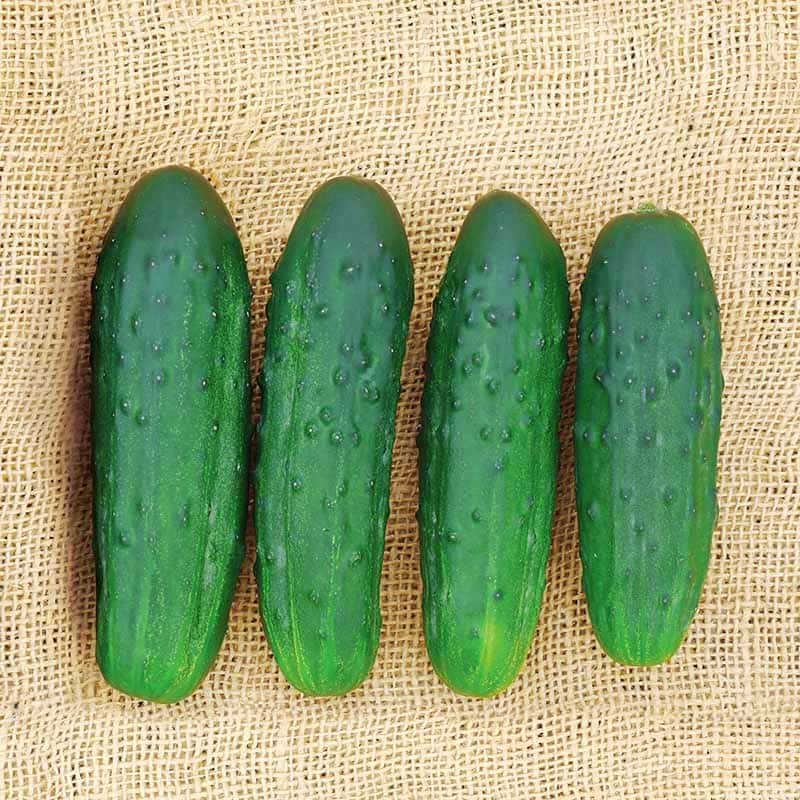
Two hybrids bred mostly for female flowers and small seed cavities. Sassy bears dark green fruits on long vines.
Alibi has shorter vines and good brining quality; pick it at 2 to 4 inches, because its tapered fruits bloat if left longer.
- Burpee Pickler and Fancipak:
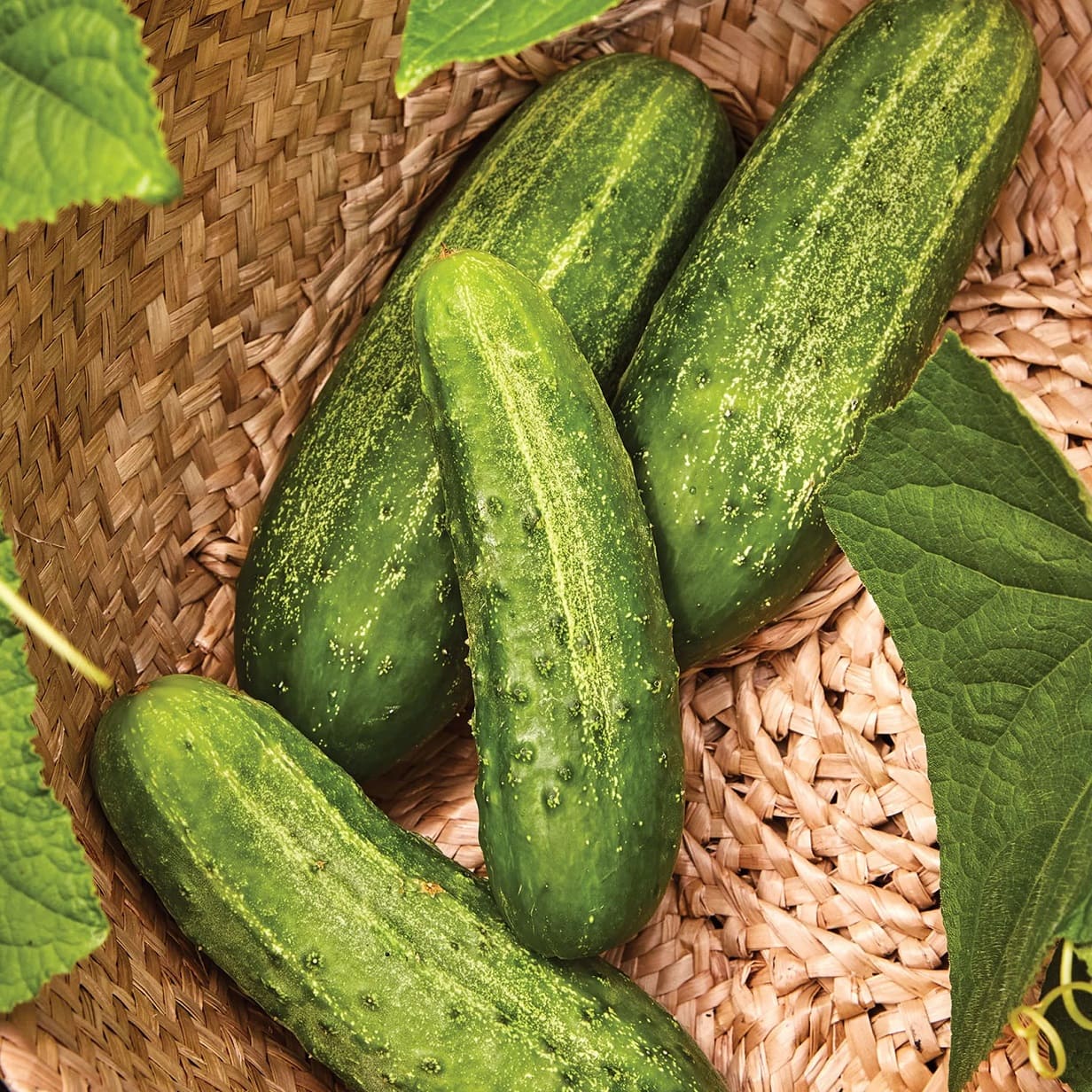
Two dependable older hybrids. Burpee Pickler, from 1957, bears blocky, black-spined fruits and tolerates cucumber mosaic virus. Fancipak, from 1985, was bred for warm regions and produces few crooked or stubby fruits.
- Endeavor:
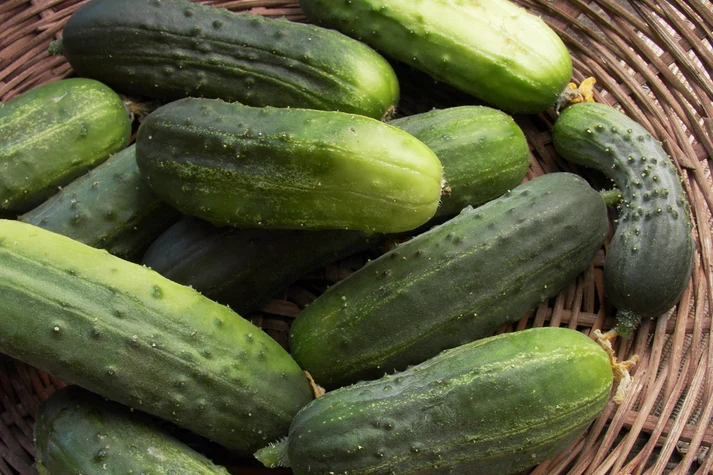
A gynoecious hybrid from USDA and North Carolina State breeders with the same six-disease resistance as Calypso. Some seed companies sell it simply as a Kirby.
- Pick a Bushel:
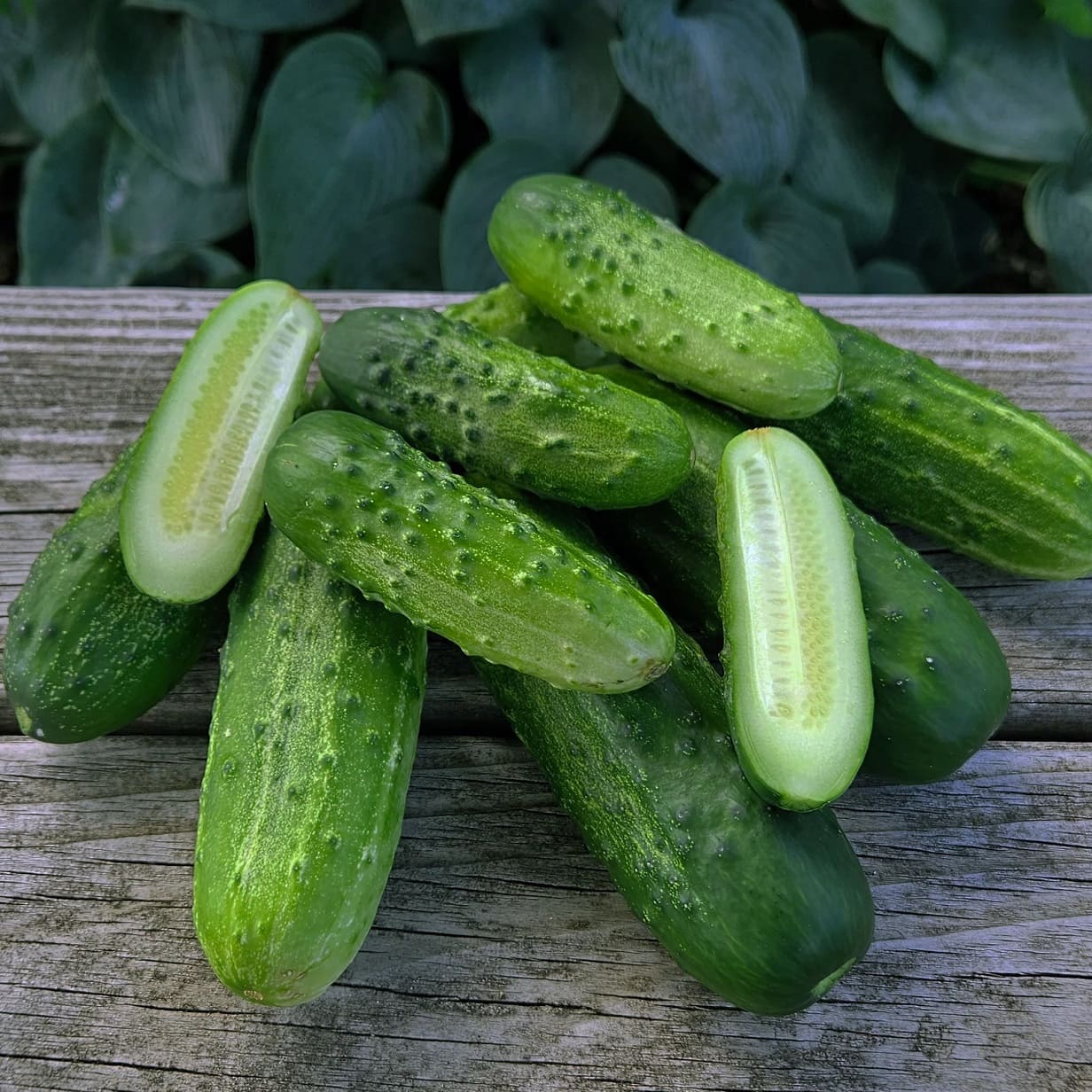
A hybrid that won a regional All-America Selections award in 2014. Its semi-bush plants spread only about 2 feet yet bear 3- to 5-inch fruits heavily, which makes it a good choice for a large container.
- Picklebush:
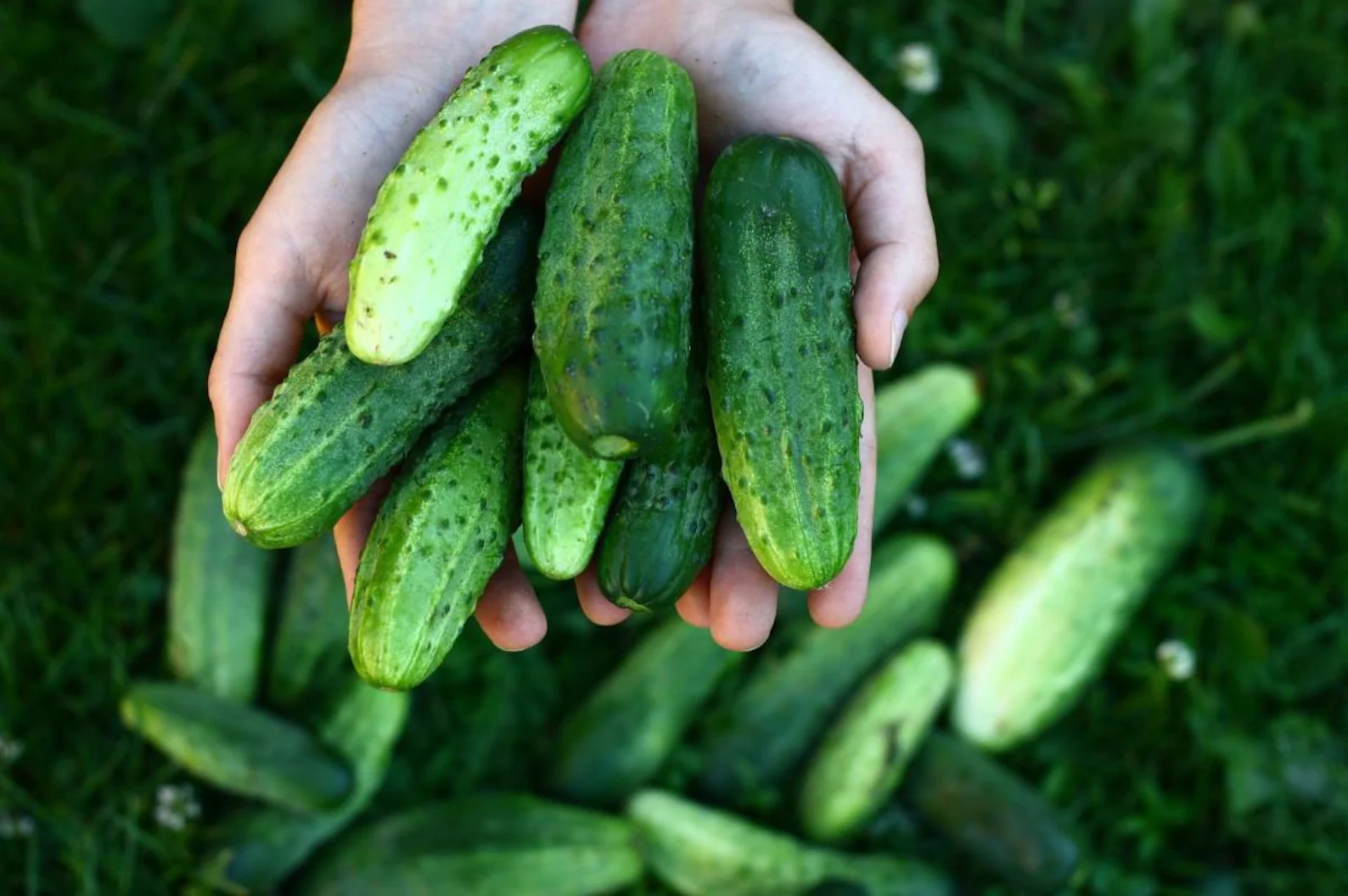
A Burpee variety with vines just 20 to 24 inches (50 to 60 cm) long, small enough for a balcony pot, bearing fruits about 4 inches long in roughly 52 days.
- Fresh Pickles and Supremo:
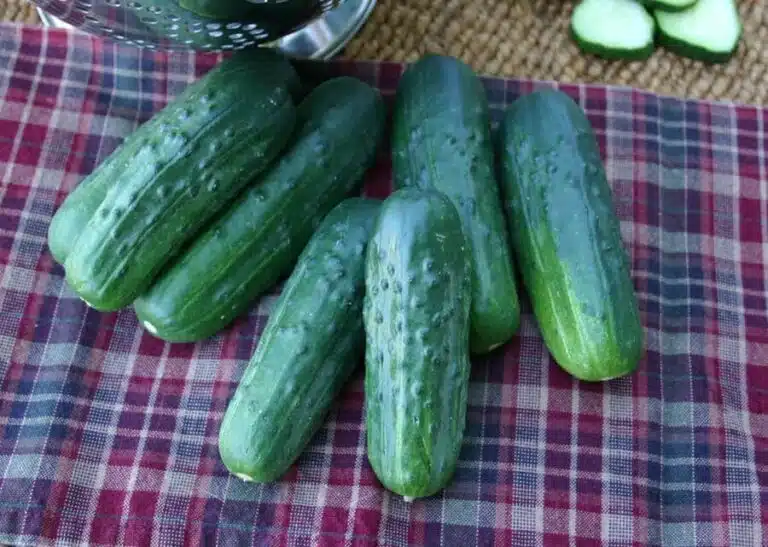
Two compact Burpee hybrids. Fresh Pickles grows only 12 to 15 inches (30 to 38 cm) tall and resists downy mildew, a plus in humid summers. Supremo bears 3- to 4-inch fruits with small seed cavities on vines 2 to 3 feet (60 to 90 cm) long.
- Excelsior:
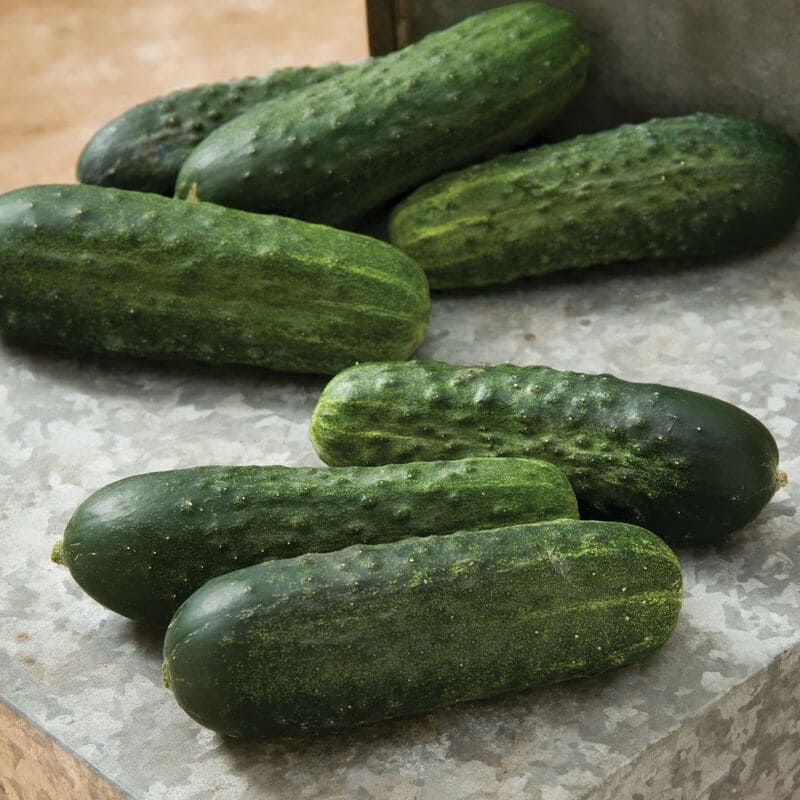
A parthenocarpic hybrid bred for greenhouses and tunnels, with blocky 4- to 5-inch (10 to 13 cm) fruits and strong scab resistance. Since it needs no bees, it’s made for growing under cover.
- Harmonie and Cool Breeze:
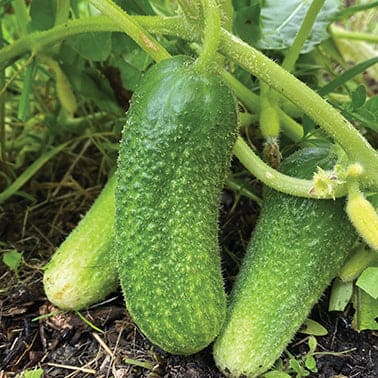
Two more parthenocarpic hybrids that set fruit without bees. Harmonie is very early, with firm, straight fruits and resistance to powdery mildew and scab. Cool Breeze has fine spines and thin skin and starts bearing in about 45 days.
Gherkins and Cornichons
For tiny whole pickles, European pickling types are bred to be picked at finger length, and their fine prickles rub off easily. In the UK and much of Europe, pickling cucumbers of every size are sold simply as gherkins.
- Parisian Pickling (also sold as Improved Bourbonne):
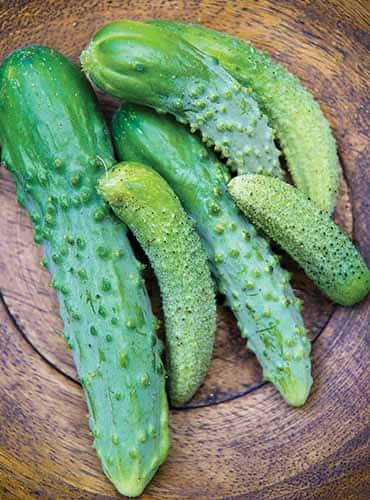
A French heirloom introduced to American gardeners in 1892. Pick it at about 2 inches for classic cornichons, or let it grow for ordinary pickles. Fin de Meaux, another French cornichon variety, is grown the same way.
Don’t confuse either with Parisian Gherkin, a semi-vining hybrid that won an All-America Selections award in 2015 and grows well in a staked container.
- Vorgebirgstrauben:
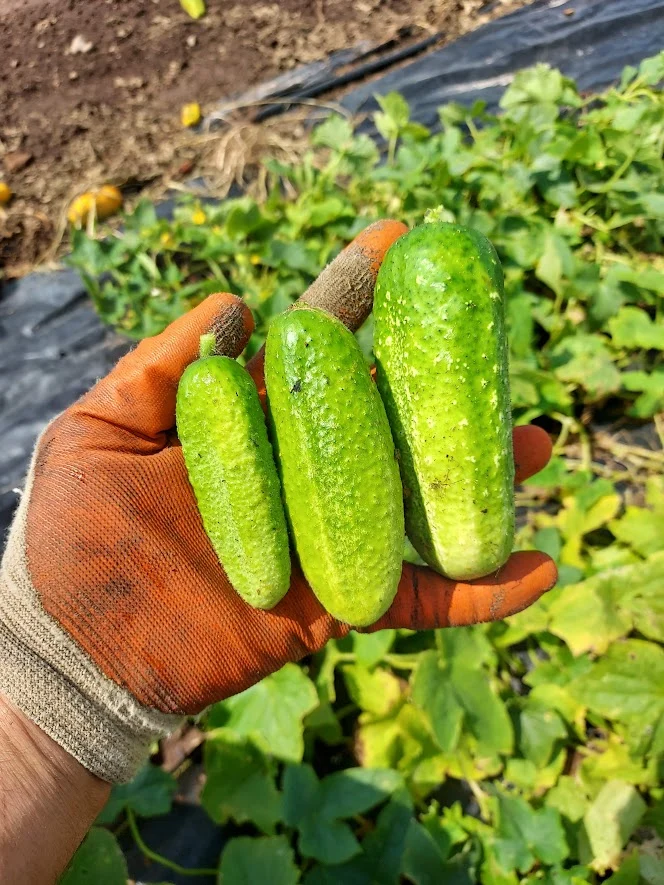
A German heirloom, listed as Rhinish Pickle by some US seed companies. It’s thicker than the French types, so pick it at 3 to 4 inches before the seeds fill out.
- Hokus:
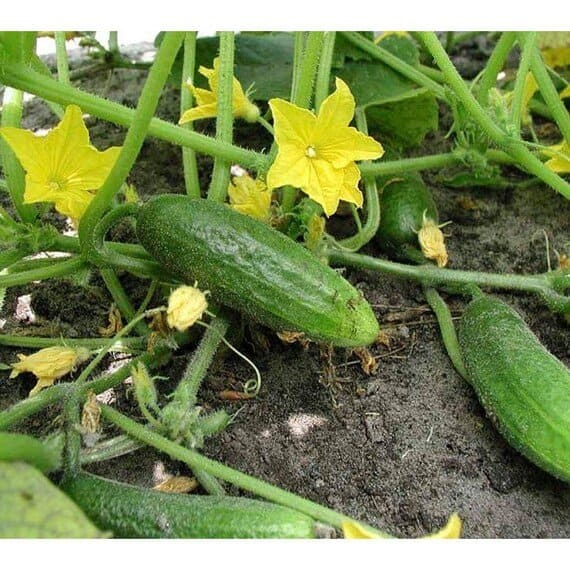
An heirloom gherkin with very uniform fruits and very few seeds. Pick at 1 to 2 inches (2.5 to 5 cm) to pickle whole.
- Vert de Massy:
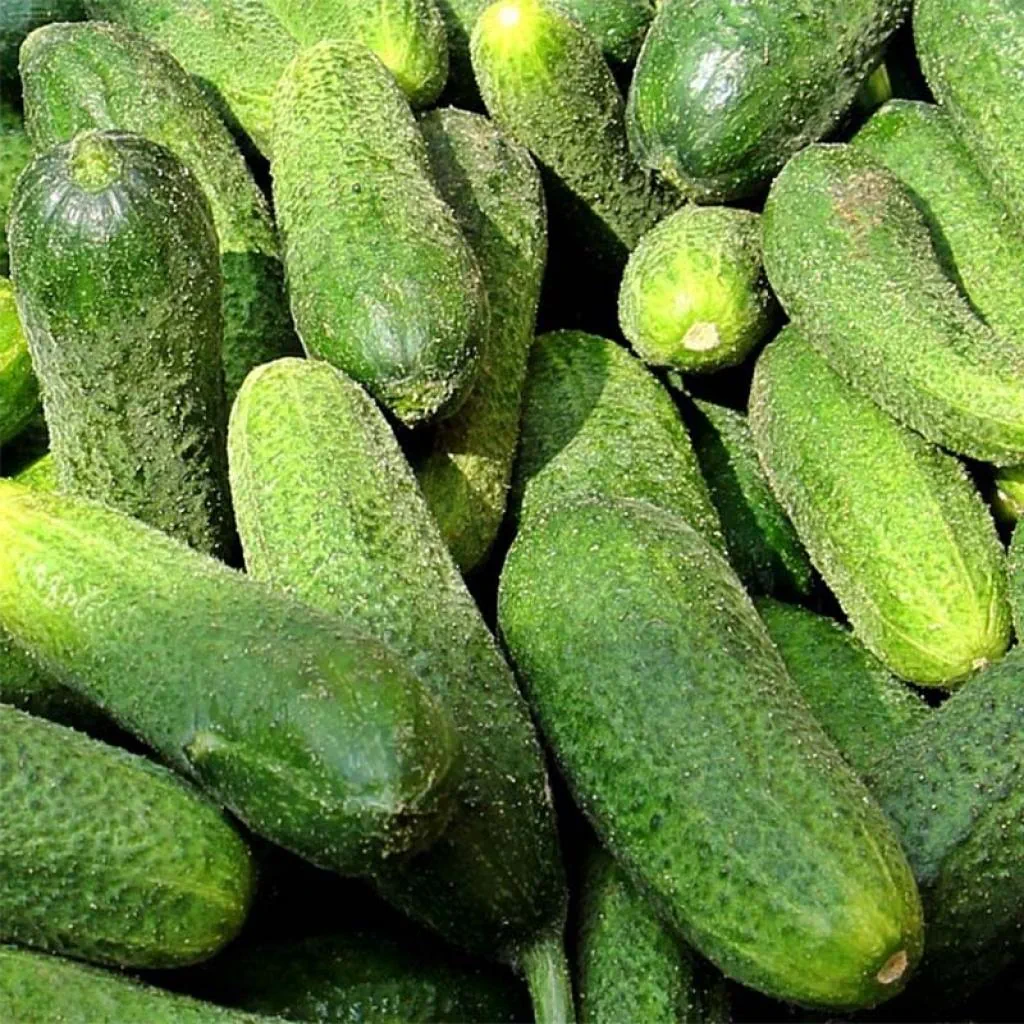
A black-spined French cornichon type with scab tolerance, ready in about 53 days.
Colorful and Unusual Picklers
- Boothby’s Blond: a Maine family heirloom with creamy yellow skin and black spines. Pick it at about 4 inches for pickles, and give it a trellis and good airflow, since it’s prone to powdery mildew.
- Salt and Pepper: a white-skinned pickler with black spines and powdery mildew resistance. Picked small, it makes a striking jar.
- Miniature White: an open-pollinated variety on vines up to 3 feet (90 cm), with small, creamy white fruits that don’t need peeling, ready in 50 to 55 days.
- Lemon: a round, yellow heirloom from the 1890s. It’s really a salad cucumber, so pick it young, before the seeds toughen, and slice it rather than pickling it whole.
- Mexican sour gherkin (cucamelon): not a true cucumber but a grape-sized relative with a lemony bite. It pickles whole and climbs a trellis readily.
- West Indian gherkin: a spiny, oval cousin of the cucumber from a separate species, and another good candidate for whole pickles.
When to Pick Cucumbers for Pickling
Pickling cucumbers grow quickly, and the size you pick at decides what you can make. Once the vines start bearing, check them every day:
- Cornichons and tiny gherkins: 1½ to 2 inches (4 to 5 cm), roughly thumb length.
- Whole dills: around 4 inches, the size tested dill recipes are written for.
- Spears: 4 to 5 inches, trimmed to fit your jar with the headspace your recipe calls for.
- Chips and slices: judge by width rather than length. Aim for 1¼ to 1¾ inches (3 to 4.5 cm) across; Penn State Extension advises no more than 2 inches across for canned pickles.
- Relish and bread-and-butter pickles: the odd shapes and larger cucumbers, peeled and seeded if the seeds have hardened.
- Yellow or swollen: past pickling. Compost it, or save the seeds if you grow only one open-pollinated variety.
Pick in the cool of the morning, when the fruits are crispest, and cut them off with scissors or pruners rather than twisting, which can damage the vine. Leave about ¼ inch (6 mm) of stem on cucumbers you’ll pickle whole.
Keep picking even when you don’t need the fruit yet, because vines carrying oversized cucumbers slow down.
Buying Cucumbers for Pickling
Without a garden, look for cucumbers labeled pickling or Kirby. Kirby is a market name rather than a variety.
It’s left over from Kirby’s Stays Green, a pickler sold by Philadelphia seedsman Norval Kirby in the 1920s, and now covers any short, bumpy pickling cucumber.
Picklers are a summer crop, and farmers markets are the most dependable place to find them. Ask when they were picked; that morning or the day before is what you want.
Many growers will set a bag aside if you order a few days ahead, and a cooler in the car keeps them crisp on the way home.
In the bin, look for cucumbers that are:
- 3 to 5 inches long and close to the same size, so every jar pickles evenly.
- Hard at both ends, with no soft spots or wrinkled skin.
- Dull rather than glossy. A shine usually means wax.
- Green to pale green all over. Yellow patches mean overripe fruit with tough seeds.
Other cucumbers in the produce aisle can work too, as long as you match them to the pickle:
| Cucumber | Good for | Not ideal for |
| Pickling (Kirby) | Every style: fridge, canned or fermented | Nothing, if it’s fresh and unwaxed |
| Persian (mini) | Fridge and quick pickles eaten within a few weeks | Fermenting and long storage; softens over time |
| Japanese (kyuri) | Quick rice-vinegar, soy or miso pickles | Canning and fermenting |
| English (hothouse) | Thin slices for quick pickles eaten that week | Spears, canning and fermenting; too watery |
| Standard slicer | Relish, peeled and seeded | Whole pickles and spears; often waxed, with large seeds |
Whatever you buy, treat it as perishable, because cucumbers lose moisture fast at room temperature.
If you can’t pickle them the same day, refrigerate them loosely bagged for no more than a day or two. Cucumbers are chilling-sensitive, and several days in a cold fridge leaves them pitted and soft.
How to Keep Pickles Crisp, From Vine to Jar
A great pickling cucumber can still make a soft pickle. Variety sets the limit, and how quickly and carefully you handle the cucumbers decides how close you get to it.
You’ll need: a sharp knife, a large bowl of ice water and, if you like, calcium chloride (sold as Pickle Crisp).
- Pickle within 24 hours of harvest, sooner if possible. The National Center for Home Food Preservation links long delays between picking and brining to hollow and shriveled pickles.
- Wash the cucumbers gently and set aside any that float. They’re usually hollow inside and better suited to relish.
- Slice 1/16 inch off the blossom end, the end opposite the stem, marked by a small rough dot where the flower fell off. That end carries enzymes that soften pickles, and once it’s gone you don’t need the old trick of adding grape leaves to the jar.
- Taste a sliver from the stem end of each cucumber. Bitterness usually concentrates there, and pickling won’t remove it, so set bitter ones aside.
- Soak the cucumbers in ice water, or layer them with crushed ice, for 4 to 5 hours before packing.
- For extra insurance, add calcium chloride to each jar before sealing. The usual dose is a rounded ⅛ teaspoon per pint (473 ml) jar and a rounded ¼ teaspoon per quart (946 ml) jar, but follow the label on the brand you buy.
Skip alum. It does nothing for quick pickles and isn’t needed in fermented ones.
Pickling lime does firm cucumbers, but use it only in a recipe written for it and rinse exactly as directed, because lime left behind lowers the acidity and can make canned pickles unsafe.
Your method matters too. Refrigerator pickles stay crunchiest because they’re never heated, while a boiling-water bath softens them a little.
Some tested recipes offer low-temperature pasteurization instead: the jars sit in water held at 180 to 185°F (82 to 85°C) for 30 minutes, checked with a thermometer, and the pickles keep more crunch. Use it only in recipes that list it.
For canned pickles, follow a tested recipe exactly and use vinegar of 5% acidity, because changing the proportions of vinegar, water and cucumbers can make pickles unsafe.
Frequently Asked Questions
Are burpless cucumbers good for pickling?
Not for fermented pickles. The National Center for Home Food Preservation says burpless types produce a softening enzyme at their normal mature size, though small ones with undeveloped seeds can work in quick, fresh-pack pickles.
The label is used loosely, and some excellent picklers, Wautoma among them, are sold as burpless, so judge a variety by what it was bred for rather than by that one word.
How many cucumbers do I need for pickles?
Plan on about 2 pounds (0.9 kg) of cucumbers per quart jar, or about 9 pounds (4 kg) for a canner load of 9 pints.
If you’re growing your own, University of California master gardeners estimate roughly 27 pounds (12 kg) from a 15-foot (4.6 m) row of pickling cucumbers over a season, enough for around 13 quarts if you pickle as they ripen.
Will growing different cucumber varieties together ruin my pickles?
No. Cross-pollination changes only the seeds inside this year’s fruit, so you’d notice it only if you saved and planted those seeds, and cucumbers don’t cross with squash or melons at all.
The one exception is parthenocarpic varieties such as County Fair, which stay seedless only if you grow them apart from other cucumbers or under cover.
Where to Start
Don’t plan a canning day around a cucumber you haven’t tried. Grow or buy one dependable pickler, turn the first fresh batch into a single jar of refrigerator pickles, and taste it after a week.
If it’s still crisp, you’ve found your cucumber. If it isn’t, check the handling steps before blaming the variety, then try another pick from the table above.
source https://harvestsavvy.com/best-cucumbers-for-pickling/


No comments:
Post a Comment