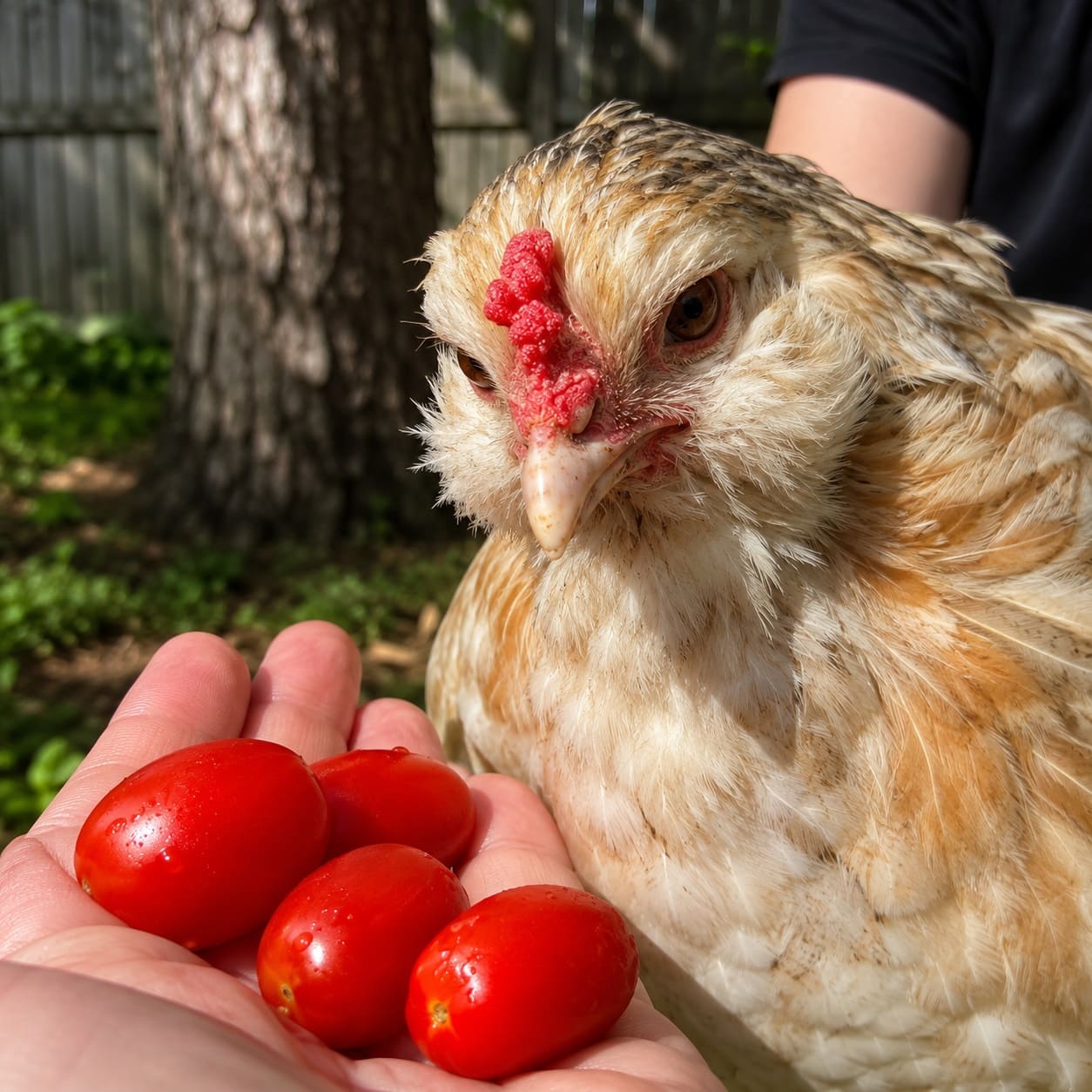
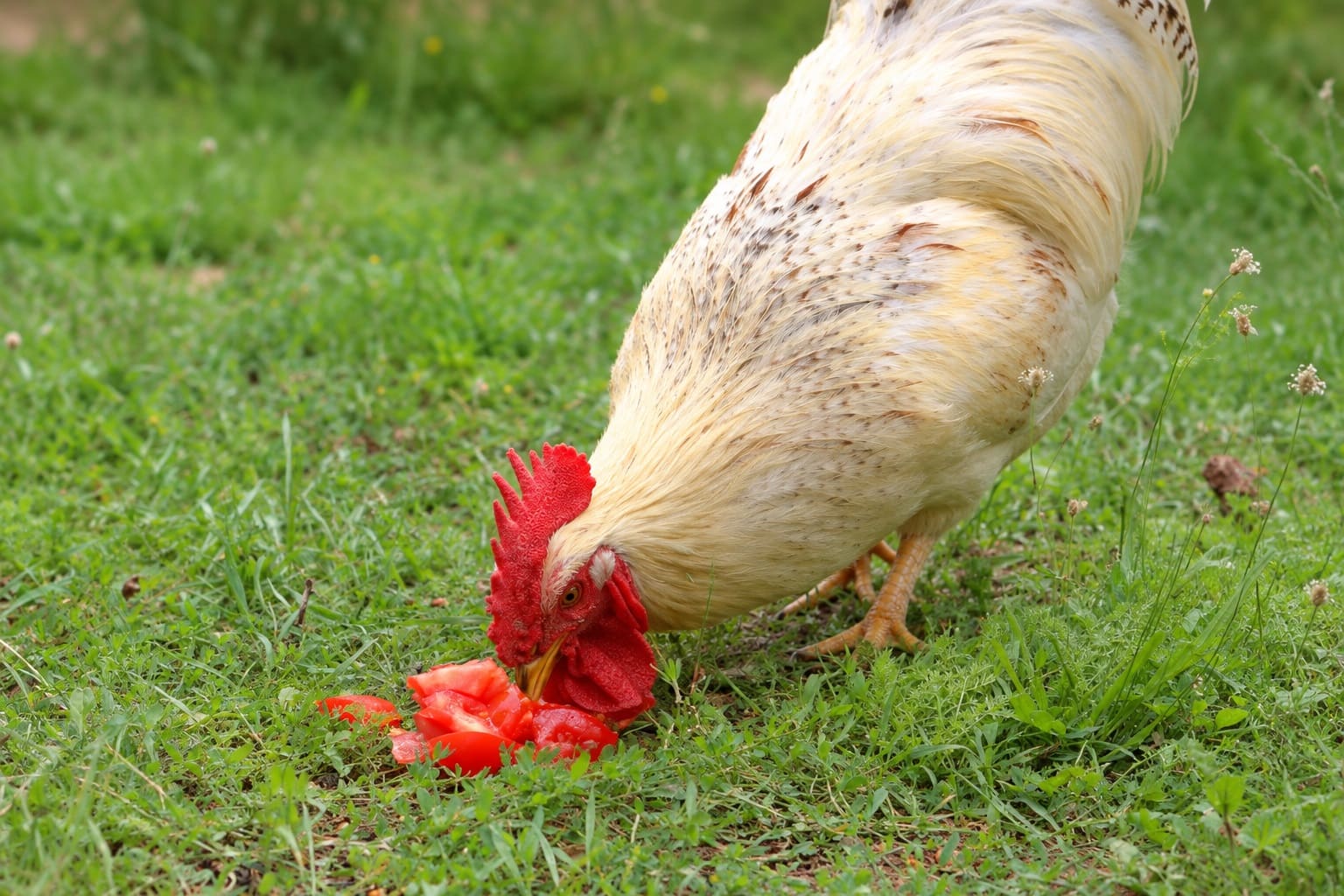
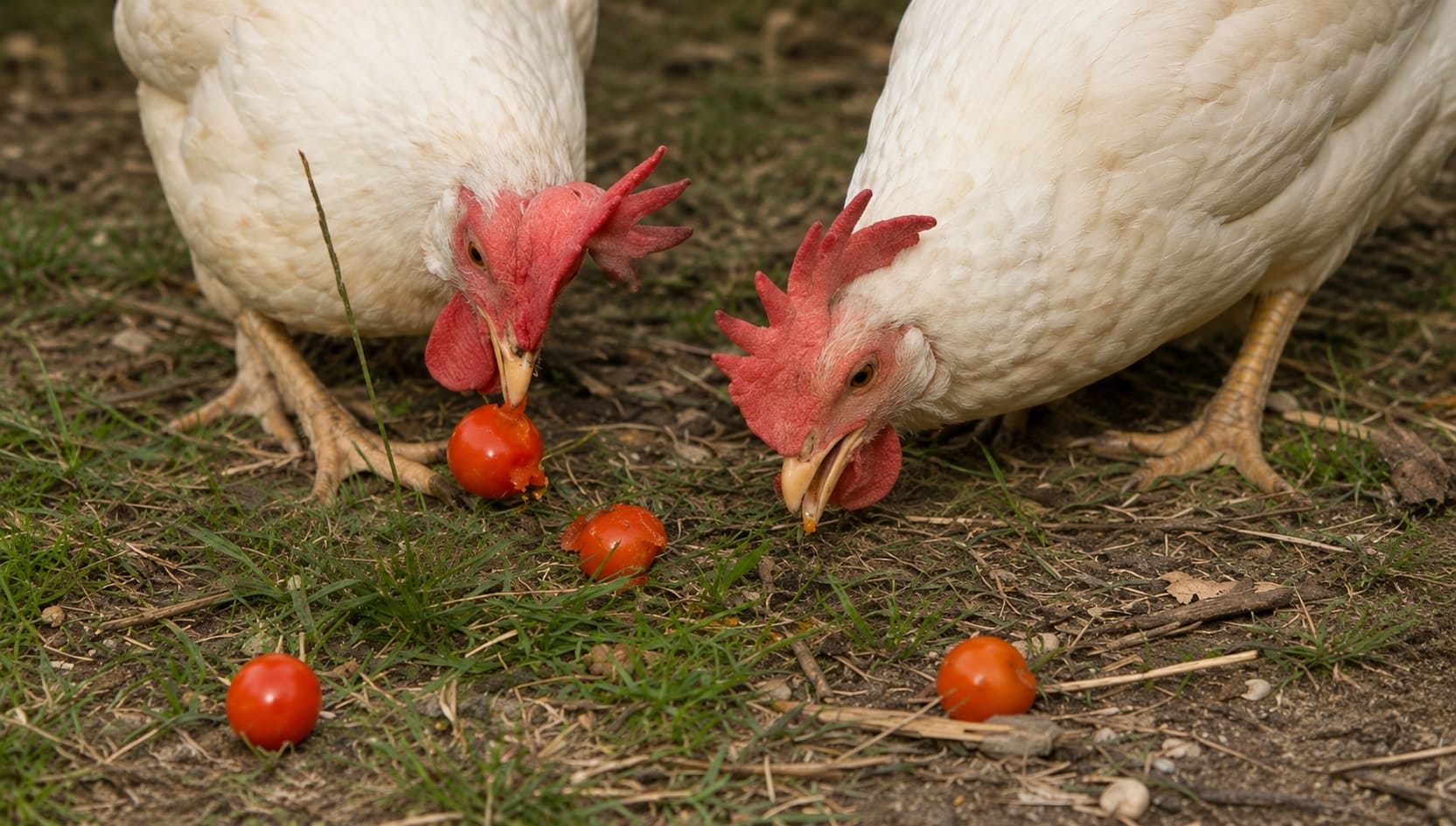
Yes. Ripe tomatoes are a safe treat for chickens, and most flocks will race across the run for one. The skin, seeds, juice and flesh are all fine.
The parts to keep away from your birds are the green ones: leaves, stems, vines, flowers and unripe fruit. These carry a bitter defensive compound that can make chickens sick.
Getting it right comes down to small portions, a few prep habits and keeping the flock off the plants themselves.
Quick Facts
- Safe: ripe fruit of any color, including skin, seeds and juice; plain cooked tomato
- Keep away: leaves, stems, vines, flowers, green fruit, moldy fruit, seasoned sauces
- Portion: about one cherry tomato or one thin slice per hen on treat days
- How often: two or three times a week
- Chicks: they don’t need any; wait until about 6–8 weeks old
Why the Fruit Is Safe but the Plant Isn’t
Tomato plants protect themselves from insects and fungi with chemicals called glycoalkaloids. In tomatoes the main one is tomatine.
You’ll often see solanine blamed instead, but solanine is mainly the potato’s version of the same defense. Either way, the compound sits mostly in the leaves, stems, flowers and green fruit.
Ripening is what makes the fruit safe. As a tomato colors up, the plant converts its tomatine into other, harmless compounds, and by the time the fruit is fully ripe only traces remain.
In effect, the plant invites animals to eat the fruit and spread the seeds, while the foliage stays bitter and unappealing.
Cooking doesn’t change this. You’ll often see fried green tomatoes used as proof that cooking makes unripe fruit safe, but lab tests on fried and microwaved green tomatoes found their tomatine levels barely moved.
Heat won’t rescue a green tomato for your flock. Time on the kitchen counter will.
Dose matters, too. Tomatine is absorbed poorly when it’s eaten, which helps explain why a hen that pecks a leaf or two usually shows no ill effects.
Nobody has worked out a safe amount for chickens, though, and smaller birds get a bigger dose per ounce of body weight. Bantams and young birds have the least margin.
Ripe means fully colored for that variety and slightly soft when you press it. Yellow, orange, purple and striped tomatoes are just as safe as red ones once they reach their mature color.
A tomato that’s mostly ripe with a green patch near the stem is fine once you cut the green part away. Varieties that stay green when ripe are harder to judge by eye, so if you aren’t sure, eat those yourself and give the flock something else.
Hard green fruit doesn’t have to go to waste. Leave it on the counter or in a paper bag at room temperature until it colors and softens, then share it.
How Much Tomato to Give
Keep all treats together to about a tenth of what a hen eats in a day. Feed companies such as Purina use that 10% guideline, and some poultry vets prefer 5%.
The point is the same either way. Complete layer feed is balanced for egg production, and anything else dilutes it.
A laying hen eats roughly a quarter pound (about 115 g) of feed a day, so a 10% treat allowance is a little under half an ounce (11 g).
According to USDA data, a cherry tomato weighs about 0.6 oz (17 g). One cherry tomato per hen already covers a full day’s treats, before any scratch grains or kitchen scraps. Bantams eat less feed, so scale their share down to match.
| Tomato | Rough Weight | Treat-Day Share |
| Cherry tomato | 0.6 oz (17 g) | One per hen |
| Thin slice of a large tomato | About 0.2 oz (6 g) | One or two per hen |
| Medium slicing tomato | About 4 oz (120 g) | Split among about 10 hens |
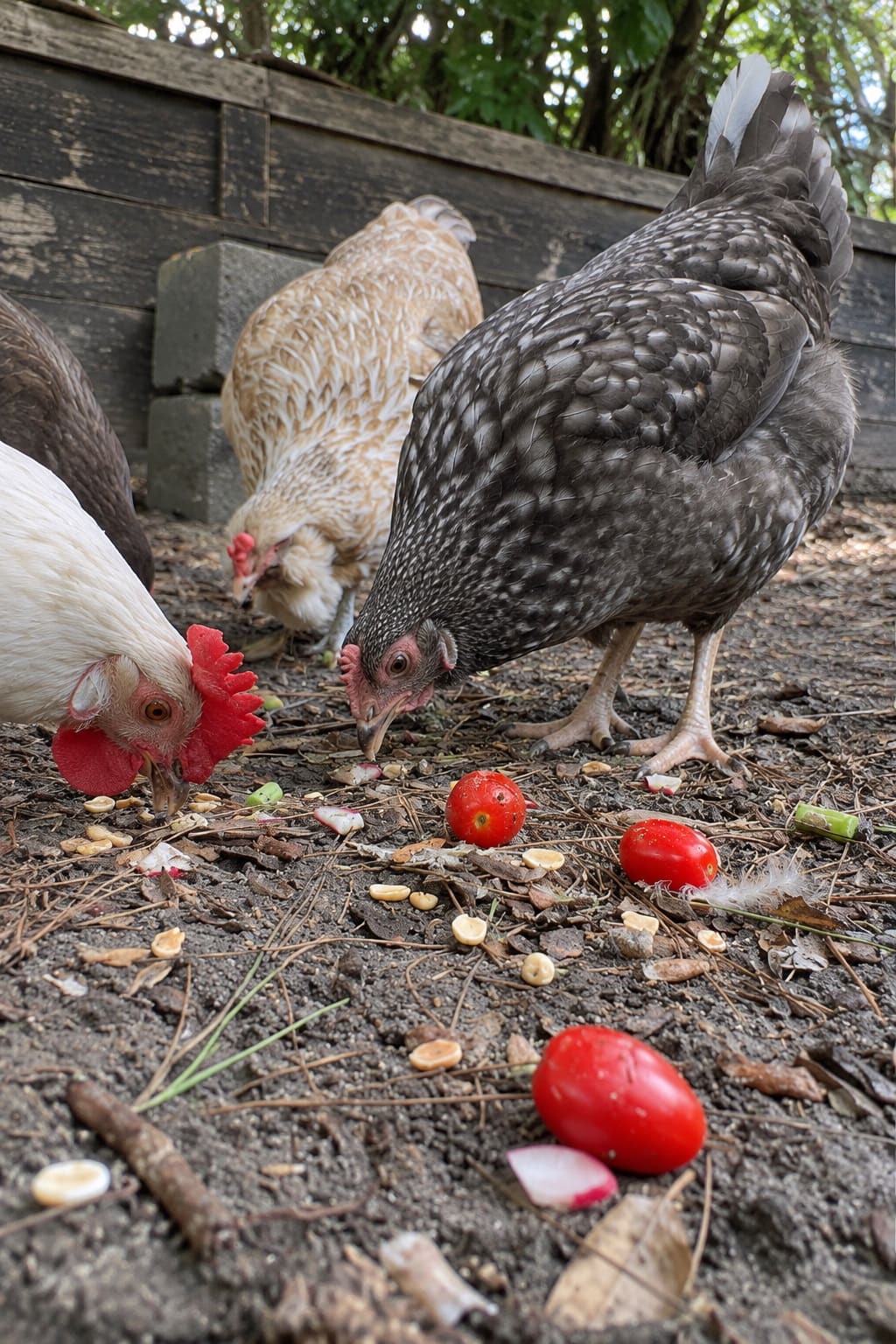
Two or three treat days a week is plenty. Offer tomatoes in the afternoon, after the birds have had their fill of feed, so the fruit tops up their diet instead of replacing it.
Moderation matters because of what a tomato is: about 95% water, with under 1% protein and almost no calcium.
Layer feed is typically around 16% protein, plus the extra calcium that goes into nearly one eggshell a day. A hen that fills up on juicy fruit eats less of the feed that makes eggs.
Watch the flock rather than a scale. Watery droppings, feed left in the feeder or thinner shells all mean it’s time to cut back for a week or two.
Tomatoes aren’t a supplement, either. Chickens make their own vitamin C, so the main benefits are hydration on hot days and a bit of fun. That’s still a good reason to share them.
How to Prepare and Serve Tomatoes
You need very little: ripe tomatoes, a knife and a flat tray, board or shallow pan to serve them on.
- Sort the tomatoes. Use only ripe fruit. Throw out anything with fuzz, slime or a fermented smell, and cut off any green shoulders.
- Remove the green bits. Pull off the stem and the small leafy cap. They’re small and easy to miss.
- Wash store-bought tomatoes. A rinse under running water removes dirt and some surface residue.
- Size them for your birds. Standard hens can handle whole cherry tomatoes. Halve them for bantams and young birds, and cut large tomatoes into chunks.
- Serve on a tray, not in the bedding. Juice soaks into litter, draws flies and is hard to clean up. Scatter pieces over a wide area so lower-ranking hens get a share too.
- Clear up within a few hours. Pick up leftovers before they spoil or attract rodents, especially in warm weather.
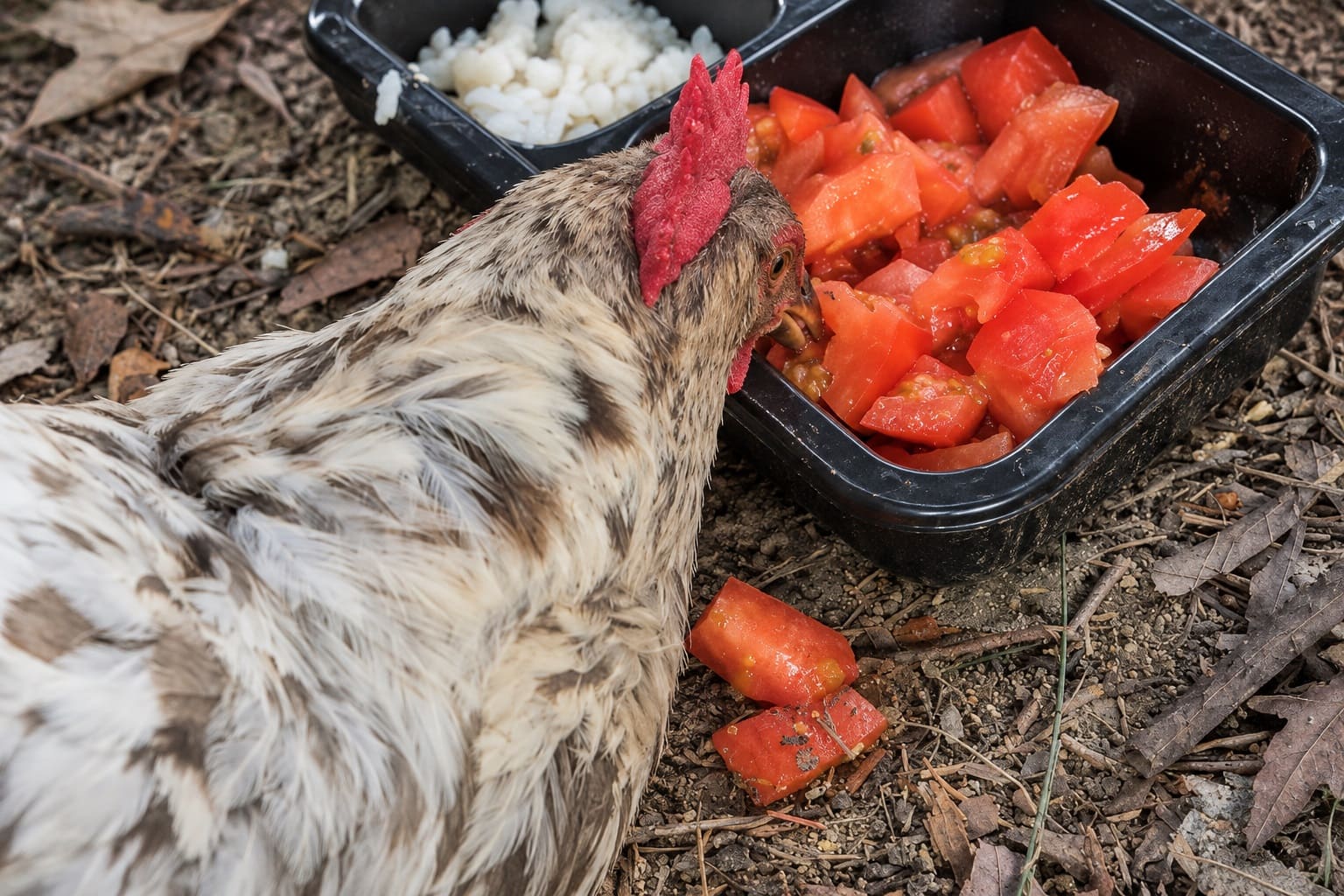
You’ll know it went well when the tray is empty in minutes and droppings look normal the next day. A few red flecks of skin in the droppings are just undigested tomato, not blood.
On hot days, chill or freeze a handful of cherry tomatoes before serving. They cool the birds down and keep them busy longer than chopped pieces would.
Cooked Tomatoes, Sauces and Kitchen Leftovers
Plain cooked tomato is fine as long as the fruit was ripe to begin with. The skins and seeds left over from a food mill or strainer on canning day are a great treat, in sensible amounts.
Canned tomatoes depend on the label. Many brands add salt, which chickens handle poorly, so stick to no-salt-added tomatoes if you share canned ones at all.
Leftover pasta sauce, salsa, pizza and ketchup are a different matter, even though you’ll see them suggested as chicken treats.
They usually contain salt and sugar, and often onion or garlic. Onions in particular can damage chickens’ red blood cells. Keep seasoned tomato dishes for the people in the house.
Overripe, cracked or bug-nibbled tomatoes are fine as long as there’s no mold.
Moldy ones aren’t. The black molds that rot tomatoes, such as Alternaria, produce toxins that EU food-safety authorities monitor in tomato products. Those belong in the trash or a closed compost bin.
Outside the US: Check Your Scrap Rules
- In Great Britain it is illegal to feed kitchen scraps to chickens, including pet hens, because of animal disease risks.
- Produce picked straight from your garden or allotment that never entered the kitchen can still go to the flock.
- Northern Ireland, the EU and some other countries have similar rules, so check with your local animal health authority.
Chickens and the Tomato Patch
Many flocks leave tomato foliage alone after one bitter taste, but you can’t count on it. Some birds strip plants to bare stalks.
The risk is highest when chickens are shut in with few other greens, or when you toss vines into the run during cleanup.
- Fence the plants, not the flock.
A 3-ft (90-cm) ring of welded wire or chicken wire around the bed keeps birds off the foliage and stops them scratching at the roots. Single-plant cages help, but they won’t stop digging at the base.
- Open the bed between seasons.
Let the flock in before you plant and again after you’ve pulled the vines. They’ll clean up insects, weed seeds and dropped fruit without any foliage to reach.
- Bag or bin the vines.
At season’s end, put plants and green windfalls in a closed compost bin or yard waste bag, never in the run.
- Pull volunteers in the run.
Keepers often find tomato seedlings sprouting from droppings in the run. Pull them while they’re small so there are no leaves within reach.
Tomato hornworms are a protein-rich snack most hens fight over, as long as you pick them from plants you haven’t sprayed.
One exception: leave any hornworm with white, rice-like cocoons on its back. Alabama Extension explains that those are parasitic braconid wasps, which will kill that caterpillar and then hunt down others in your garden.
 Learn more about Gardening with Chickens: Tips for a Successful, Sustainable Garden
If Your Chickens Ate Leaves, Vines or Green Tomatoes
If the flock got into the patch, work through these steps:
- Remove access. Herd the birds out and pick up any trimmings or green fruit lying around.
- Offer only feed and fresh water for the rest of the day. Holding back other treats makes it easier to tell what caused any upset.
- Watch them for a day or two. Signs to look for include diarrhea, a bird standing hunched and fluffed up, refusing food, weakness, wobbling or tremors.
- Call a vet if a bird is weak, can’t stand, stops eating or drinking, or if a small bird ate a lot. Tell the vet which parts were eaten, roughly how much and when.
There’s no proven home remedy for this kind of poisoning, so for a bird that’s clearly unwell, a vet is the right call.
FAQ
Can baby chicks eat tomatoes?
They can, but they don’t need to. Starter feed gives chicks everything they need for rapid growth, and treats only dilute it.
If you want to share, wait until they’re around six to eight weeks old, then offer a bite or two of soft, ripe tomato and see how they handle it.
Can chickens eat peppers, eggplant and potatoes too?
The ripe fruit of peppers and eggplant is fine in moderation, and so is plain cooked potato.
Raw or green potato skins, sprouts and peelings are not. Treat the leaves and stems of all of these the way you treat tomato plants and keep them out of the run.
Will tomatoes change my eggs?
Not noticeably at treat-sized amounts. In feeding trials, dried tomato or tomato paste mixed into the whole ration can tint yolks and raise their antioxidant content. A few tomatoes a week won’t, and feeding too many can cost you eggs.
Related posts:
- Can Chickens Eat Strawberries? Benefits & Feeding Tips
- Can Chickens Eat Oranges? Safety, Portions & Peels
- Can Chickens Eat Grapes? Safe Portions & Feeding Tips
Feed the Fruit, Fence the Plant
Tomato season is one of the easiest ways to treat your flock. Share ripe fruit a few times a week, keep the portions small, and keep everything green on the other side of a fence or in a closed bin.
If you grow your own, set aside the cracked and bird-pecked fruit for the hens and let them clean up the bed once the vines come out.
source https://harvestsavvy.com/can-chickens-eat-tomatoes/


No comments:
Post a Comment