Chicken mites are tiny blood-feeding parasites, and most backyard infestations come down to two species: the red mite, which hides in the coop and feeds at night, and the northern fowl mite, which lives on the bird around the clock.
Getting rid of them means treating the right target, the coop or the chickens, and then treating again before the next generation hatches.
Pin down the mite first and everything else gets simpler. Dusting your hens won’t reach mites living in the coop walls, and scrubbing the coop won’t touch mites living on your hens.
Quick facts
- Size: under 1/16 inch (about 0.5 to 1.5 mm), just big enough to see as a moving speck.
- Color: gray or off-white when hungry, red after a blood meal, darkening as it digests.
- Red mite: lives in cracks in the coop, feeds at night and can survive 8 to 9 months without a meal.
- Northern fowl mite: lives on the bird, mostly around the vent, and is the most important mite pest of US laying hens.
- Key rule: no treatment kills every egg, so plan on at least two rounds about 7 days apart.
Which Mite Do You Have?
All poultry mites suck blood or feed on skin, and all of them can make a flock miserable. What differs is where they live, and that decides where your treatment has to go.
| Mite | Where it lives | When you’ll see it | What to treat |
| Red mite (roost mite) | Cracks, perch ends and nest boxes; visits birds to feed | At night, on roosts and birds; rarely on birds by day | The coop first, birds as well |
| Northern fowl mite | On the bird, mainly vent feathers; can’t last long off it | Any time of day | Every bird; the coop needs only a light treatment |
| Scaly leg mite | Burrowed under leg and foot scales | Never; you see lifted, crusty scales | Affected legs, plus the roosts |
| Depluming mite | Burrowed at the base of feathers on back, neck and head | Never; you see broken and missing feathers | Affected birds, with a vet’s help |
Red mites and northern fowl mites look almost identical to the naked eye, so go by behavior rather than appearance. If you find mites on a hen in the middle of the day, they’re almost certainly northern fowl mites.
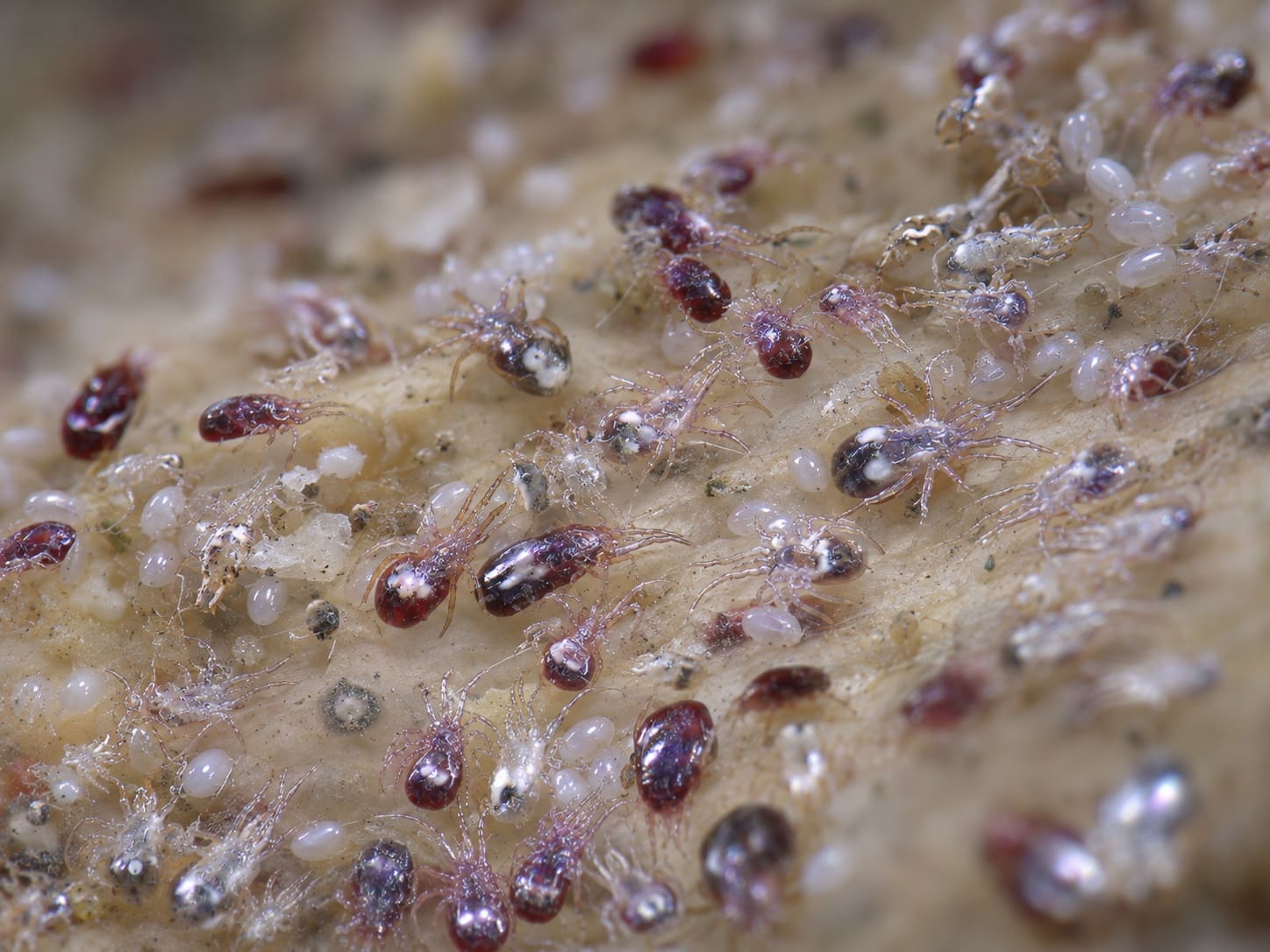
If the birds look clean by day but you find crawling specks on the roost at night, it’s red mites. Finding red mites on birds in daylight means a very heavy infestation.
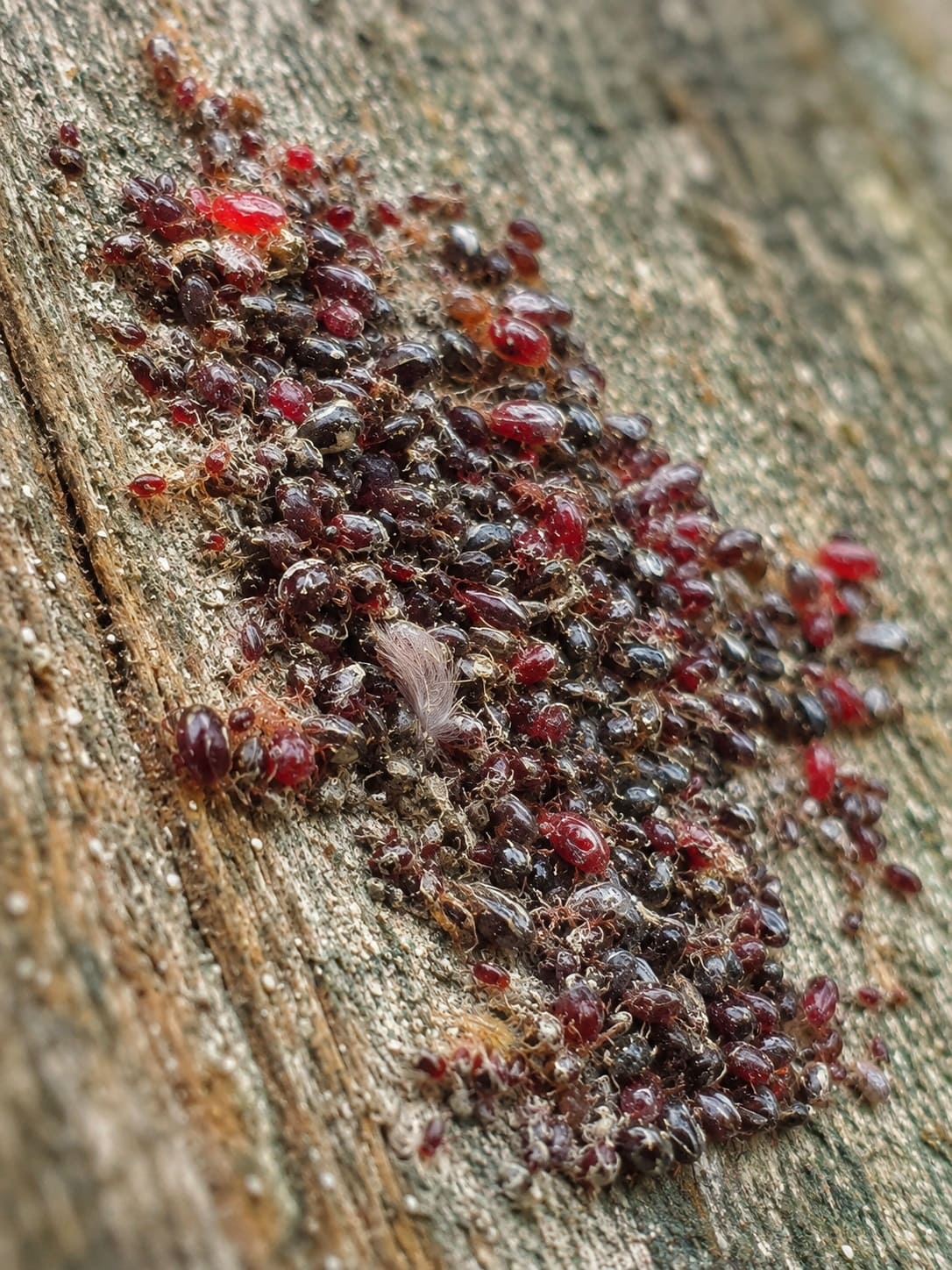
Make sure you’re not looking at lice. Poultry lice are larger, straw colored and quick, and they run from your light.
They chew on feather debris rather than blood and leave clumps of white eggs glued to the base of the feathers.
Mite eggs and droppings look more like fine dirt or dandruff. The treatment overlaps, but lice live only on the bird, so you can skip the deep coop cleanout.
In warm regions, including parts of the southern US, the tropical fowl mite behaves much like the northern fowl mite and is handled the same way.
Signs Your Chickens Have Mites
Mites are easy to miss until numbers are high, so learn the behavior changes that show up first:
- Hens refuse to go into the coop at night, sleep somewhere new or abandon the nest boxes and lay on the floor.
- Restlessness on the roost after dark, with extra preening, head scratching and feather pecking.
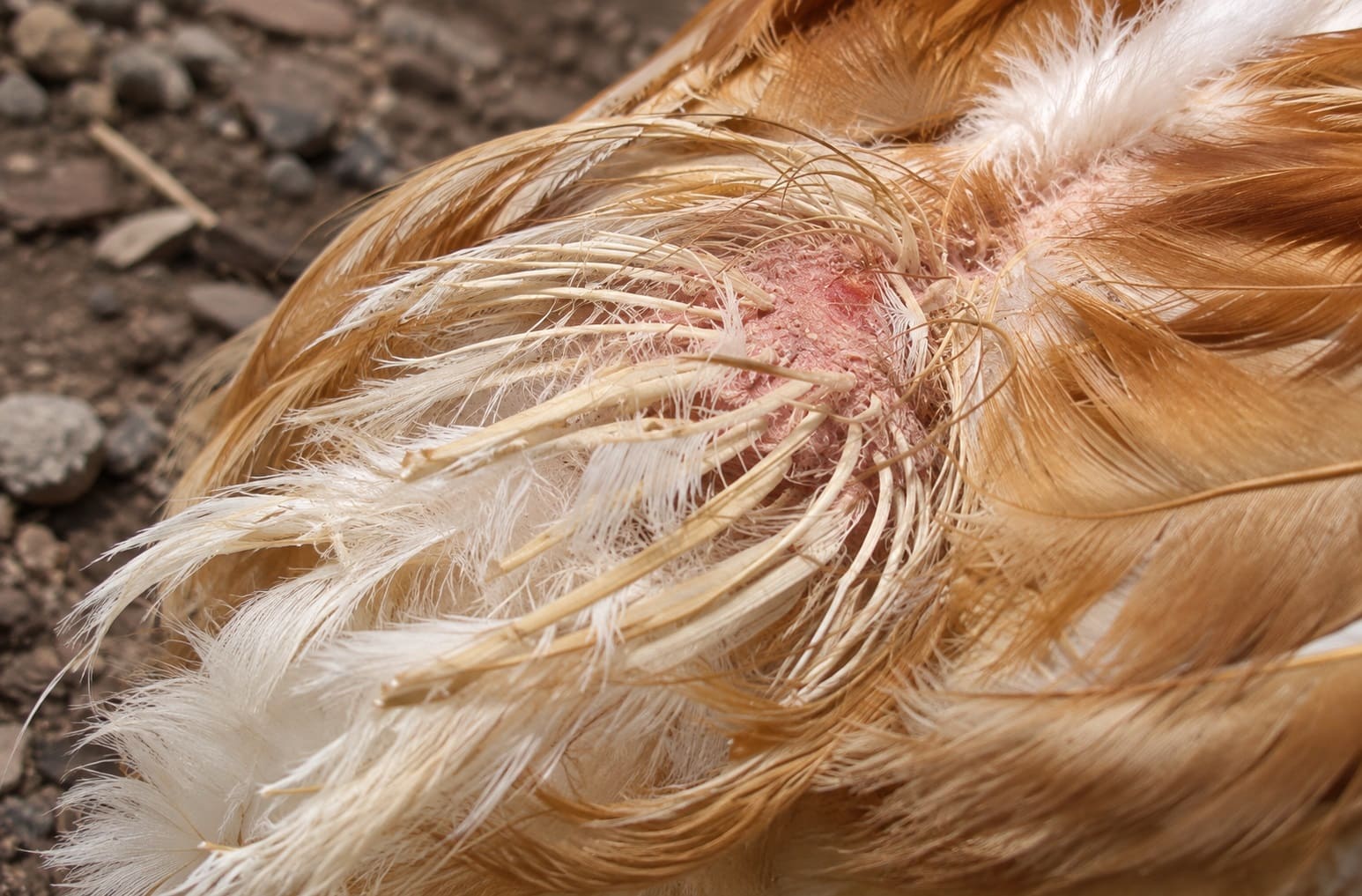
- Dirty, darkened or matted feathers around the vent, often with scabby skin underneath.
- Pale combs and wattles, weakness and weight loss, which point to blood loss.
- A drop in laying with no other obvious cause.
- Small red smears on eggshells, from mites crushed in the nest.
- Itchy bites on your own arms after egg collection or coop chores.
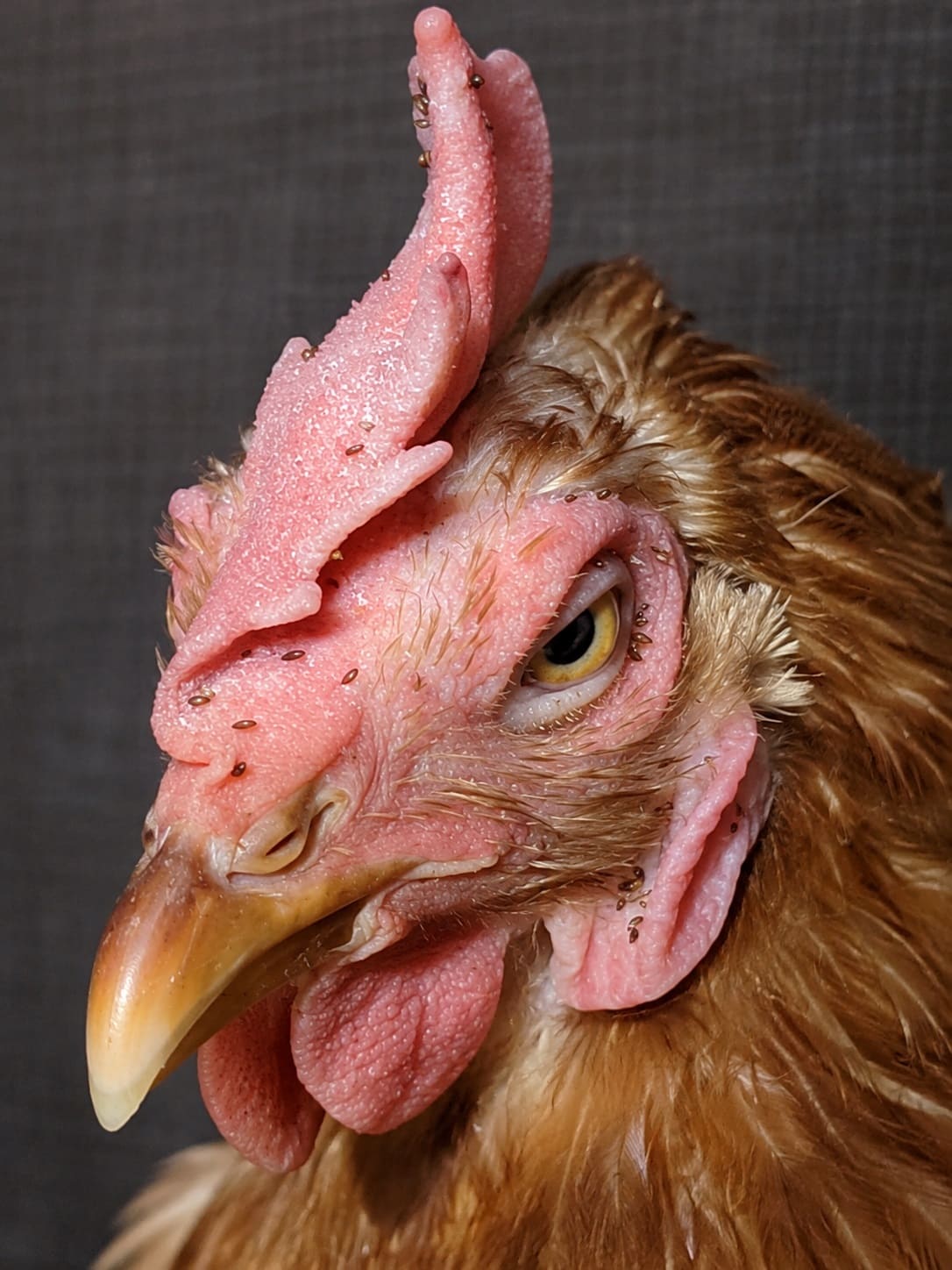
A heavy red mite infestation can drain more than 3% of a hen’s blood volume in a single night. Chicks and broody hens sitting in an infested nest are at the greatest risk, and both can die from blood loss.
Feather loss on its own is weak evidence. A bare back is usually caused by a rooster’s mating or by flockmates pecking, a bare belly by a broody hen plucking her brood patch, and ragged plumage all over in late summer or fall by molting.
Molting birds have new pin feathers coming in; mite-damaged birds have scabs, debris at the feather base or the mites themselves.
How to Check Your Flock and Coop
Checking the Birds
Pick up a hen, tip her gently so her rear faces you and part the feathers just above and around the vent. Then check under each wing and, on crested breeds such as Silkies and Polish, around the crest.
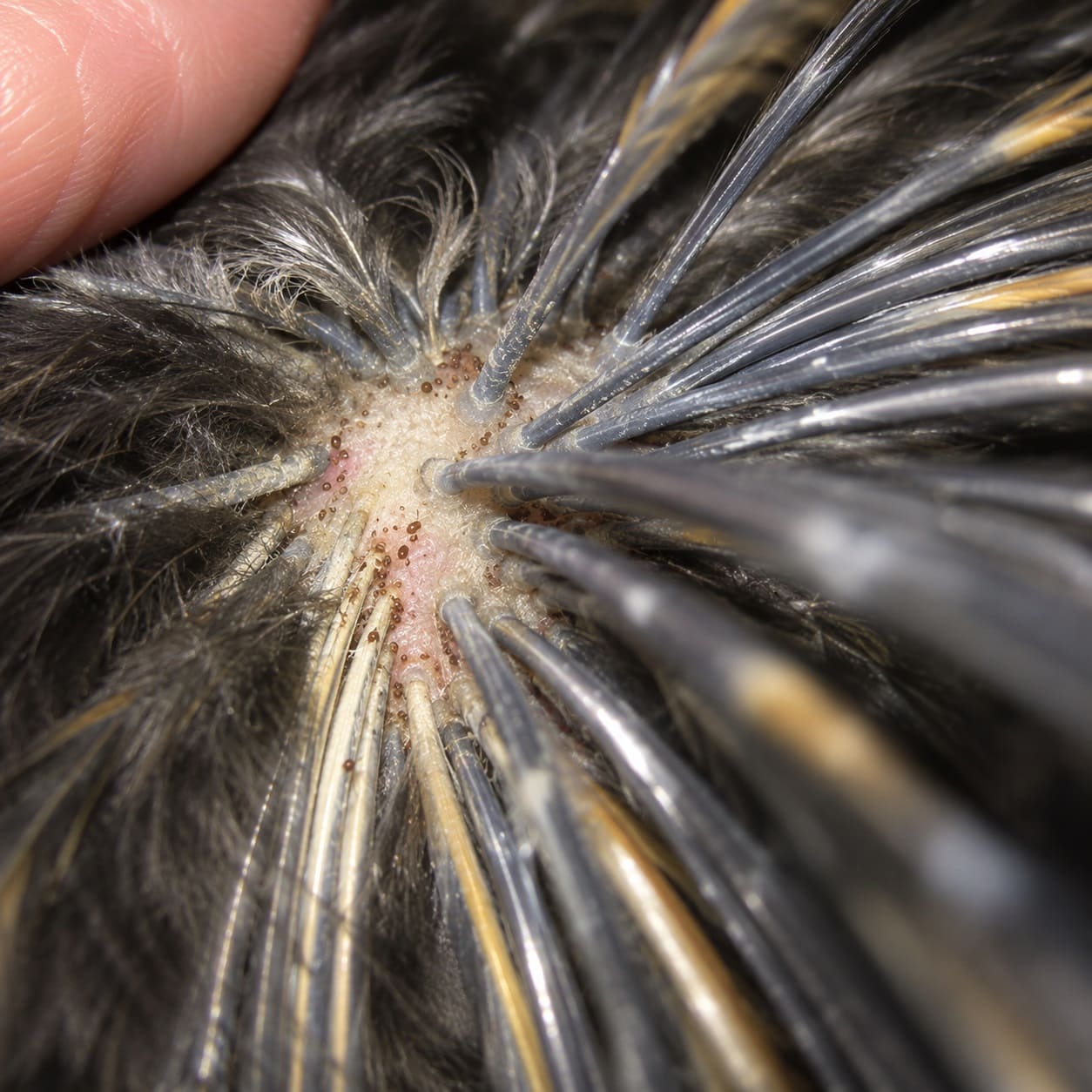
You’re looking for moving specks, gray or black grime at the base of the feathers, egg clusters stuck to the feather shafts and scabby or inflamed skin. Northern fowl mites often crawl straight up your arm.
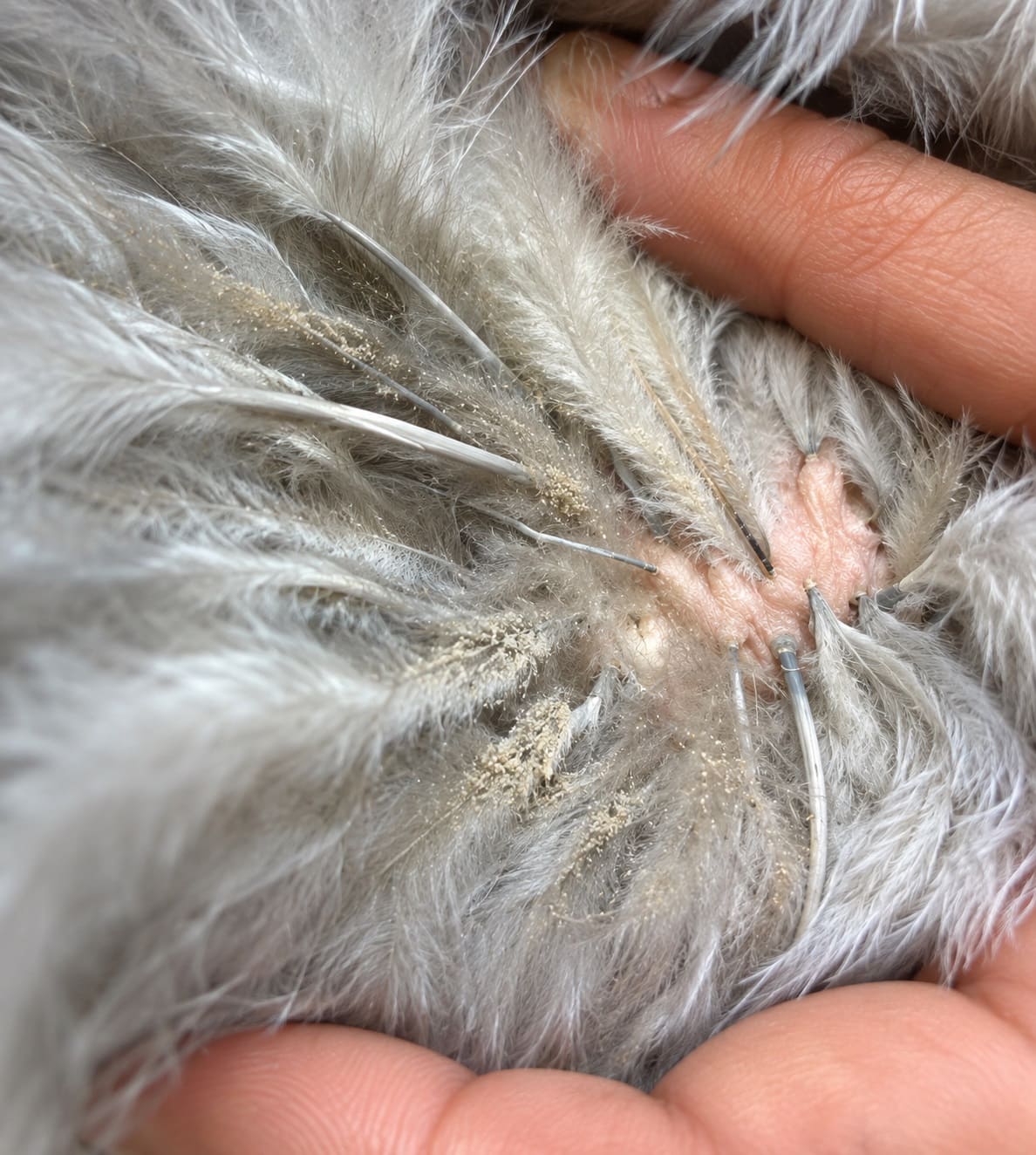
Check at least three or four birds, including any that look rough. If one bird has mites, assume the whole flock does.
Checking the Coop at Night
Red mites hide by day, so go out after dark with a flashlight, ideally an hour or more after the birds settle.
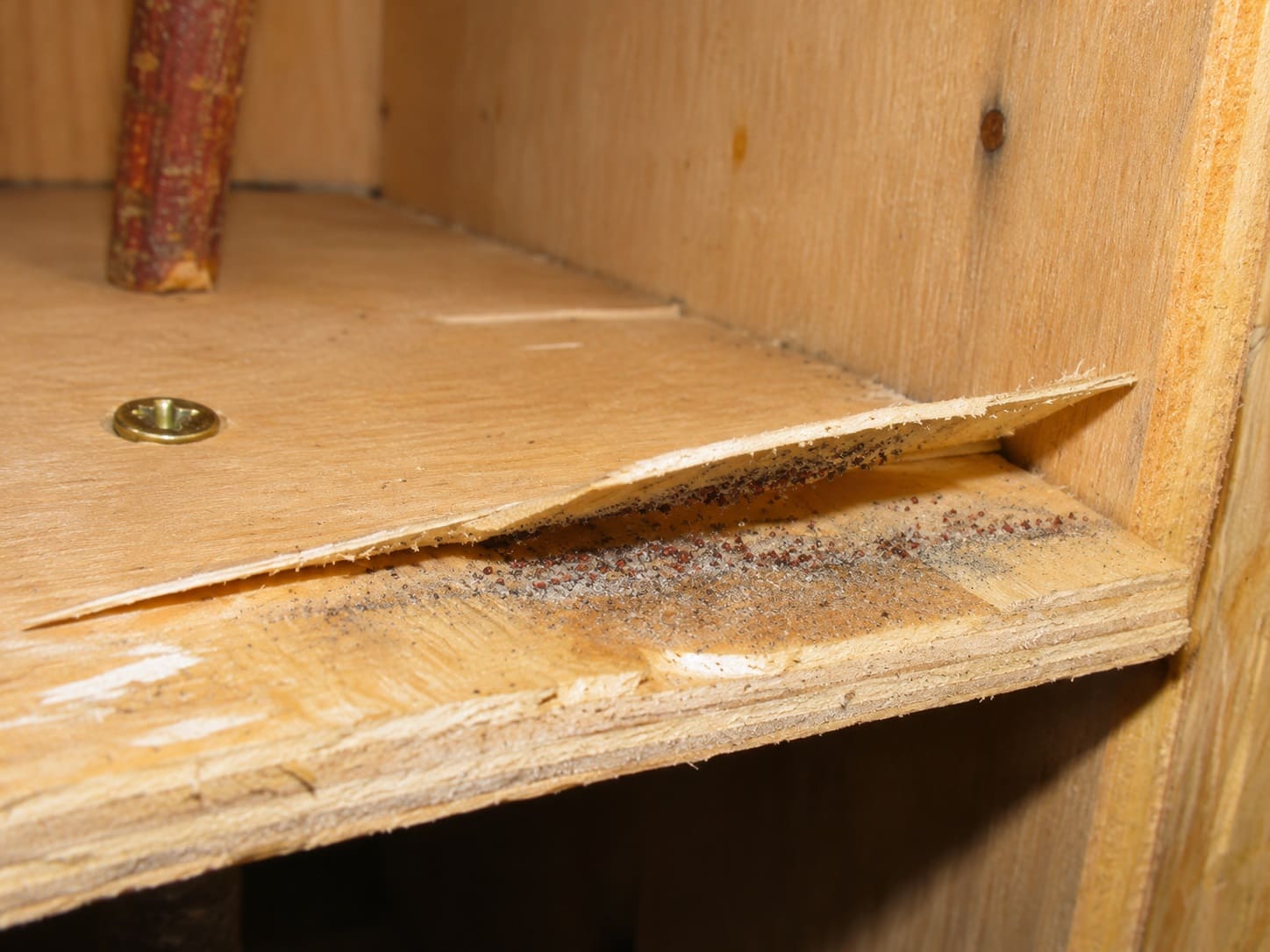
Look along the underside of roosts, at perch ends and brackets, in nest box corners and in any crack near where the birds sleep.
Then run a white paper towel or your fingertips along the underside of the roost. Red streaks are blood from crushed, freshly fed mites.
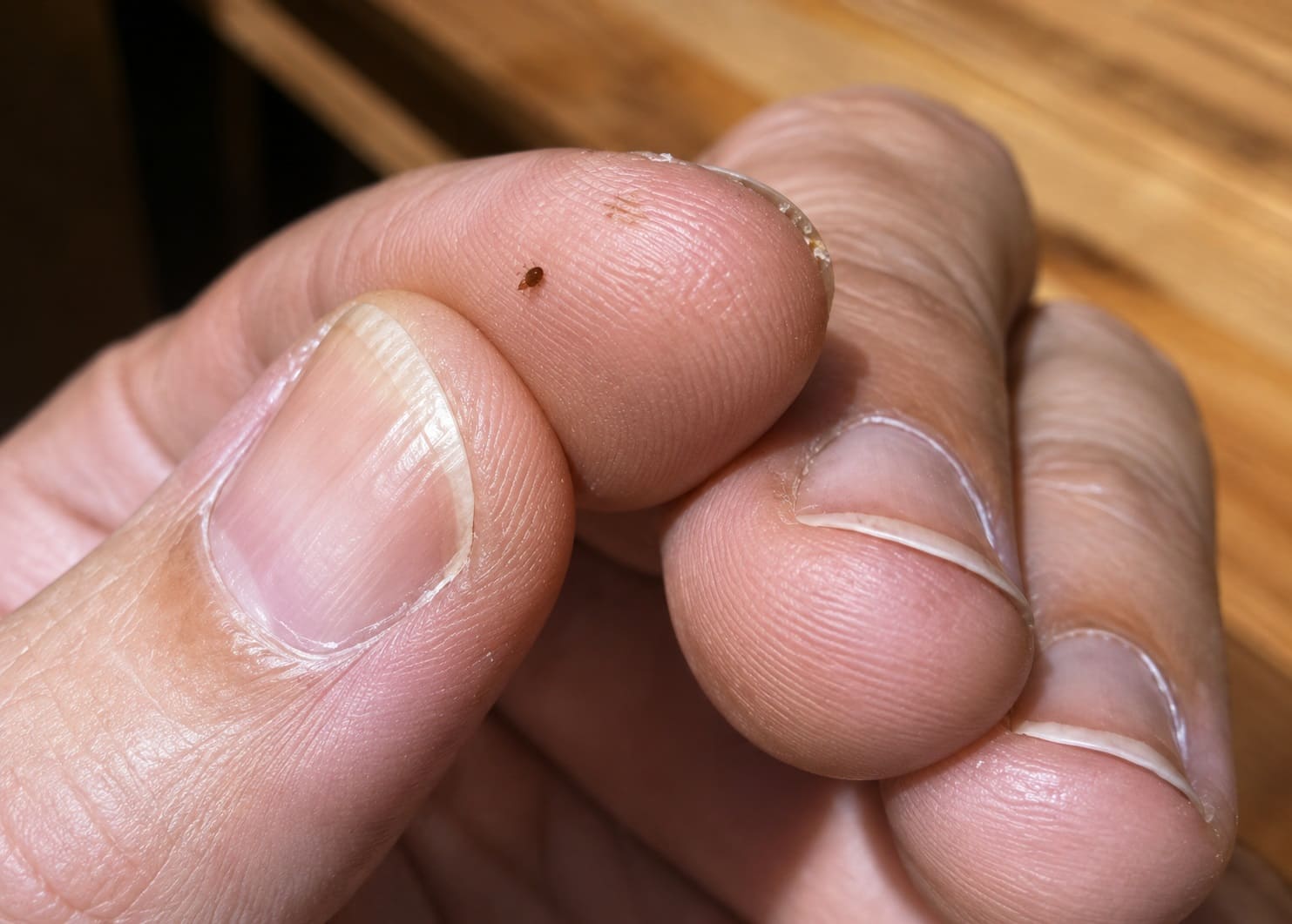
By day, look for gray, ash-like deposits around cracks and joints. That residue is mite droppings and shed skins, and it marks a hiding spot.
To measure a problem rather than guess at it, set a trap. Roll a strip of corrugated cardboard tightly inside a short piece of 1-inch (2.5 cm) PVC pipe and zip-tie it under a roost, where the hens can’t pull it out. After a day or two, unroll it over white paper and count.
The Alabama Cooperative Extension System treats fewer than 250 mites as a low count and more than 500 as high, and suggests treating the birds and coop as counts approach 500.
Wrapping painter’s tape sticky side out around the roost overnight works as a simpler yes-or-no test.
Why One Treatment Never Works
Most mite products kill feeding mites but not their eggs, and mites breed fast. In warm weather a red mite can go from egg to egg-laying adult in about a week, and a northern fowl mite’s cycle takes 5 to 12 days.
Treat once and the eggs that survived hatch a few days later, so the infestation seems to clear and then roars back.
Red mites add another problem: they can survive in an empty coop for 8 to 9 months without feeding. Moving the flock out for a few weeks won’t starve them, and a secondhand coop can arrive already infested.
Temperature extremes do kill them. Above 113°F (45°C) or below about -4°F (-20°C) is lethal, which is why a steam cleaner works on removable parts, though an ordinary winter won’t clear a coop.
So every plan below repeats the treatment about 7 days later to catch the new hatch, and usually a third time a week after that, then keeps checking for a month.
Choosing a Mite Treatment
Use only products whose label lists poultry, and follow that label exactly for dilution, where to apply it and egg use.
A product that works on mites but isn’t labeled for chickens has no tested egg-withholding period, so you’d be guessing about residues in the eggs your family eats.
| Option | How it’s used | Best for | Watch out for |
| Spinosad (Elector PSP) | Diluted spray on the coop; the label also allows direct spraying of birds for northern fowl mites | Red mites in the coop; northern fowl mites | Expensive, though a bottle lasts years |
| Permethrin dust or spray labeled for poultry | Worked into feathers at the skin, and on roosts and walls | Both main mites, where they’re still susceptible | Widespread resistance; deadly to cats |
| Sulfur dust | Rubbed into feathers, added to dust baths or hung in dust bags | Northern fowl mites | Use only dusting or wettable sulfur sold for poultry; wear a mask |
| Fluralaner (Exzolt) | Prescription added to drinking water, two doses 7 days apart | Northern fowl mites (US label) | Needs a veterinarian; not cheap for a small flock |
| Diatomaceous earth (DE) or silica dust | Dry dust in cracks and dust baths | Prevention and light infestations | Slow, useless when damp, irritating to lungs |
1. Spinosad comes from a soil bacterium and is the go-to for many keepers because it works against mites that shrug off older insecticides.
Follow the label on which dilution goes on the coop and which on birds. Mixed spray loses strength, so make only what you’ll use that day.
2. Permethrin is cheap and sold at most farm stores, but the Merck Veterinary Manual notes that northern fowl mites have developed widespread resistance to pyrethrins and pyrethroids, the family permethrin belongs to.
If two rounds haven’t brought numbers down, switch to a different active ingredient rather than applying more. Permethrin is also extremely toxic to cats.
Treat where cats can’t reach, keep them out until everything is dry and change clothes before handling them.
3. Sulfur is an old remedy with good modern evidence. In University of California, Riverside trials, small bags of sulfur dust hung where hens brushed against them cut northern fowl mite numbers by 95% or more within a week, and the treated birds were mite-free within two weeks.
In an earlier Riverside study, a sulfur dust box cleared mites within 2 to 4 weeks, even from hens that never used it themselves.
4. Fluralaner was approved by the FDA in July 2025 as the first oral treatment for northern fowl mites in US laying hens, with no egg withholding period. The hens drink it, and mites die when they feed.
Your veterinarian has to prescribe it. Outside the US, the same product is widely used against red mites.
5. DE gets heated debate. It works by scratching the waxy coating off mites so they dry out, and dust-bathing research shows real benefits against northern fowl mites.
But it acts slowly, does nothing once it gets damp and won’t clear an established red mite infestation by itself. Use it as a preventive and a finishing layer, not as your main weapon, and wear a dust mask when you apply it.
Oil-and-soap coop sprays, neem, essential oils and garlic can kill mites they soak or coat directly, but none has evidence that it clears a real infestation. Feeding herbs or garlic doesn’t make blood unappealing to mites, whatever you may read.
Don’t use dog and cat flea products containing fipronil or other ingredients with no poultry label, carbaryl (Sevin), whose poultry uses have been removed from its labels, or ivermectin from cattle and sheep products.
Ivermectin use in chickens is extra-label in the US, so it needs a veterinarian’s prescription and an egg-withholding time set through the Food Animal Residue Avoidance Databank, and studies show it does little against red mites at safe doses.
How to Get Rid of Red Mites
Red mites live in the coop, so most of your effort goes there. Plan a dry, warm day and start in the morning so everything can dry before roosting time.
You’ll need: a dust mask, gloves, old clothes you can wash right away, a scraper and stiff brush, a hose or pressure washer, heavy trash bags, fresh bedding, a pump sprayer and a mite product labeled for poultry.
Allow about half a day for a small backyard coop.
- Shut the hens out of the coop for the day, with water and shade in the run.
- Remove all bedding and nesting material and seal it in bags for the trash. Don’t put it on the compost pile or spread it where the hens range.
- Take out everything that comes apart: roosts, nest boxes, droppings boards and dividers. If the roof is lined with felt, check underneath it; mites colonize the space under roofing felt, and it may need to come off.
- Scrape droppings and debris out of every crack, joint and perch bracket. Mites shelter under the grime, and treatments can’t reach them through it.
- Scrub or pressure-wash every surface with hot, soapy water, forcing water into the cracks, then let it dry. A steam cleaner on removable parts kills both mites and eggs.
- Spray the coop with your labeled product, driving it into every crack, corner and joint. It takes more than you’d expect; the Alabama extension service notes that a coop often needs over a gallon of spray to reach the gaps.
- Once everything is dry, put the coop back together, add fresh bedding and let the hens back in.
- That evening, treat the birds on the roost with a product labeled for use on poultry, since the surviving mites will be on them after dark.
- Repeat the coop treatment and bird check 7 days later, and again a week after that. Then trap or check the roosts weekly for at least a month.
You’ll know it’s working when hens go into the coop willingly again and your nighttime checks and traps come up empty. Expect a few stragglers after the first round.
Mites keep emerging from deep cracks for days, and that’s exactly what the follow-up treatments are for.
Change your clothes and shower as soon as you finish. Red mites ride on fabric and hair, and they will bite you on the way into the house.
How to Get Rid of Northern Fowl Mites
Northern fowl mites live on the birds, so this time the hens get the full treatment and the coop gets a lighter one.
- Treat every bird in the flock after dark, when they’re calm on the roost; a helper to hold each hen makes it much easier.
- Part the feathers and apply the product to the skin, not the feather surface, concentrating on the vent, under the wings and the neck. Keep dusts and sprays away from eyes and nostrils.
- Change the bedding and nesting material, and treat roosts and nest boxes once.
- Repeat in 7 days, and a third time a week later if you still find mites.
- Recheck a few birds each week for a month.
If your birds are still crawling after two rounds of permethrin, you’re probably dealing with resistant mites. Move to spinosad or sulfur, or ask a veterinarian about fluralaner.
Avoid soaking birds with liquid sprays or dips in cold weather; damp feathers can chill a hen badly, so use a dust or wait for a mild day.
Treating Scaly Leg and Depluming Mites
Scaly Leg Mites
Scaly leg mites burrow under the scales of the shanks and feet, and the scales lift, thicken and crust over. Older birds are most often affected, and the mites spread slowly through shared roosts.
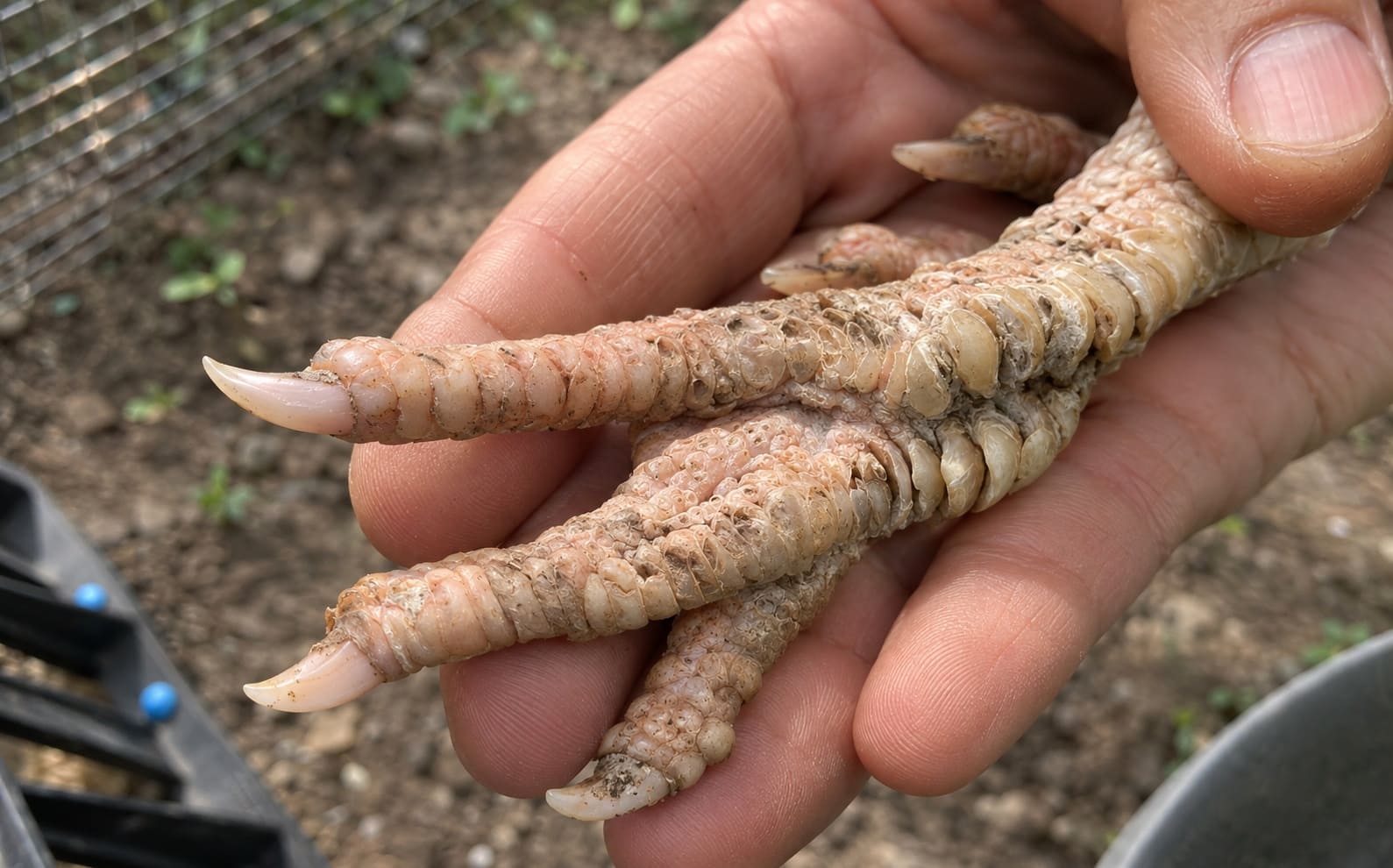
Treatment works by smothering them:
- Soak the bird’s legs in warm, soapy water for 5 to 10 minutes.
- Brush gently with a soft toothbrush, removing only loose debris. Never pick or pull scales off; they bleed.
- Dry the legs well.
- Coat them thickly with petroleum jelly, working it up under the raised scales.
- Repeat every 2 to 3 days for at least two weeks, and coat the roosts too.
The mites die within that time, but the legs look rough until the damaged scales are replaced, which can take until the next molt. A bird that is lame, has bleeding legs or isn’t improving needs a vet.
Depluming Mites
Depluming mites burrow at the base of feathers, mostly on the back, neck and head, and the irritation makes birds pull out their own feathers, especially in spring and summer.
They’re invisible to the naked eye and easily mistaken for a hard molt or rooster damage, so a vet’s skin scraping is the reliable way to confirm them.
Sulfur dust and dust baths help, but surface powders struggle to reach the burrows, so treatment is best worked out with a veterinarian.
Keeping Mites Out of Your Coop
Mites don’t mean your coop is dirty. Wild birds, rodents, new chickens and secondhand equipment carry them in, so prevention is mostly about blocking those routes and catching problems early.
- Quarantine new birds for 30 days away from your flock, and check and treat them before they join.
- Treat secondhand coops, crates and nest boxes before they go near your birds.
- Keep wild birds out with covered runs or hardware cloth, store feed where sparrows can’t reach it, take down feeders near the coop and remove wild bird nests from coop eaves.
- Change clothes and boots after visiting another flock, a poultry swap or a show.
- Check a broody hen’s nest after dark before she starts sitting, and give her fresh nesting material, since she’ll stay on it day and night for three weeks.
- Give hens a dry dust bath year-round. A tub or cement-mixing tray under cover, filled with washed play sand, lets them clean their own feathers, and mixing in DE or poultry dusting sulfur adds protection. For DE, the Merck Veterinary Manual cites about 6 cups per 50 pounds (23 kg) of sand.
- Check birds monthly, and weekly in summer for red mites and in winter for northern fowl mites, which thrive in cooler weather.
Coop design matters most for red mites. Seal cracks and joints with caulk, and consider painting the interior a light color: paint fills crevices, and mites show up against a pale surface.
Use roosts that lift out for cleaning, avoid felt roofing and rough-sawn tongue-and-groove lumber, and favor pine shavings or sand over long straw, which gives mites hollow stems to hide in.
Plastic and metal coops have fewer hiding places and wash down easily, but they can still get mites, especially if condensation keeps them humid.
 Learn How to Build a Duck Coop: Expert Tips & DIY Plans for Beginners
Frequently Asked Questions
Can chicken mites live on humans?
No. Red mites and northern fowl mites bite people, leaving itchy red bumps, often around the wrists, waistband and ankles, but they can’t establish themselves on healthy people.
Shower, wash your coop clothes on hot and use an anti-itch cream or antihistamine for relief.
If bites continue for more than a few days after the coop is treated, see a doctor; scabies, bed bugs or mites from a wild bird nest in your eaves can look similar.
How long does it take to get rid of chicken mites?
Plan on two to three weeks of treatment: a first round plus one or two follow-ups 7 days apart, then a month of weekly checks.
Northern fowl mites usually clear within that window. Red mites in an old wooden coop full of cracks can take longer, because new ones keep emerging from places the spray didn’t reach.
Do I need to burn my coop?
Almost never. A thorough cleanout, the right product and two or three follow-up rounds clear most infestations.
If an old wooden coop is riddled with gaps you can’t seal, replacing the worst parts is a better investment than another season of treatments.
Where to Start
Tonight, take a flashlight to the coop and run a paper towel under the roosts, then check two or three hens around the vent tomorrow morning. That tells you which mite you have, if any.
Treat the coop for red mites or the birds for northern fowl mites, mark your calendar for the follow-up rounds a week apart, and set a cardboard trap so you’ll know early if they come back.
source https://harvestsavvy.com/chicken-mites/


No comments:
Post a Comment